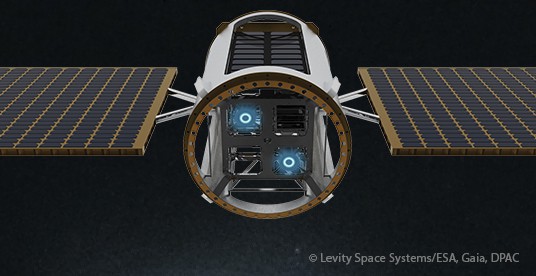
The launch capacity of launch providers is not always sufficient to meet the increasing demands on the flexibility of microsatellite operators. Levity Space Systems is developing an electrically propelled microlauncher kickstage, to transport small satellites into higher orbits beyond the microlauncher capabilities. The additional stage establishes a new alternative for satellite operators, by expanding mission capabilities and reducing launch costs, while increasing the launch performance of the microlauncher. The goal is to provide satellite operators with the opportunity to use microlaunchers as a viable alternative to conventional rockets, as they are able to reach low Earth and lunar orbits, reducing launch times, as well as reliable satellite constellation maintenance by specifically replacing defective satellites.
Benefits:
Transport of small satellites into higher orbits (access to lunar orbit using microlaunchers)
Reduction of the launch interval from 24 to 3 months
Reduction of launch- and opportunity costs
Deployment and maintenance of microsatellite constellations
Avoidance of secondary payload restrictions
Increasing number of possible satellite concepts and applications
PVT-GAMERS – “Improved Pressure-Volume-Temperature Gauging” Method for Electric Propulsion Systems
In the new era of electric propulsion, where propellant tanks are larger and missions are longer, the accuracy of classic mass retrieval methods has become obsolete. The knowledge of the exact amount of remaining propellant is critical for optimising a spacecraft’s lifespan. A team from Luleå University of Technology has developed the “Improved Pressure-Volume-Temperature Gauging” Method. This method uses existing technology readiness levels (TRL 9) sensing technologies and it improves the physical modelling of the available propellant as well as the accuracy of the classic Pressure-Volume-Temperature (PVT) retrieval techniques. Thanks to smart use of the spacecraft’s telemetry, its implementation will help spacecraft propulsion systems providers, spacecraft operators, telecommunication companies, and space agencies to increase the lifespan of space missions.
Benefits:
More accurate gauging of spacecraft propellant mass
Technology scalable to any propellant tank size
Extension of the lifespan of space missions and their profitability
Low-cost implementation using the existing spacecraft telemetry systems
Propellant control system as a transferable technology to any one-phase pressurised vessel in any sector
Biocontroller – Platform Technology for the Improvement of Microbes Applied in Space Missions
Microbes are a ticking time bomb for long-term space missions. Microbes evolve thousands of times faster than humans and, in space, they are no longer kept in check by the inexhaustible diversity of the Earth’s biosphere. Regulating the evolution of microbes is crucial to prevent microbes from evolving in undesired directions and becoming tremendous threats to human health. The OPE Group’s expertise lies in controlling the evolution of microbes. For this purpose, OPE designed innovative bioreactors and developed IoT-enabled hardware and software to train microbes to be beneficial to space travellers. The technology allows in-situ resource utilization and resource recovery during deep space missions.
Benefits:
Cost-effective support of human life on spacecraft
In-situ resource utilisation and resource recovery during deep space missions to produce clean water, food, fuel, soil fertilisers, chemicals, medicines and a large variety of other materials
Stable and robust foundation for new ecosystems on celestial bodies to foster population
Reinforcing the space travellers’ microbiome for disease prevention and well-being
Golden Fleece – In-Space Nanometal 2D Printing Demonstration
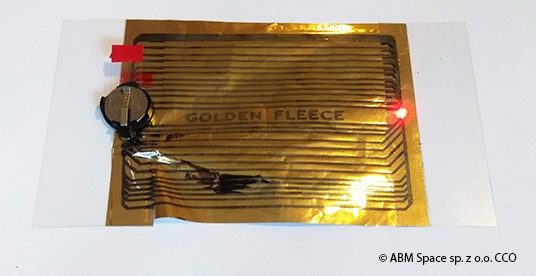
Golden Fleece is an intelligent solar sail concept used for spacecraft propulsion. ABM Space and AMEPOX Microelectronics developed a production process with a 2D-printing technology, allowing the solar sail to be covered with in-situ nanometal ink to place electronic circuits on the sail substrate. Nanometal has outstanding and diversified mechanical, thermal and electrical properties which can be used for various applications in the field of space materials. The development of this 2D-printing method will facilitate in-orbit production and utilisation of metals gained in the future, particularly in-situ from the Moon and asteroids. The technology enables flexible production in space, spare parts production from lightweight material and mass production from future in-situ resources.
Benefits
Flexibility of electronics production in space
Flexibility of production of lightweight structures in space
Nanosilver as a biocide allows sterile structures and reductions in cleanroom costs
FISHinSPACE – Zebrafish Larvae to Study Vertebrate Physiology in Space
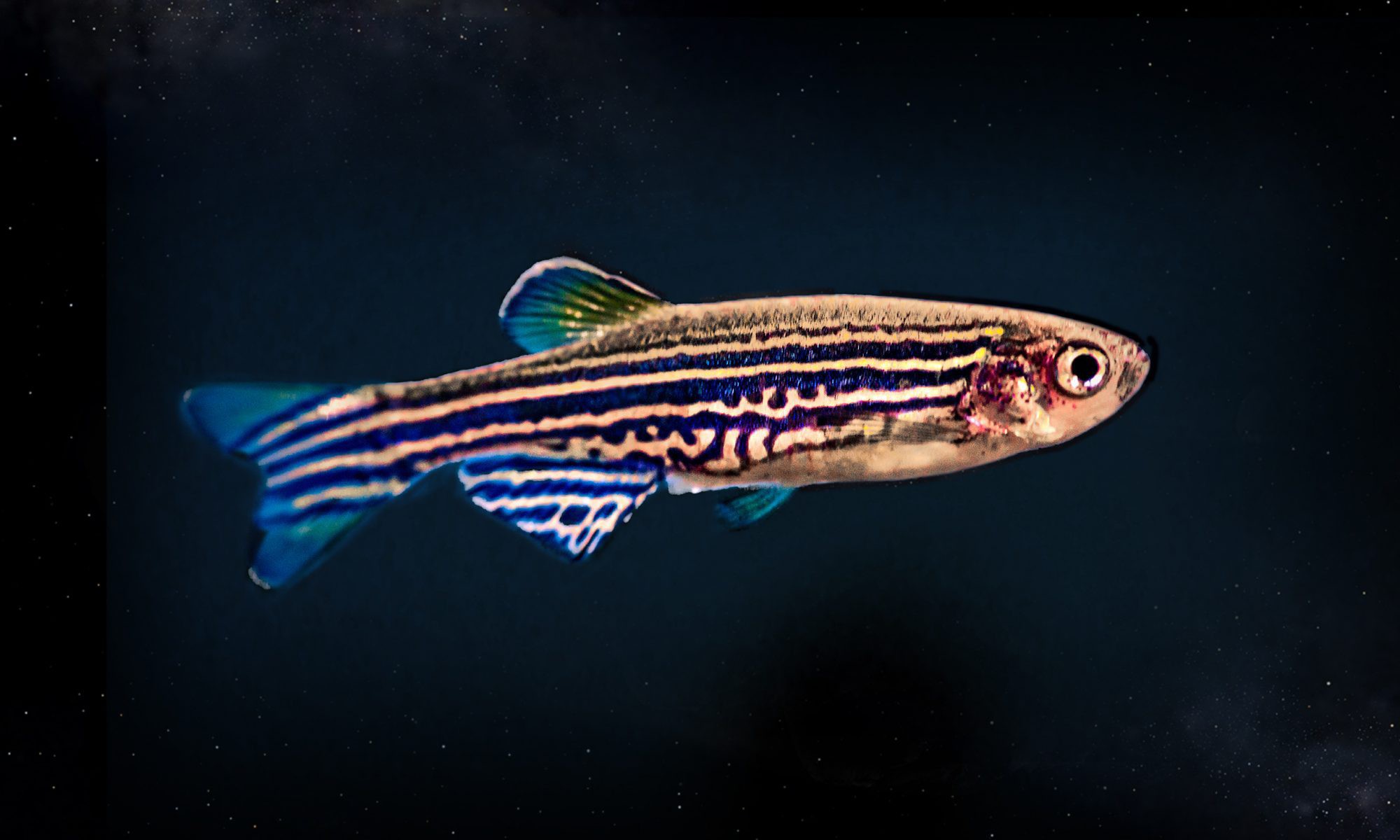
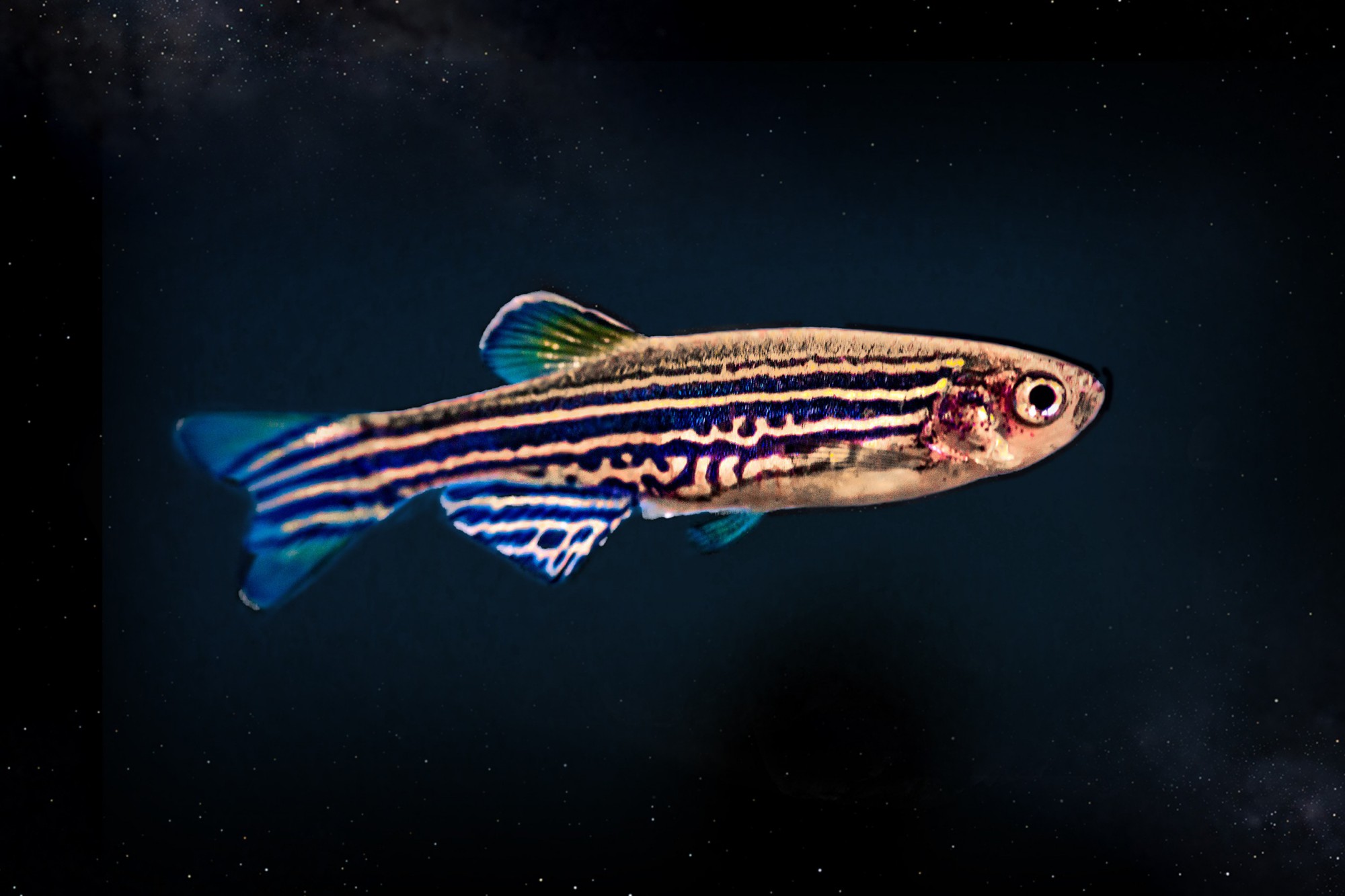
The Zebrafish larvae are the ideal model to study vertebrate physiology in space and to transfer the results to humans. In the “FISHinSPACE” project, the GIGA – Université de Liège will send a platform for microscopic observation of such zebrafish larvae into space. The device for automatic observation of individual larvae is a cheap and highly efficient system model for studying an entire living organism in space conditions. The biggest benefits of this model are the optimisation of human life in an extreme environment, and the exploitation of the space environment to research common health issues.
Benefits:
Zebrafish larvae are highly suitable to study vertebrate physiology under space conditions
Exploiting the space environment as a proxy for researching common health issues, such as aging, osteoporosis, or blood circulatory problems
Space flight market will benefit as life in extreme environments becomes easier
Pharmaceutical industry will benefit from an adaptable platform to develop and test new medicines
Modern satellites, especially micro and nano satellites, have little in-orbit processing capabilities and data storage capacities. The satellites are dependent on sending their data regularly to a ground station. Golbriak Space OÜ is developing a cloud computing infrastructure on the International Space Station (ISS) using the Bartolomeo platform, to serve other spacecraft that would not be able to afford on-orbit processing otherwise. The “Bartolomeo cloud” could be realised through a compact high-performance computing data centre installed on the ISS, interfaced to customer spacecraft through an optical and a radio frequency (RF) antenna terminal installed on the ISS. Potential ISS cloud services could reduce the time between data acquisition and availability, in order to introduce new capabilities such as automated feature detector for Earth observing spacecraft, enhanced spacecraft autonomy (cognitive satellites) and real-time machine learning on space data.
Benefits:
Reduction in time between data acquisition and availability
In-orbit spacecraft have the ability to use machine learning services
Opportunity to extend missions
Complementary services e.g. data storage and high-bandwidth data downlink
Shapecomm – Shaping the Future of Satellite Communication
Current communication systems are experiencing great technical changes but do not fully reach the theoretical data rate limits. Satellite communication, in particular, requires flexibility and higher transmission rates to cope with current demands, e.g., for inflight entertainment systems or high throughput satellites. Shapecomm showcased the innovative technology of “Probabilistic Amplitude Shaping” (PAS) and “Distribution Matching” (DM), which achieved a 2.5-fold rate increase in an optical transmission experiment over the Atlantic Ocean conducted by Facebook and Nokia Bell Labs. Based on the patented technology, the company’s objective is to develop a transceiver architecture building upon the DVB-S2X standard, which could support new standardization endeavours, possibly culminating in DVB-S3.
Benefits:
Increase the data rate limits of current communication systems, e.g. satellite communication links
Efficient use of existing resources (e.g. bandwidth), helping to serve and accommodate more users and provide a better experience to end users
Important enabler and pioneer for future applications that require high data rates
Transceiver modems can be designed and produced more flexibly and with lower costs
Economically efficient provision of reliable connections and high data rates in remote areas
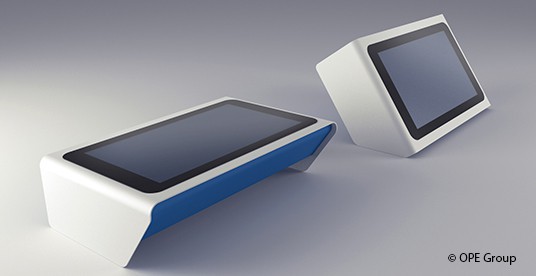
GIMOD – Graphene Interferometric Modulation Displays for VR/AR
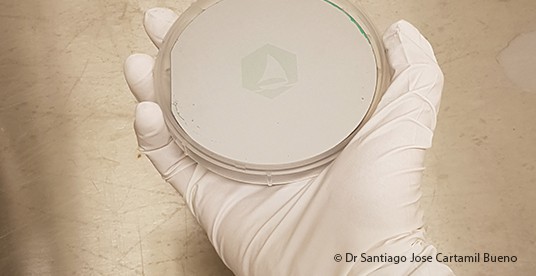
Future displays in astronaut helmets will need to integrate Virtual/Augmented Reality (VR/AR) capabilities for training and operation purposes. The screens of electronic devices with standard technologies consume the most power. Reflective-type displays (e.g. e-book readers) consume little power although current technologies cannot provide colourful images nor fast refresh rates to reproduce videos. Graphene Interferometric Modulation Displays (GIMOD) unite the advantages of the reflective-type technology (low power consumption) with those of standard technologies (video capability), in order to cater to the display requirements in future VR/AR visors. The SCALE project, implemented jointly with Gesellschaft für Angewandte Mikro- und Optoelektronik mbH (AMO) and Graphenea S.A., will commercialise the graphene technology to lead the new semiconductor industry of 2D materials.
Benefits:
Reflective-type display technology with high contrast in bright environments
Ultra-high resolution (>2500 ppi) with low power consumption
Ultimate refresh time (>1000 Hz)
Caters to the requirements of portable VR/AR visors
Nucleus VR – Connecting People and Information Worldwide in Real-Time
Human survival in space is highly dependent on life support systems, computers and equipment. Maintaining these complex systems requires support of hundreds of earth-based experts. Nucleus VR is removing the distance barrier, by allowing astronauts and experts to work simultaneously, as if they were together in the same place. Experts simply connect to the digital twin of the spacecraft and appear in the real spacecraft as a holographic companion. Data can also be placed on the digital twin and displayed in the real spaceship with Augmented Reality (AR). Thereby, challenges can be solved faster, and in a natural, intuitive and less stressful way.
Benefits:
Connecting astronauts and experts all over the world in the digital twin
The digital twin is built from existing CAD data using a simple drag-and-drop process
Many kinds of data can be pinned to the digital twin (live telemetry streams, PDF, video, 360° video)
Increase astronauts’ well-being through meetings with family and friends in relaxing virtual worlds
Compatible with most existing AR/VR (Virtual Reality) hardware: HTC VIVE, OCCULUS, Android AR, castAR, PC, HOLOLENS
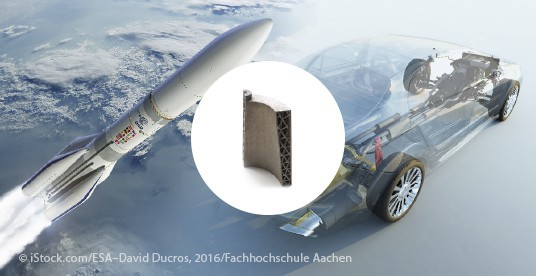
Technical components in space are often exposed to fluctuating temperatures, which can lead to degraded performances or reduced lifetimes. Infused Thermal Solutions (ITS) is an innovative concept to passively stabilize the temperature of thermo-elastic spacecraft components. This idea combines known concepts of phase change materials (PCM) with modern manufacturing techniques (3D printing). The phase change materials are embedded inside custom-printed, double-walled component structures, offering a standalone solution.
Benefits:
Temperature stabilisation
Reduced thermo-elastic deformations
Increased component lifetimes
Creation of complex lightweight “bionic” structures
Cost reduction
Technology transfer (spin-off), e.g. in the automotive industry