Additive Manufacturing for Space Using High-Performance
Polymers
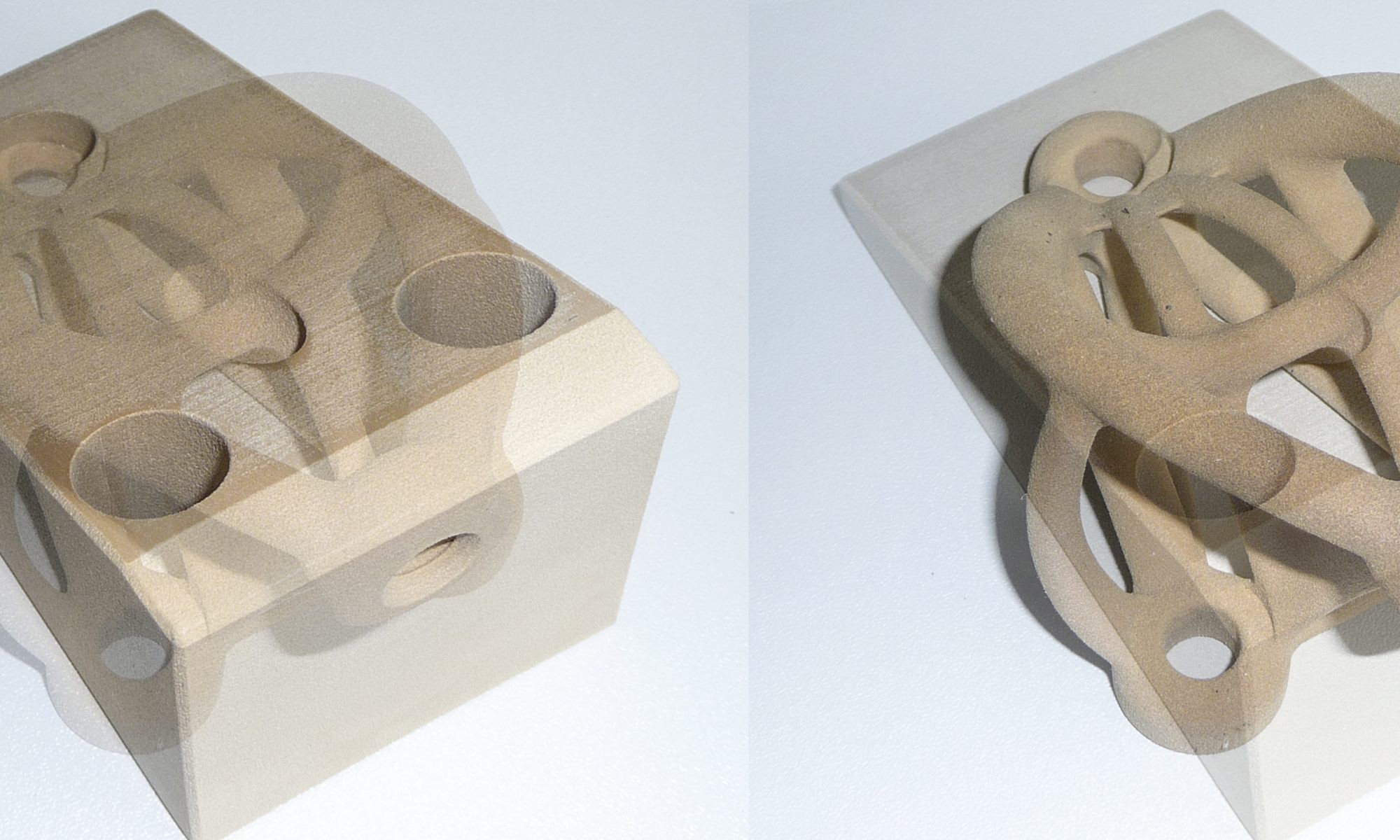
AMPFORS (Additive Manufacturing of Polymer Parts for Space) is seeking to replace the metal structural components used for space applications with lightweight polymer parts. These parts are produced by means of additive manufacturing, which is also known as 3 D printing. To compensate for their lower mechanical stability compared to meta 1, the polymer components are then outfoted with a metallic layer to form a “sandwich” composite. AMPFORS plans to use both the high-performance polymer PEEK and the less expensive material polyamide (PA). In addition to the space sector, this project’s key markets include aircraft manufacturing, mechanical engineering, tool-making, and medical equipment production.
Benefits:
Makes satellite structures up to 20% lighter and up to 50% less expensive
lncorporation of metal coatings improve the mechanical, electrical, and thermal properties of polymers; also prevents the emission of water and monomers
Additive Manufacturing process speeds up component design and production
Fraunhofer IST Brunswick, Germany Dr Andreas Dietz www.ist.fraunhofer.de ondreos.dietz@ist.frounhofer.de
Wall#E: Fibre-Reinforced Spacecraft Walls for Storing Energy
The idea behind Wall#E involves integrating energy storage functions into the support structures of spacecraft, which will significantly reduce the mass and volume of satellites without sacrificing performance. To this end, Wall#E utilises fibre-reinforced structures (which enjoy more and more popularity in aerospace engineering) infiltrated with innovative solid-state battery materials. While this project’s initial focus is on satellites, the underlying concept can easily be adapted to launch systems, space stations, and ground-based e-mobility applications.
Benefits:
Reduced satellite mass
Simpler, more compact constructions
Lower costs of development/launch
TU Braunschweig – Institute of Space Systems Brunswick, Germany Prof Dr-Ing Enrico Stoll www.space-systems.eu e.stoll@tu-bs.de
Technical components in space are often exposed to fluctuating temperatures, which can lead to degraded performances or reduced lifetimes. Infused Thermal Solutions (ITS) is an innovative concept to passively stabilize the temperature of thermo-elastic spacecraft components. This idea combines known concepts of phase change materials (PCM) with modern manufacturing techniques (3D printing). The phase change materials are embedded inside custom-printed, double-walled component structures, offering a standalone solution.
Benefits:
Temperature stabilisation
Reduced thermo-elastic deformations
Increased component lifetimes
Creation of complex lightweight “bionic” structures
Cost reduction
Technology transfer (spin-off), e.g. in the automotive industry
SUMSENS – Structure-Borne Ultrasonic Multi-Hop Sensor Network for the Temperature Monitoring of Satellites
The mechanical and thermal integrity of spacecraft will be crucial for future space missions lasting months, years, or even longer. Traditionally, wired sensors are used to measure all relevant parameters. SUMSENS offers the integration of a holistic wireless sensor network using the satellite structure itself for communication, in order to provide in-situ monitoring of the mechanical and thermal subsystem status. The SUMSENS sensor network consists of smart temperature sensor nodes, communicating among themselves via structure-borne ultrasonic waves. The core of each sensor node is a microcontroller platform providing all required data operations. SUMSENS integrates Augmented Reality (AR) to support visual system integration, monitoring and maintenance. The technology can be transferred from space to ground transportation.
Benefits:
Wireless sensor network instead of heavy, space-consuming network infrastructure consisting of cable clutter
Cost reduction due to flexible installation, easy expandability, low energy consumption and reduction of communication traffic
Silent Running – Intrinsic Structural Vibration Reduction for Carrier Rockets Using Metamaterials
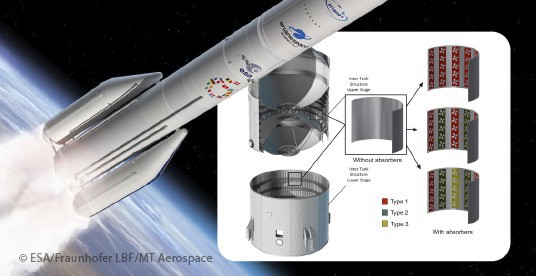
When launching and flying a rocket, vibrations must be reduced to such an extent that they do not cause damage to the payload and structure. In the “Silent Running” project, MT Aerospace and Fraunhofer LBF are using carbon-fibre-reinforced plastics (CFRP) with metamaterials, in order to reduce the vibrations that affect on the payload and structure during acceleration. Metamaterials combine the benefits of active and passive vibration reduction and are used, in the automotive industry, amongst others. “Silent Running” specifically targets to minimise vibrations in the upper stages of future Ariane carrier rockets. The innovative vibration dampers should be integrated into the load-bearing structure of the carrier rockets, so that the heavy damping elements conventionally used are no longer required.
Benefits:
Efficient rocket stages and complex payloads with longer service lives by minimising vibrations in the stage structures
Efficient rocket stages and complex payloads with longer service lives by minimising vibrations in the stage structures
Transporting of satellites with effective payloads and thus improved payload/cost ratio per launch
Spin-off into the automotive, aerospace and shipping industries
Multifunctional lightweight structures for satellites
Conventional satellite design separately considers functional, structural and protective requirements. Subsystems are not integrated into the primary structure, but applied at a later production stage.
Project aim: disruptive innovation in satellite design
Integration of functions into load-carrying structural parts (communication, thermal management, vibration control, diagnosis)
Concurrent optimisation of structural and functional properties with respect to mass and production processes
Validation by a demonstrator
Fraunhofer Institute for Structural Durability and System Reliability LBF Dr Dirk Mayer dirk.mayer@lbf.fraunholer.de
OCULUS – Optical Coatings for Ultra Lightweight Robust Spacecraft Structures
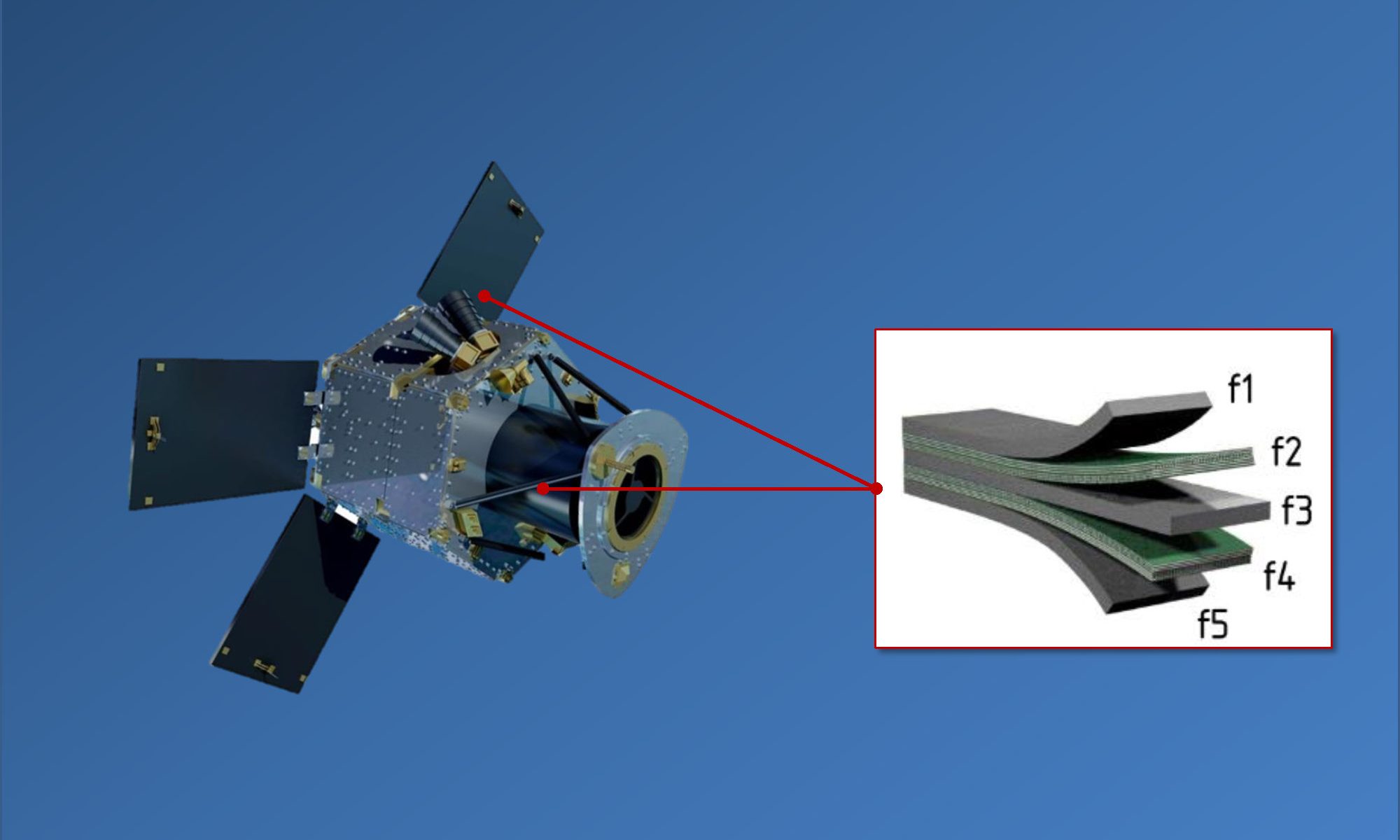
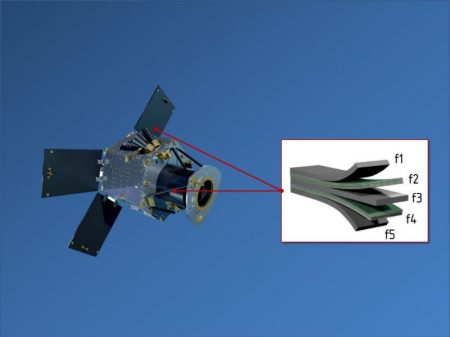
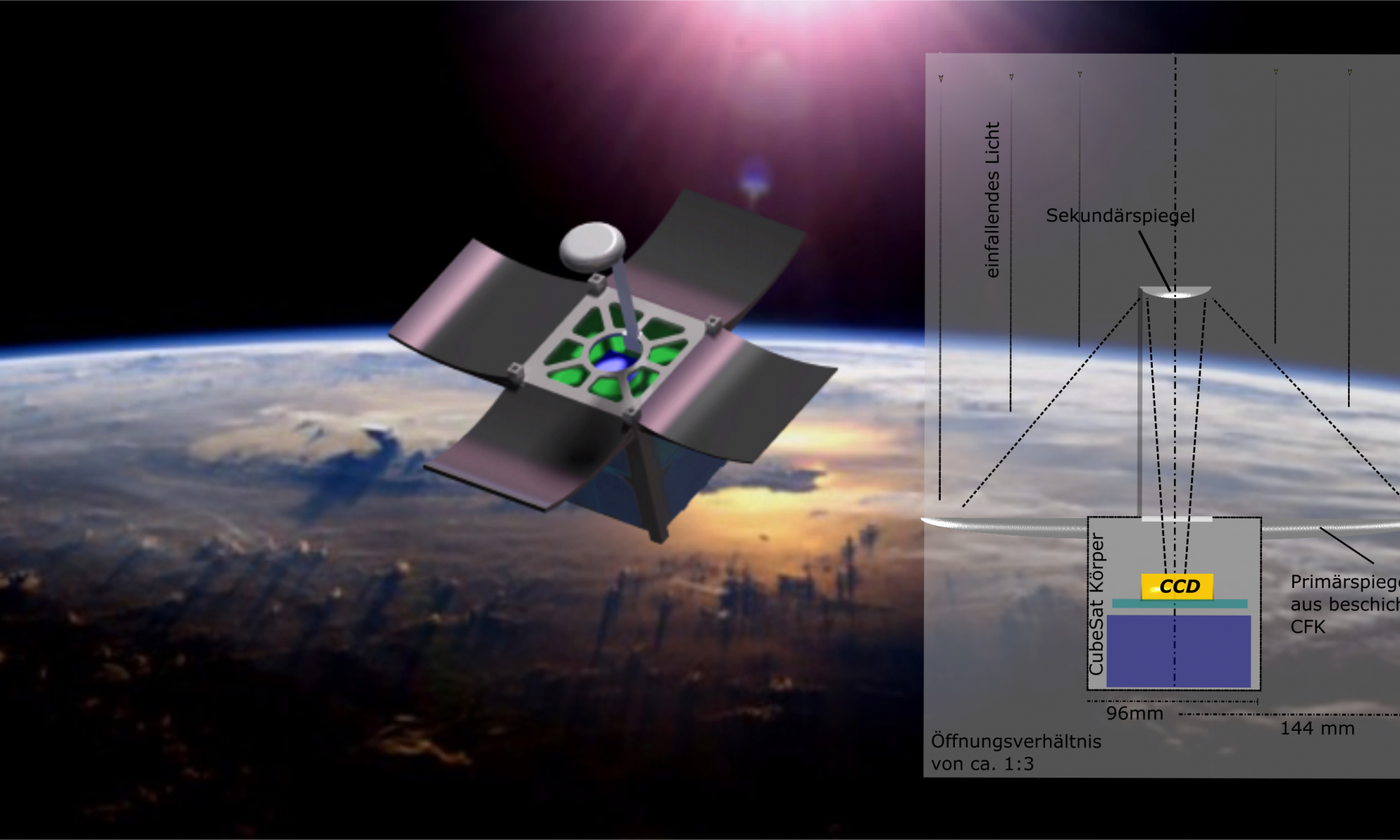
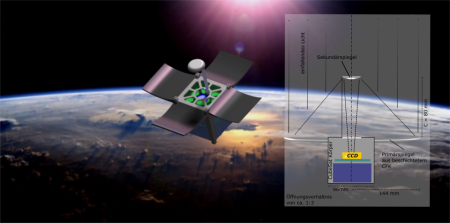
Low weight as well as high durability and accuracy for mirrors of space telescopes? New material solutions have great potential to make it happen! The objective is to combine innovative production processes of carbon-fibre-reinforced plastic (CFRP) structures and reflective coatings. By this means, lightweight optical mirrors can be developed for aerospace applications (e.g. remote sensing and astronomy) that exhibit versatile advantages over conventional mirrors:
Thermal stability (no cooling necessary)
80% to 90% weight reduction
Modularisation in production (large quantities using one tool)
Smart coatings enable multifunctional surfaces
Process transferable to mechanical engineering industry
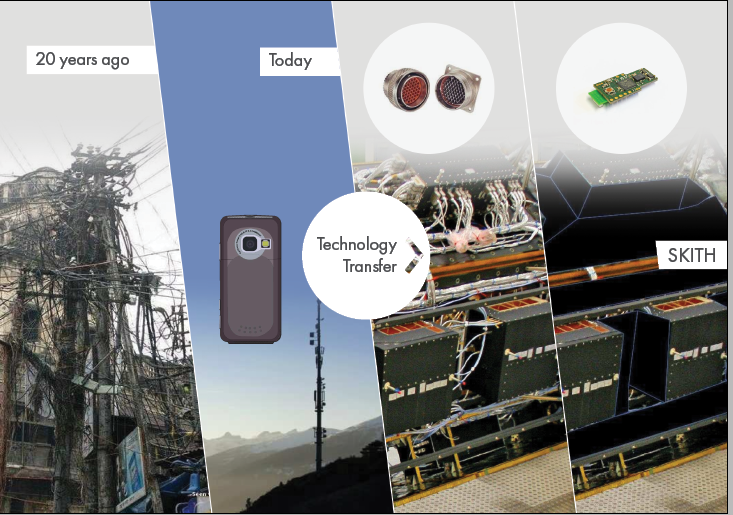
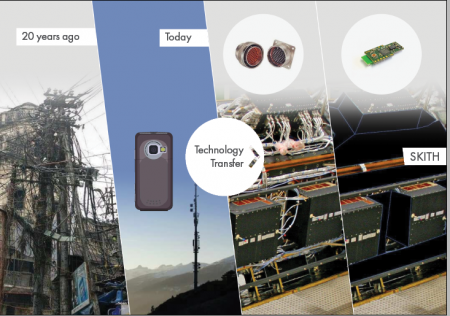
The harness for satellites has been necessary so far but also costly, heavy and a major risk factor. Skith aims to create the first wireless satellite, by using short range, high speed real time miniature radio communication links. By combining modular and fault-tolerant software with ultra-wideband technology from industry 4.0, a robust and adaptable system will be created.
Skith is aiming at:
Reducing the costs of integration and launches of satellites
Increasing the dependability of machines, especially of satellites and aircrafts
Increasing the Flexibility of control systems
Making the board computer independent from input/output (10) devices