Celestial – Products and Services for Deep Space Communication
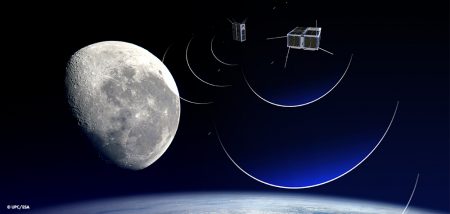
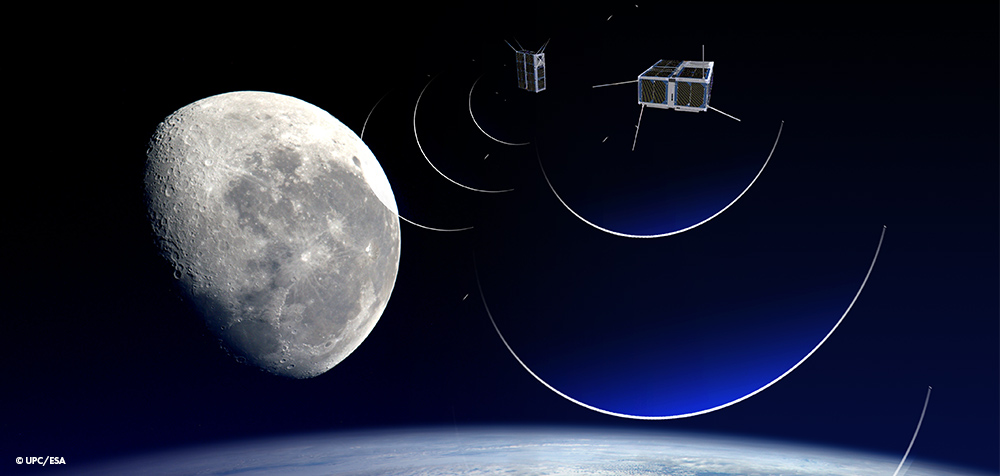
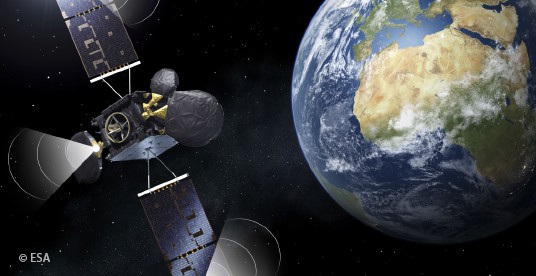
Moon missions are facing many challenges in new space exploration, and communication is one of them. The fact that not all locations on the moon are accessible to transmissions from Earth creates an obstacle to cislunar communication. Celestial aims to deploy a small satellite relay constellation in lunar polar orbit to overcome this barrier. A total of three satellites (plus one redundant satellite) will be deployed. Working on the S and X bands, this constellation will be able to communicate and relay data from lunar missions to ground stations on Earth. In addition, Celestial aims to provide its satellite communication system to missions seeking to explore high-radiation Earth orbits. This payload will be lightweight and radiation-hardened, ensuring longer life than the similar communication systems currently available. The biggest benefit for lunar missions lies in the reduced costs made possible by a low-weight communication system and the ability to reach lunar locations that are otherwise inaccessible.
Benefits:
Increased data transmission rates and continuous communication coverage of the lunar poles
Low power consumption for low-cost lunar missions
Access to lunar regions beyond the direct line of sight
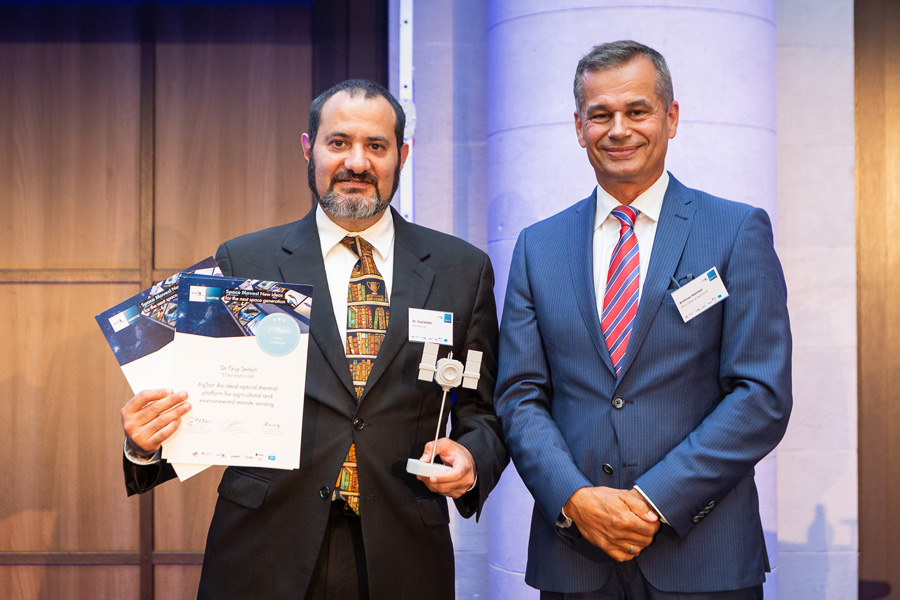
AgSat – An Ideal Optical-Thermal Platform for Agricultural and Environmental Remote Sensing
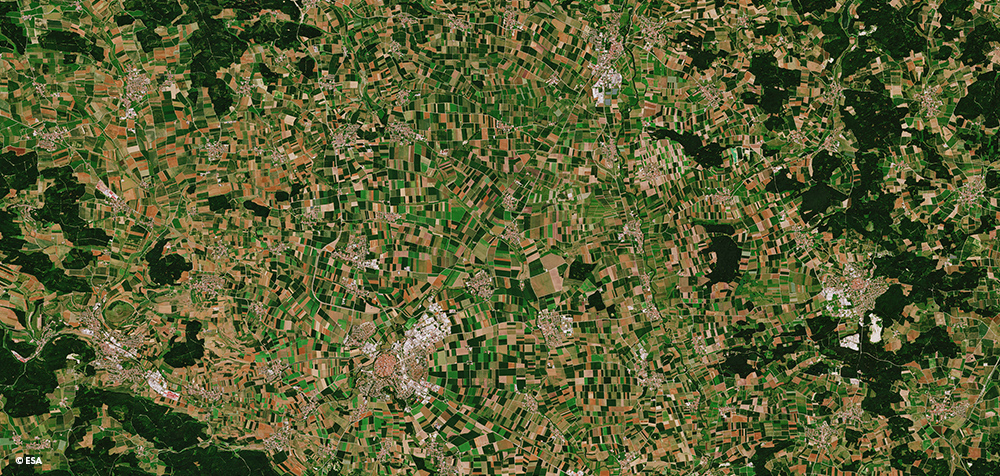
The growing human population, associated challenges related to climate change, and the insufficiency of existing terrestrial sensing systems require new sources of Earth observation (EO) data. Critical parameters like non-photosynthetic vegetation (NPV) and evapotranspiration (ET) are not properly estimated by existing operational EO systems. NPV is important for estimating fire risk, tillage intensity, and the risk of soil erosion due to water and wind. ET is important for agricultural production and water usage. AgSat will offer an advanced multispectral satellite concept that will not only measure those parameters, but also include on-board artificial intelligence and data processing to minimise data downloads while using laser-based systems for more efficient data transmission. AgSat will deliver custom, need-driven, cloud-free data products directly to stakeholders within minutes of acquisition. Science data will be available to end users under an open data policy.
Benefits:
Data continuity with Sentinel-2/Landsat missions
Open data for science products
On-board anomalous event detection (fires, floods) and data product creation, including downlinking to end users
AC Biode – The World‘s First Standalone AC Battery
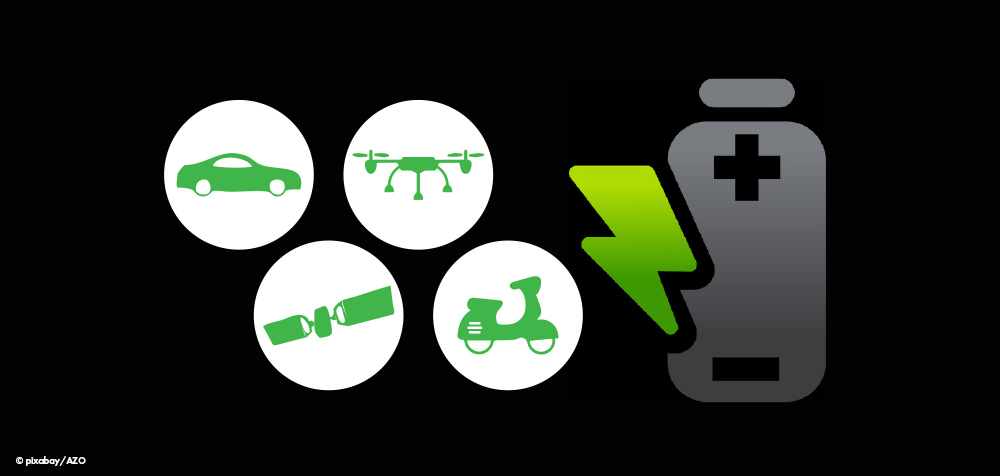
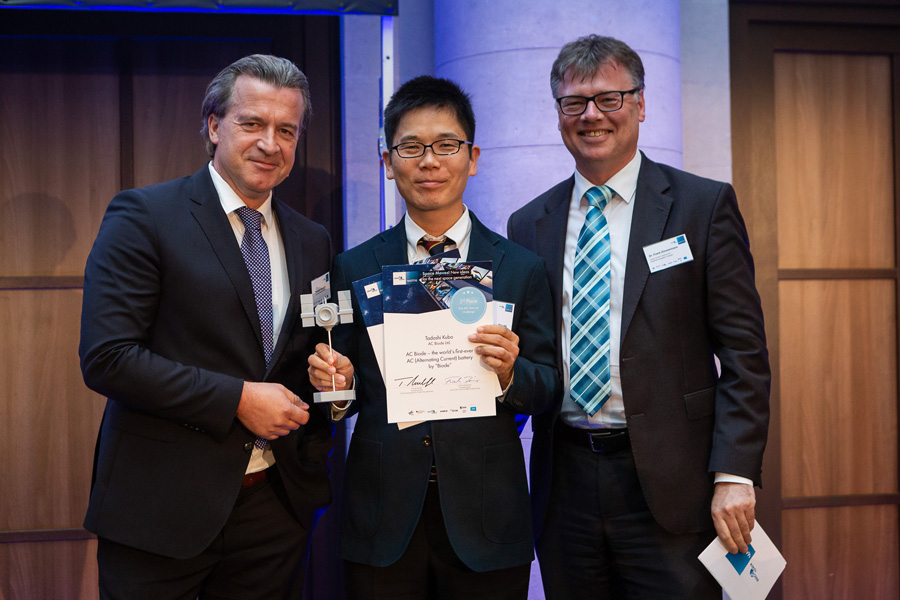
The demand for high-capacity batteries in the space industry has significantly increased and battery capacity is still insufficient in terms of mobility and safety. AC Biode Ltd. is developing the first-ever standalone battery based on alternating current (AC). Biode features the characteristics of both anodes and cathodes. Thanks to a special electric circuit also found in particle accelerators, the system offers more V/Ah flexibility, requires 30% less space, and is safer than every type of regular direct-current (DC) battery. Conventional batteries use DC, which leads to power loss when electricity is converted from AC to DC. AC Biode Ltd. will utilise existing materials and battery production lines to penetrate the market faster than competitors that use new materials or types. Applications are possible in space and in connection with drones, electric vehicles and scooters, and energy storage.
Benefits:
Battery is up to 30% more compact and reduces conversion losses
MoonFibre – Spinning Technology Fibres from Lunar Rock for Direct Use on Earth’s Satellite
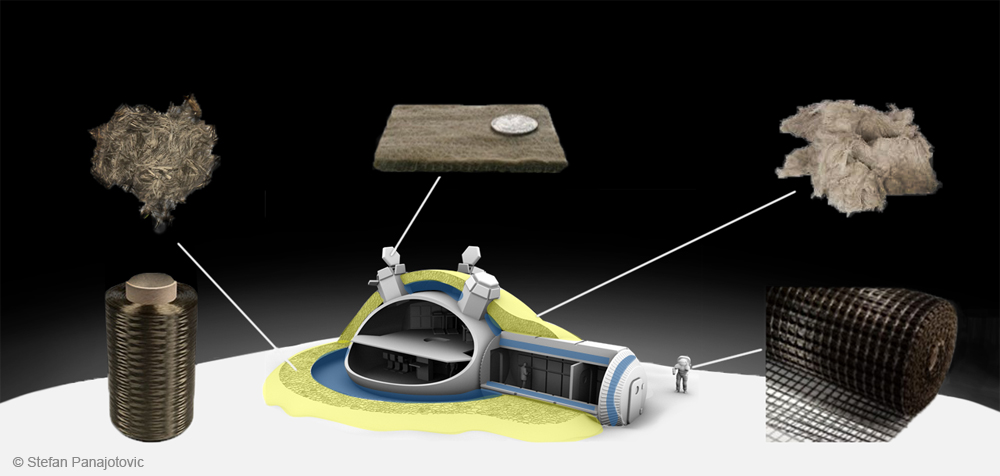
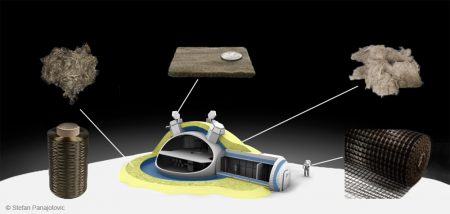
Private and public institutions all over the world pursue one common mission: a manned station on the moon. The costs of rocket flights alone to transport such a station to the moon would be approximately EUR 1,000,000 per kilogramme. This is why numerous research teams around the world are working on solutions to use moon rock to manufacture 3D-printed structural components on-site. The MoonFibre project at RWTH Aachen University is developing a spinning system that will be able to produce fibres directly from lunar rocks. These fibres could be used not only to stabilise the 3D-printed structure of the lunar station, but also for thermal isolation, filter systems, or the textiles of astronaut suits. RWTH Aachen intends to further develop a spinning process already used in industry for basalt fibres as a compact and easily transportable system for use on the lunar surface. The spinning process is to be tested under zero gravity within an in-orbit demonstration experiment. The proof-of-concept will serve as the basis for the future on-site production of fibres and textiles on the moon.
Benefits:
Permanent settlements on the moon and technology transfer into space
Cost-effective on-site production of fibres and textiles on the lunar surface
Development of a robust, automated, and miniaturised spinning technology
SPACE IC produces highly integrated and versatile microchips for efficient power conversion. In satellite payloads, these chips help solve the power interface problem which electronic modules face. Individual power interfaces limit the reusability of these modules and make power distribution systems both complicated and inflexible. This is where the Standard lntermediate Power Bus Interface comes into play, which SPACE IC is going to define along with experts in power management. A standard interface of this kind will aid satellite payload manufacturers in increasing efficiency and Aexibility of power distribution while reducing complexity and costs.
Benefits:
Flexible, efficient power distribution
Simplified development and production
lmproved reusability and risk reduction
Multiple cost-reduction effects, from reduced weight and effort to mass production
SPACE IC GmbH Hanover, Germany Volodymyr Burkhay www.space-ic.com info@space-ic.com
Flow Front Detection with Fibre-Optic Sensors in the Rotating Infusion
Process for CFRP (carbon-Rber-reinforced polymer) Components
In the boosters of the Ariane-6 launch vehicle MT Aerospace AG of Augsburg, Germany, is producing some of the space industry’s largest CFRP components. Measuring around 12 metres long and 3.4 metres in diameter, these parts are manufactured using a vacuum infusion process in which dry carbon fibres are wound around a form and then submerged in resin. Intelligent sensors are needed to monitor the flow front of the resin as it is introduced and optimise the overall process. For this purpose, MT Aerospace AG is now working with Fraunhofer LBF on incorporating glass fibre sensors into its components during the winding phase. During infusion, each component has to be turned slowly in an oven. This delicate step is where the sensors monitor the distribution of the resin.
Benefits:
Digitalised manufacturing optimises the process while reducing costs
Visualisation of previously hidden processes and corresponding digital controls provide for increased process stability
Information gained from sensors makes it possible to automate the Aow of resin and ensure quality and repeatability
Process data also improves control and accelerates ramp-up to serial production, which makes the company more competitive
Fraunhofer LBF Darmstadt, Germony Martin Lehmann www.lbf.fraunhofer.de martin.lehmann@lbf.fraunhofer.de
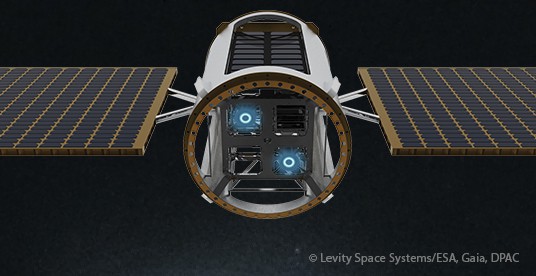
The launch capacity of launch providers is not always sufficient to meet the increasing demands on the flexibility of microsatellite operators. Levity Space Systems is developing an electrically propelled microlauncher kickstage, to transport small satellites into higher orbits beyond the microlauncher capabilities. The additional stage establishes a new alternative for satellite operators, by expanding mission capabilities and reducing launch costs, while increasing the launch performance of the microlauncher. The goal is to provide satellite operators with the opportunity to use microlaunchers as a viable alternative to conventional rockets, as they are able to reach low Earth and lunar orbits, reducing launch times, as well as reliable satellite constellation maintenance by specifically replacing defective satellites.
Benefits:
Transport of small satellites into higher orbits (access to lunar orbit using microlaunchers)
Reduction of the launch interval from 24 to 3 months
Reduction of launch- and opportunity costs
Deployment and maintenance of microsatellite constellations
Avoidance of secondary payload restrictions
Increasing number of possible satellite concepts and applications
Golden Fleece – In-Space Nanometal 2D Printing Demonstration
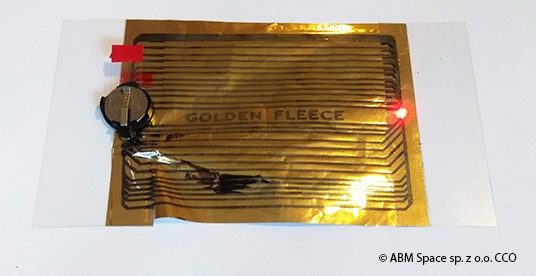
Golden Fleece is an intelligent solar sail concept used for spacecraft propulsion. ABM Space and AMEPOX Microelectronics developed a production process with a 2D-printing technology, allowing the solar sail to be covered with in-situ nanometal ink to place electronic circuits on the sail substrate. Nanometal has outstanding and diversified mechanical, thermal and electrical properties which can be used for various applications in the field of space materials. The development of this 2D-printing method will facilitate in-orbit production and utilisation of metals gained in the future, particularly in-situ from the Moon and asteroids. The technology enables flexible production in space, spare parts production from lightweight material and mass production from future in-situ resources.
Benefits
Flexibility of electronics production in space
Flexibility of production of lightweight structures in space
Nanosilver as a biocide allows sterile structures and reductions in cleanroom costs
Shapecomm – Shaping the Future of Satellite Communication
Current communication systems are experiencing great technical changes but do not fully reach the theoretical data rate limits. Satellite communication, in particular, requires flexibility and higher transmission rates to cope with current demands, e.g., for inflight entertainment systems or high throughput satellites. Shapecomm showcased the innovative technology of “Probabilistic Amplitude Shaping” (PAS) and “Distribution Matching” (DM), which achieved a 2.5-fold rate increase in an optical transmission experiment over the Atlantic Ocean conducted by Facebook and Nokia Bell Labs. Based on the patented technology, the company’s objective is to develop a transceiver architecture building upon the DVB-S2X standard, which could support new standardization endeavours, possibly culminating in DVB-S3.
Benefits:
Increase the data rate limits of current communication systems, e.g. satellite communication links
Efficient use of existing resources (e.g. bandwidth), helping to serve and accommodate more users and provide a better experience to end users
Important enabler and pioneer for future applications that require high data rates
Transceiver modems can be designed and produced more flexibly and with lower costs
Economically efficient provision of reliable connections and high data rates in remote areas
SUMSENS – Structure-Borne Ultrasonic Multi-Hop Sensor Network for the Temperature Monitoring of Satellites
The mechanical and thermal integrity of spacecraft will be crucial for future space missions lasting months, years, or even longer. Traditionally, wired sensors are used to measure all relevant parameters. SUMSENS offers the integration of a holistic wireless sensor network using the satellite structure itself for communication, in order to provide in-situ monitoring of the mechanical and thermal subsystem status. The SUMSENS sensor network consists of smart temperature sensor nodes, communicating among themselves via structure-borne ultrasonic waves. The core of each sensor node is a microcontroller platform providing all required data operations. SUMSENS integrates Augmented Reality (AR) to support visual system integration, monitoring and maintenance. The technology can be transferred from space to ground transportation.
Benefits:
Wireless sensor network instead of heavy, space-consuming network infrastructure consisting of cable clutter
Cost reduction due to flexible installation, easy expandability, low energy consumption and reduction of communication traffic