ivilion – Multifunctional structural cooling for EVs
Electric vehicles (EVs) face several key challenges, particularly high costs, long charging times, and limited range. Fast charging is critical to accelerating EV adoption, but it typically generates significant heat, which is often managed only through complex and costly immersion cooling systems.
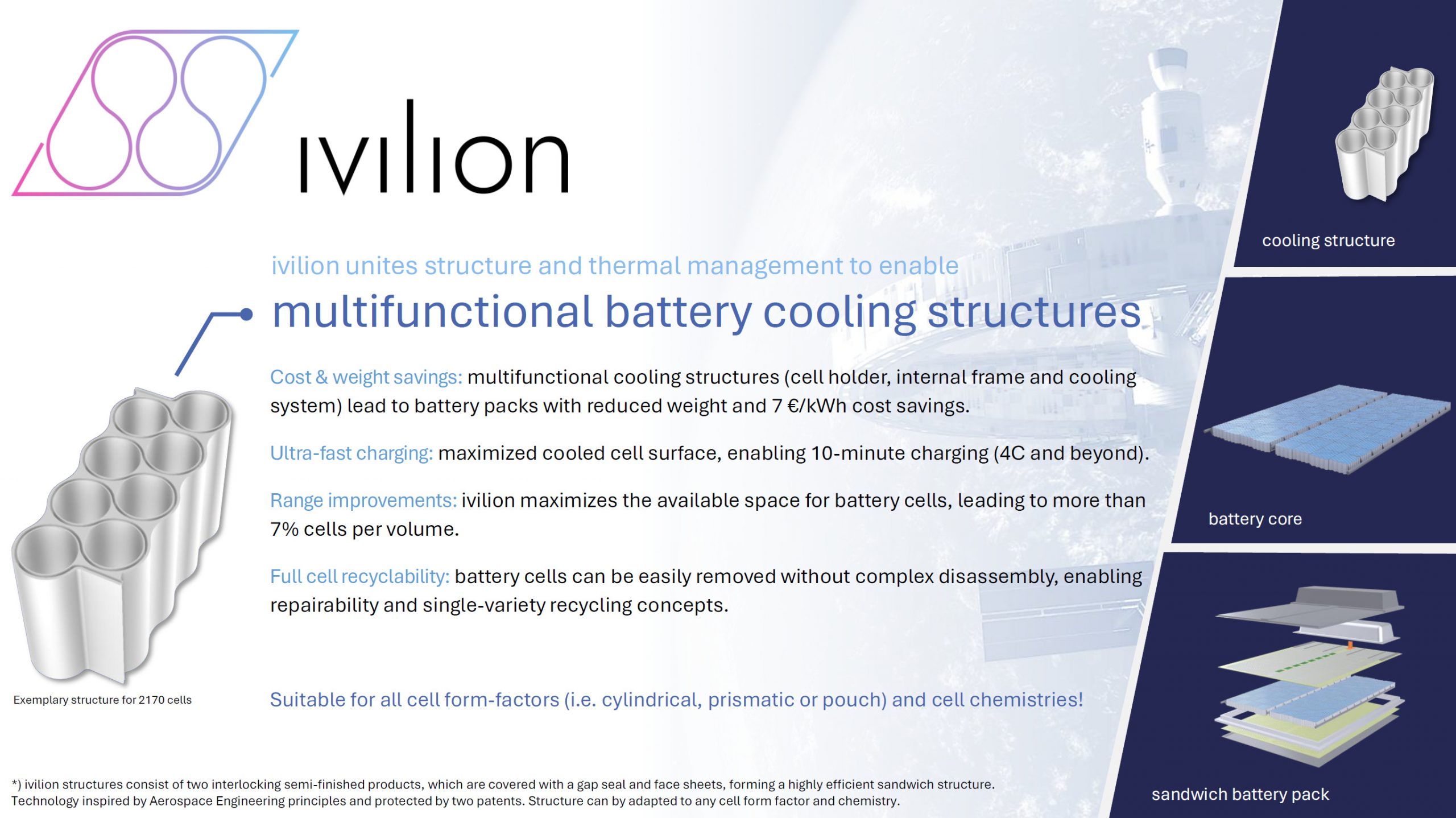
ivilion GmbH addresses this challenge with innovative battery cooling solutions and advanced battery pack designs for mobility applications. At the core of its technology is a multifunctional cooling structure that simultaneously acts as a cell holder, thermal management system, and structural element of the battery pack. These structures can be directly integrated into the battery, reducing the number of components and system complexity.
This multifunctionality enables cost savings of up to €7 per kWh and improves energy density at the pack level. Additionally, the significantly enlarged cooled surface area achieves cooling performance comparable to immersion systems, allowing for high C-rates during fast charging.
ivilion’s technology supports faster charging, longer driving ranges, and lower production costs—and is compatible with all cell formats and chemistries.
Benefits:
Cost and weight savings for battery packs through multifunctional cooling structures.
Improved range: ivilion maximises the available space for battery cells, resulting in more than 7% cells per volume.
Complete recyclability of the cells: Battery cells can be easily removed without complicated disassembly, enabling repairability and single-origin recycling concepts.
Space missions generate ever-increasing amounts of data. As their complexity grows and telemetry volumes increase, ensuring the health of spacecraft becomes more challenging.
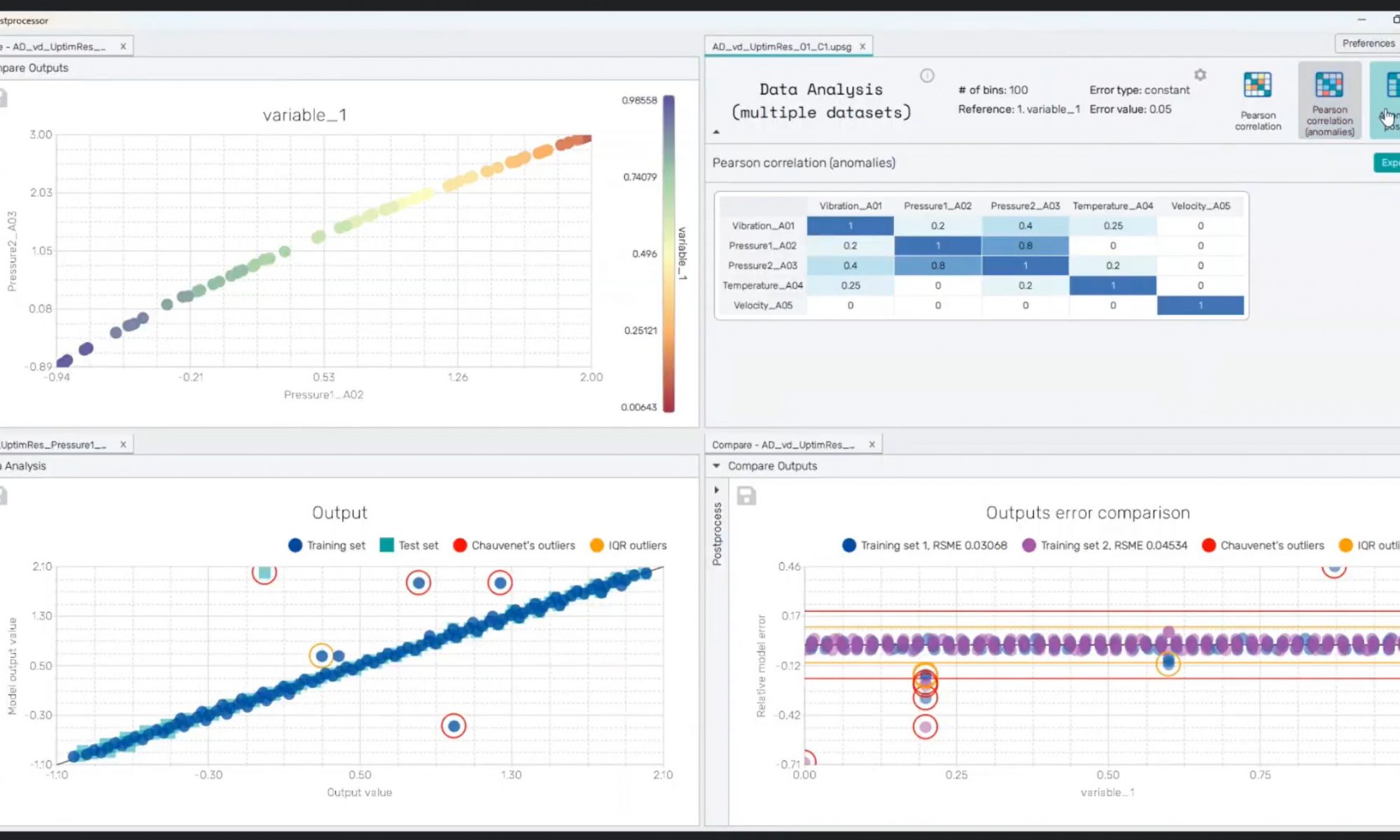
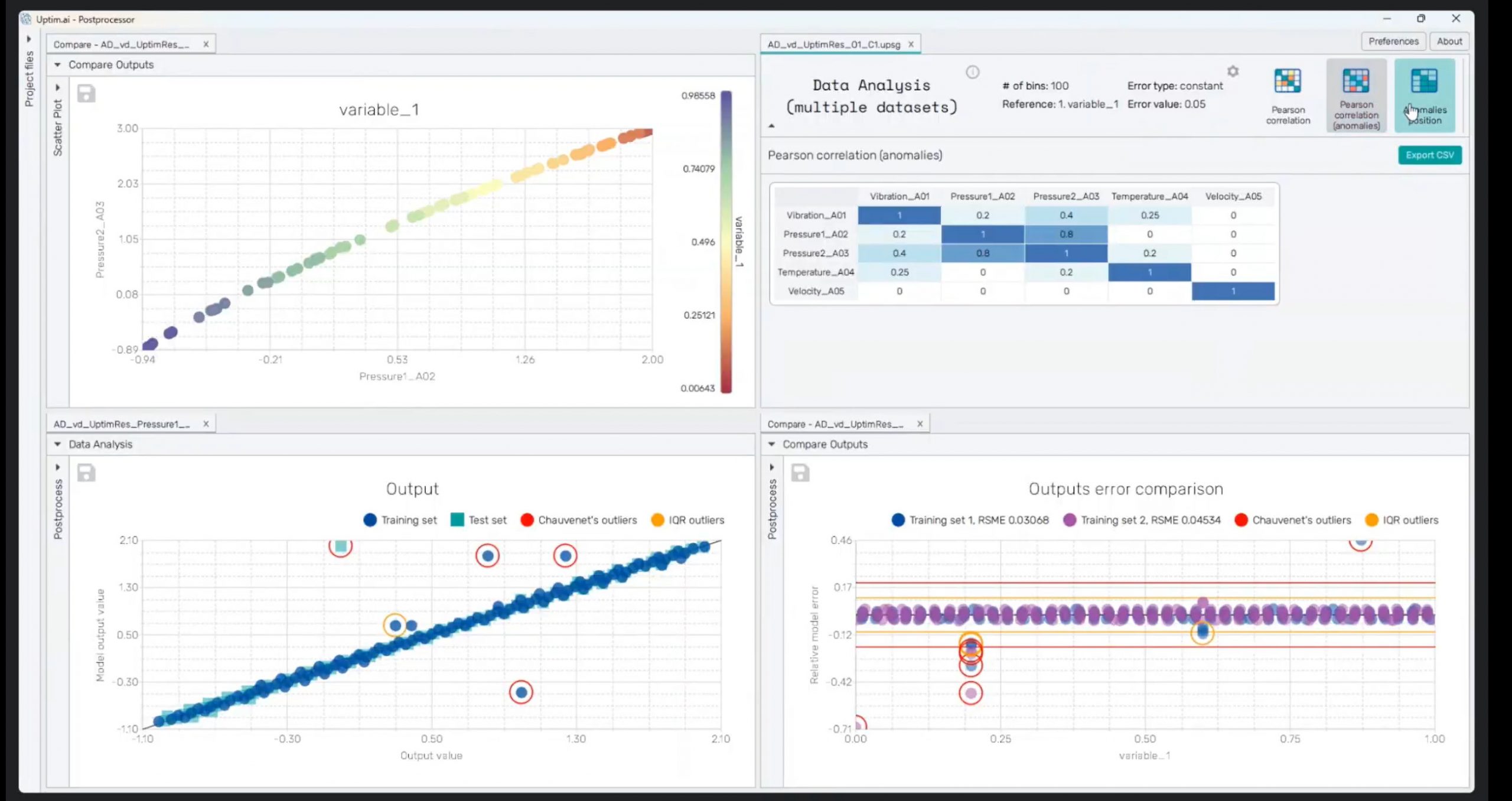
PADS is an advanced, AI-based system that automatically monitors and analyses spacecraft data in real time. This ensures higher anomaly classification accuracy and reduces false alarms. By automating anomaly detection, the system minimises the need for manual telemetry analysis, reduces operational costs and supports fleet-wide monitoring for scalable spacecraft diagnostics. It enables faster and more reliable decision-making, thereby improving mission success rates and operational efficiency.
Built on proven aerospace applications, PADS brings next-generation intelligence to satellite and launch operations, enabling smarter, safer and more efficient space missions.
Benefits:
This AI-powered anomaly detection solution enhances spacecraft reliability by predicting deviations before failures occur.
The system enables faster response times, improved data utilisation and unique insights into anomaly problematics.
Reduction of operational costs through the automatic processing of data.
Proactive, predictive model that addresses potential issues before they escalate.
Heavy metal pollution from industries such as mining, electroplating and leather tanning affects millions of hectares of land around the world, threatening biodiversity and human health.
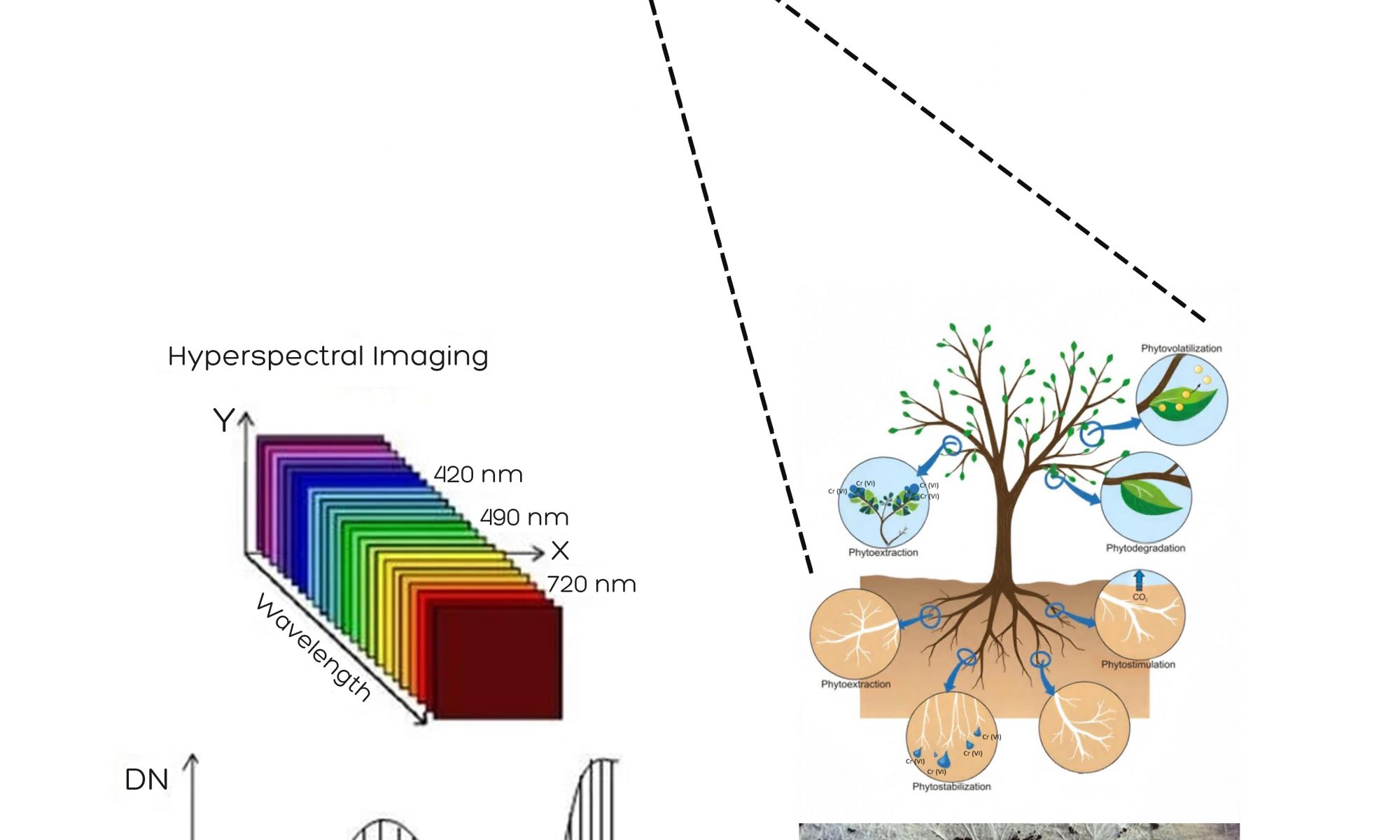
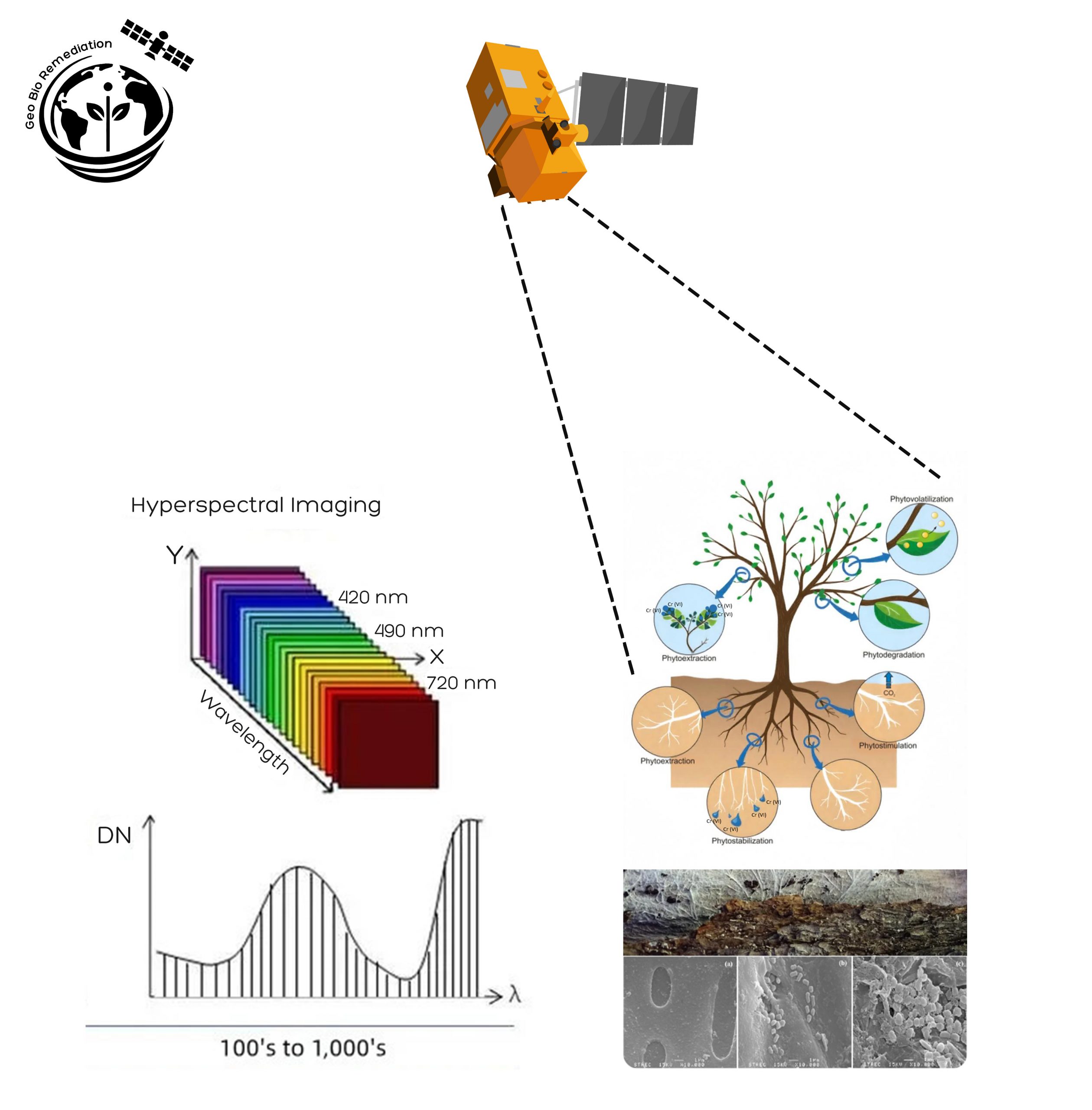
GeoBioRemediation is an innovative solution that uses space technology and AI-driven analytics alongside bioremediation techniques to tackle heavy metal pollution in soil and water. By using Sentinel-2, EnMAP hyperspectral imaging, and IoT sensors, it enables real-time monitoring of contamination and provides predictive insights, thereby empowering industries, municipalities, and policymakers to take action. The project offers a cost-effective, scalable, and sustainable alternative to traditional remediation methods by integrating biochar-bacteria reactive zones and phytoremediation. Its applications span the mining, manufacturing, agricultural, and biodiversity conservation sectors, supporting global environmental and climate resilience efforts.
Benefits:
Cost savings: Reduces site survey and remediation costs by up to 70%.
Faster detection: Contamination is detected in days instead of months.
Automated monitoring: AI-powered continuous surveillance eliminates the need for expensive manual sampling.
Sustainable clean-up: Biochar-bacteria zones, phytoremediation and microbial bioremediation safely convert toxic Cr(VI) to Cr(III).
Preflet – The most adaptive AI powered energy manager & avoided emission reporting
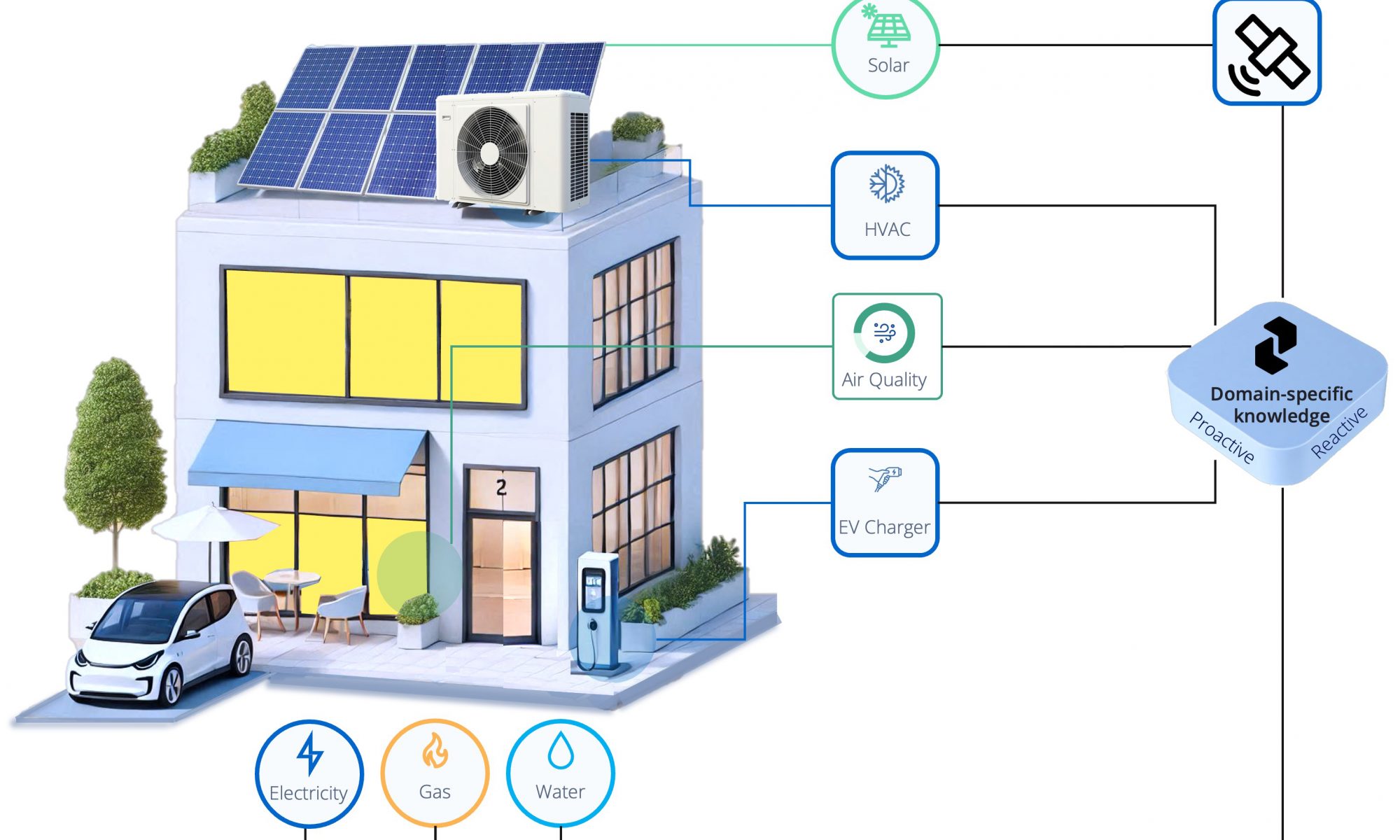
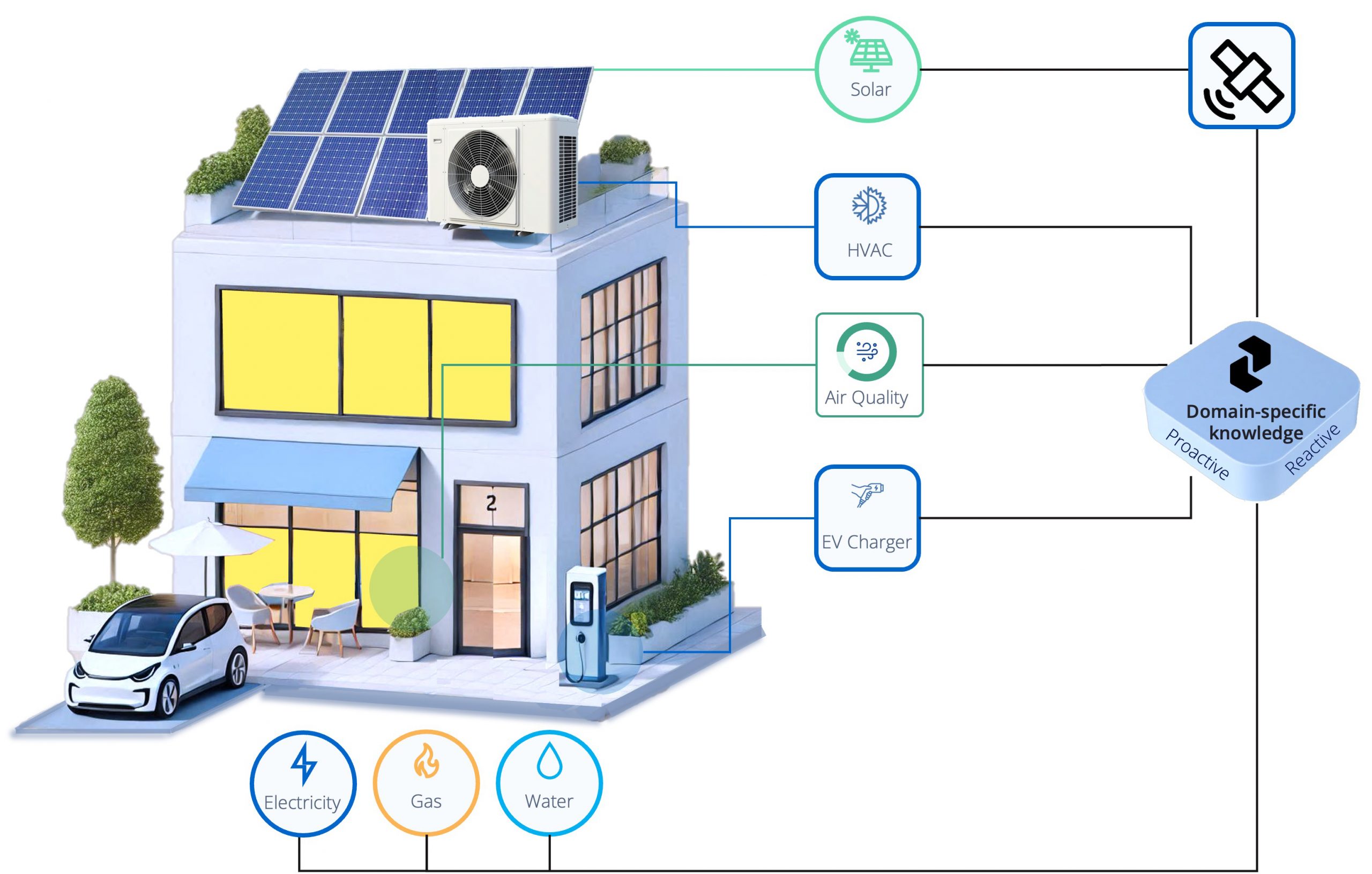
Preflet is an AI-powered platform designed to analyse and reduce building energy consumption. It identifies the causes of energy losses and suggests ways to reduce consumption, helping building managers to lower their carbon footprint and costs.
The platform combines cutting-edge, AI-driven energy optimisation with satellite data and IoT technology. It intelligently analyses real-time data from IoT sensors, weather forecasts and satellite imagery to optimise energy consumption, reduce costs and enhance sustainability. Preflet provides tailored solutions for different building types, helping property owners and managers to reduce their carbon footprint and energy expenses. With a focus on smart integration and innovative AI algorithms, the platform empowers businesses to take control of their energy usage and contribute to a greener, more efficient future.
Benefits:
Actionable insights are identified through a benchmark based on the analysis of thousands of buildings as well as satellite and renewables data.
Proactive AI: Preflet notifies users when inefficiencies occur and suggests mitigation actions, requiring little to no effort from users.
Self-learning: Preflet continuously learns from human feedback and adapts to evolving needs.
Affordable: It streamlines processes and compliance to save time and reduce effort while remaining cost-effective for buildings of any size or complexity.
Hyposto energy storage solutions for optimising power supply in space missions
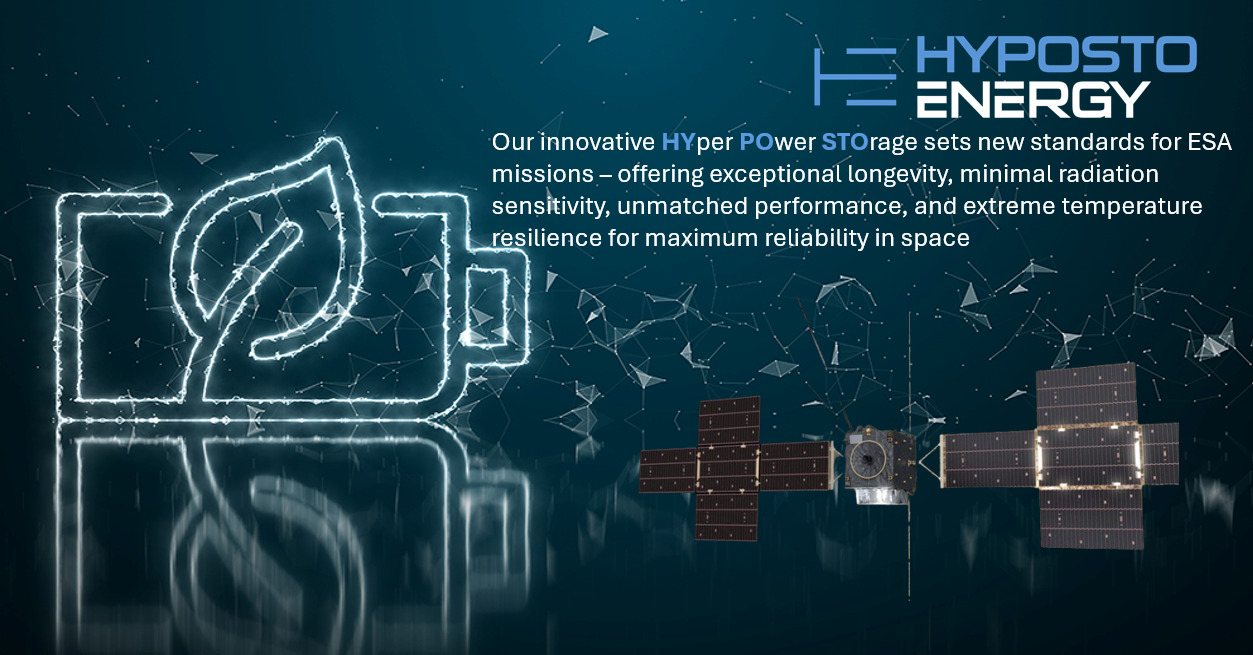
The market for energy storage solutions in the space sector is growing continuously. There is a need for new energy storage systems that can withstand extreme conditions such as radiation, temperature fluctuations, and long operational durations, because conventional lithium-ion batteries face limitations due to their limited cycle life, temperature sensitivity, and radiation vulnerability.
Hyposto Energy is developing lithium-titanium-oxide (LTO) batteries for the space industry, particularly satellite operators, space organisations, and private companies, to optimise the power supply of satellites and enhance their lifespan and cost efficiency. LTO batteries offer high cycle life, radiation resistance, and temperature tolerance, making them ideal for space applications. Additionally, they allow for the integration of solar energy and serve as an uninterruptible power supply (UPS), allowing critical systems to be continuously powered.
The technology could also be applied to spin-off applications in renewable energy and PV home storage on Earth.
Benefits:
LTO batteries offer up to 25,000 charge cycles (five to ten times longer than lithium-ion batteries) to ensure longer durability, which is crucial for the long-term operation of space systems.
Radiation-resistance, making LTO batteries ideal for space, where radiation can shorten the lifespan of electronics.
Wide temperature tolerance of -40°C to +70°C and robustness against extreme vibrations, ensuring reliability in harsh environments.
“Moon Village” is considered one of the most important projects of manned space flight. However, the long-term energy supply for the urbanisation of the Moon has not yet been clarified. Temperatures vary between -170 °C and +120 °C, and solar energy is unavailable during the two week long moon nights. There are no fossil fuels on the Moon. The energy supply must be secured with lunar regolith, a mixture of different metal oxides. Current storage systems, such as batteries, heat accumulators or mechanical storage units, lack the capacity for long-term supply. The Fraunhofer IST and ICT are developing a process by which metallic iron can be extracted from regolith and used as a non-fossil fuel. Unlike fossil fuels, the combustion products are solid and can be collected. They are recycled in a novel process and can be reused. The unique solution uses a direct electrochemical process to recycle the iron oxide in order to produce iron again, bypassing the previously known hydrogen route. This makes the process very efficient. It operates at temperatures below 100°C. The process can be used terrestrially in modified power plants or combined heat and power plants and thus makes a significant contribution to climate protection (decarbonisation).
Benefits:
Circular economy
Time-independent energy supply (day/night) on the Moon
Iron fuel is extracted from lunar regolith
On Earth, the process makes an important contribution to decarbonisation
Combustion products are recycled by means of excess electricity
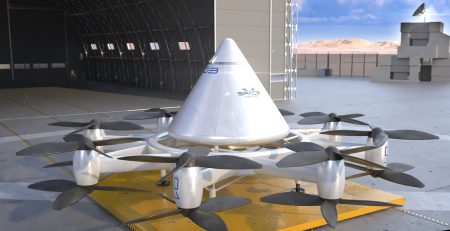
Spacecopter – A Novel Technical Approach for Reusable Space Launch Vehicles
The Spacecopter concept provides a new approach for reusable space launch vehicles that will not only drastically reduce the transportation cost for payloads into orbit but also has the potential to fundamentally revolutionise spaceflight. By combining known and well-established technologies from the automotive, electric flight and chemical battery industry, the Spacecopter project is a low-risk but highly innovative answer to the problem of high transportation costs for orbital payloads. Utilising electrically-driven propellers for the initial launch phase and to return rocket stages to the ground will not only reduce costs but also reduce the mechanical and acoustic loads for the payload. The Spacecopter concept will allow a commercial airline type of operation with only minor check-out procedures between flights. This not only allows completely new market approaches and business opportunities for launch service customers but will, in the long term, squeeze all classic expendable launch vehicles out of the market.
Benefits:
Cost reduction for space launch services of up to 80%
Sustained exposure to high-energy radiation can cause significant damage to both human and spacecraft life in space. Understanding the effects of radiation, as well as developing technology to counter its effects, necessitates a thorough understanding of the radiation environment. The current capability allows us to study radiation around the near-Earth environment through statistical and analytical models. However, there is a paucity of empirical data that can aid accurate assessment of the environment. Digantara intends to fill this gap through actionable intelligence by measuring proton fluence and, as a result, proton radiation in near-real-time using in-situ radiation monitors. Digantara is developing ROBI – Radiation Monitor. The name ROBI means ‚Sun‘ in Sanskrit/Bengali, signifying the extensive presence of protons in space. ROBI is a proton fluence monitor that measures proton flux in real time. High-energy protons account for 95% of any solar event. Thus, measuring proton fluence is a good measure of ionising radiation in the near-Earth environment.
HELIOS – The next step in interplanetary transportation
Chemical and electric space thrusters occupy opposite positions on the propulsion spectrum. The choice is to use chemical propulsion with a short but strong thrust-pulse and low efficiency in fuel utilisation, or electric propulsion with continuous long-term but weak thrust and high efficiency in converting fuel into momentum for the spacecraft. There is a big gap in thruster parameters between these main thruster species; a niche for electric high-thrust propulsion like Helios. To guarantee the achievement of highly efficient fuel utilisation, the Helios high-thrust device is basically an electric propulsion system with the benefit of boosting fuel efficiency by coupling external electrical energy in thrust generation. Based on this high momentum generation per fuel particle, the Helios propulsion concept offers the capability of high momentum change per time; high thrust completes the basic benefits of electric space propulsion.
Benefits:
Helios high-thrust electric propulsion combines the flexibility of a continuous electric thruster with the powerful behaviour of a chemical-like thrust level
Ability to switch on and off on demand and to adjust the operational time
High thrust level, which is able to change the momentum of a craft with high inertia in short time
Capabilities to react to sudden disturbances and to significantly reduce travel time by reaching maximum velocity at an earlier point in the mission
Lane-level navigation provides value for drivers with better ETA (estimated time of arrival) management, and more personalised and better anticipation for stress-free driving. Geoflex‘ high-accuracy lane-level positioning can be fitted in pretty much any car, with or without cameras. Moreover, high-accuracy lane-level map data can be crowdsourced at scale using the same vehicles. This creates a virtuous circle where the car with its positioning can detect new lane geometries, which can be sent to a map server to add to the coverage. The innovation relies on software algorithms that can be easily integrated into the navigation stack without complex integration with a computer vision system. There is no hardware upgrade needed and the new car position at decimeter accuracy can be broadcast to the navigation software instead of a standard GNSS feed. The positioning service is available worldwide, it leverages the 4 GNSS constellations (GPS, Galileo, Beidu, Glonass) and can be fused with other sensors with high integrity.
Benefits:
Improve car positioning from metric accuracy to centimetric accuracy
Maximise the value of GNSS, the only absolute positioning technology available in a car
Improve the integrity and availability of multi-sensor positioning engines
Leverage a wide range of applications from navigation to autonomous driving