Small intelligent system for space independence (SISSI)
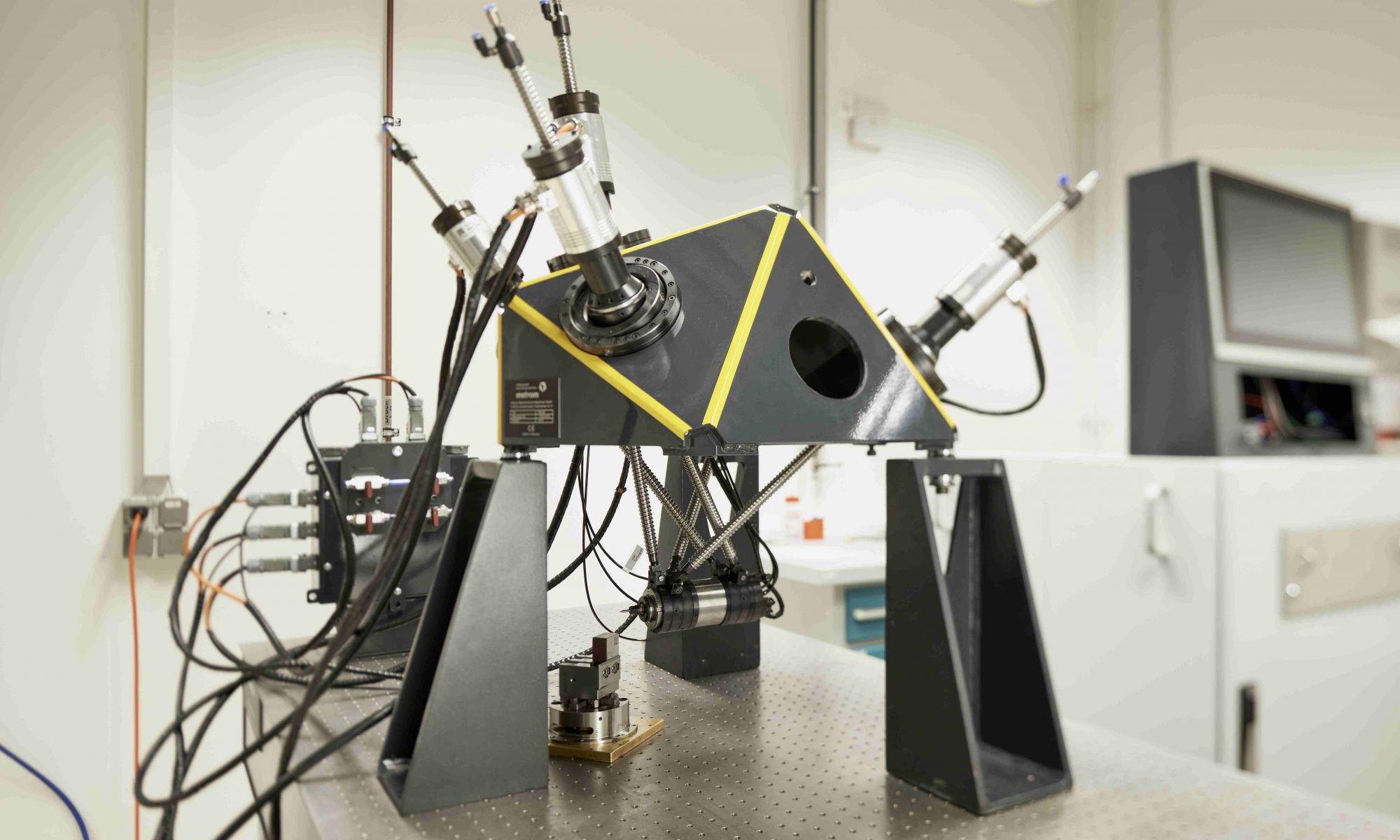
It will be necessary to establish local production capabilities in space in the near future. The transport costs and time until components are available are the most important factors here, which make it essential to manufacture and repair on site. The conventional production capabilities available up to now on Earth are heavy, cannot be transported, and require mechanical precision in the machine structure to allow for accuracy on the workpiece. Robots used for processing are not precise enough and consist of various individual components. The solution here is to develop and manufacture a miniaturised processing system based on parallel kinematics. The modular basic structure and the inherent features of the functionality demonstrated on Earth are redesigned, manufactured in a miniaturised form, and put into operation. This is what SISSI was made for. A small processing system, which can adapt to the environmental conditions and always creates the optimal result with the lowest possible use of resources.
Benefits:
Mechanically simple structure with repeated components
μ-level precision thanks to self-calibration
Processing in unfavourable conditions thanks to dust protection and temperature compensation
No limit on processing by replacing the technological tools
High degree of stiffness due to special frame shape
PhySens – intelligent system maintenance and current monitoring
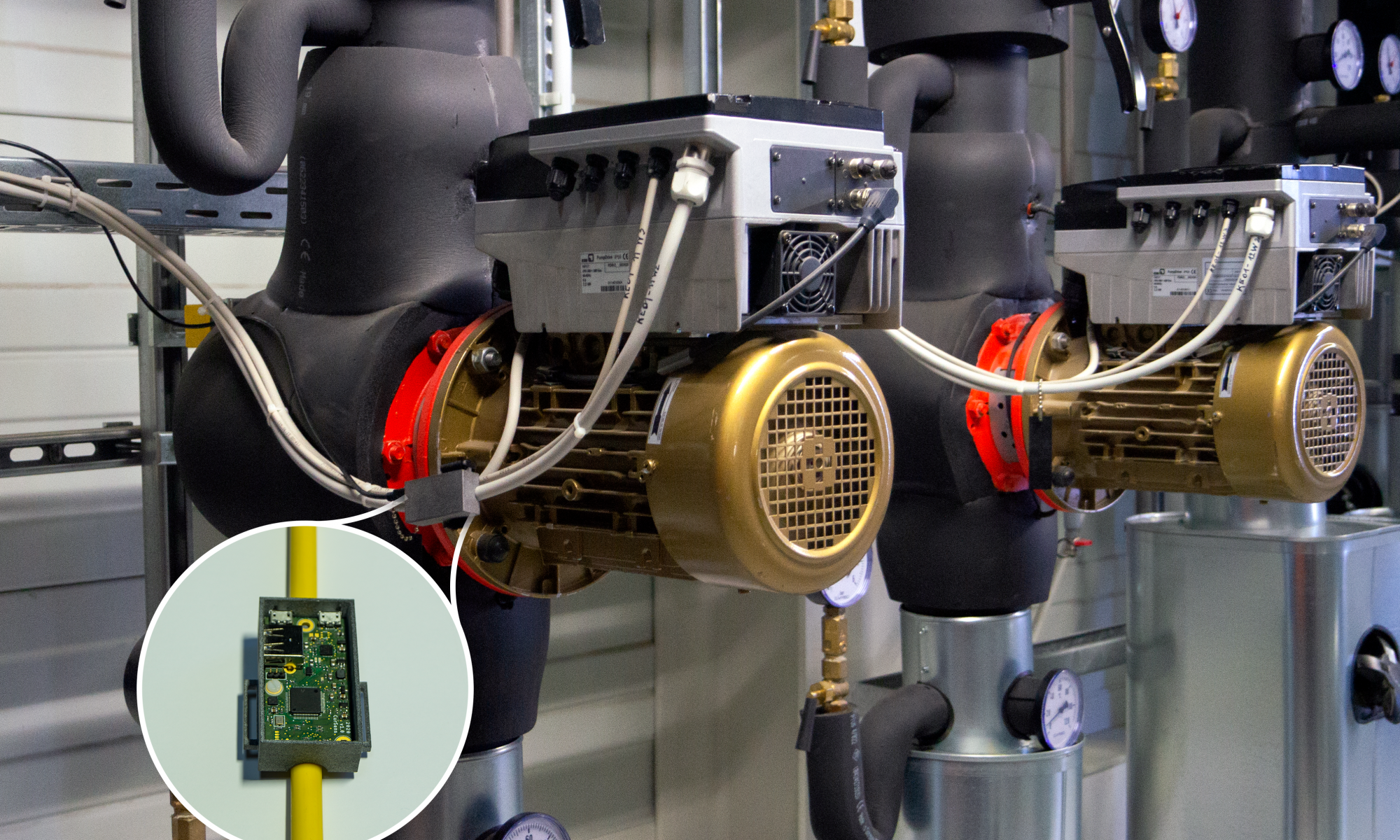
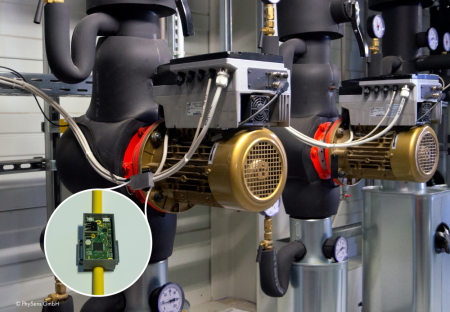
With increasing automation and demand for energy efficiency, new digital measurement solutions are more pertinent than ever for monitoring and process optimisations. Existing products based on current monitoring lack flexibility and are costly to install. Due to the operating principle, these sensors can only measure the current in a single conductor of a cable. Therefore, these systems are unsuitable for many businesses, especially for retrofits because of cost and complexity. Based on space technology deployed as part of ESA’s Rosetta Mission, PhySens GmbH developed a contactless, non-invasive and easily retrofittable sensor solution for current measurement. By simply mounting the sensor on a cable, it measures the currents in all conductors simultaneously using high-precision magnetic field data. As a result, this new sensor-solution can detect and classify anomalies in current profiles caused by e.g. faulty motors or seized bearings in hard-to-access or sealed machinery. This is vital for intelligent load management and predictive maintenance as part of industrial automation or future manned space missions.
Benefits:
New contactless, non-invasive current sensor based on space technology
Vital for industrial automation
Easy-to-install, flexible and safe solution also suitable for space applications
Artificial Intelligence for and from Satellite Internet Constellations
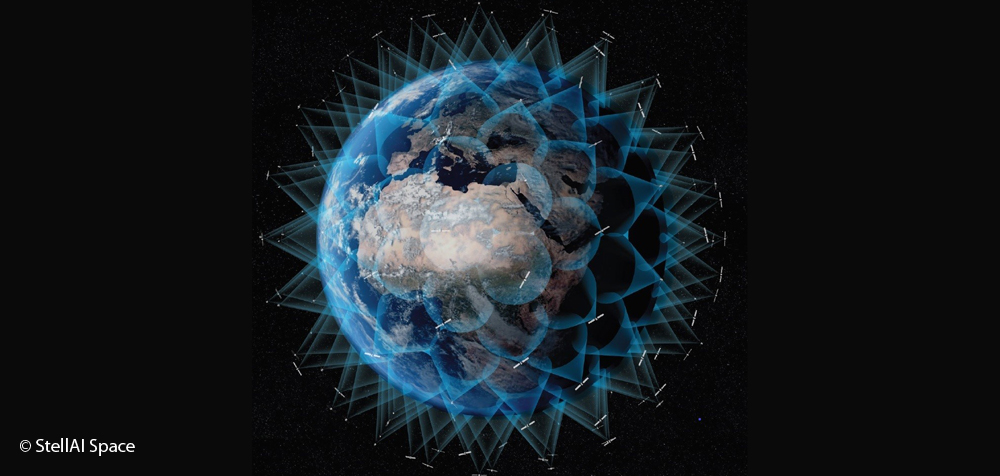
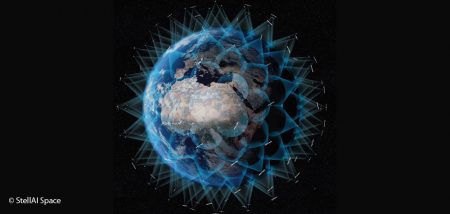
The main stakeholder in the commercial space industry are looking for ways to deploy, operate and maintain large satellite constellations at low cost. Projections indicate that in the next decade, the number of satellites in Earth‘s orbit will increase from a few thousand to hundreds of thousands. Managing such a large number of satellites manually with conventional control centres and workers will be very difficult and expensive, which is why operators and space agencies are looking for ways to automate their constellation management. This is where artificial intelligence (AI) and machine learning algorithms can provide support. Avoiding collisions with space debris, setting up and maintaining communication networks, monitoring the condition of the satellites and their operating routines are just some of the tasks that StellAI Space intends to solve with AI. The company‘s solution will use data from hundreds of satellites forming existing constellations in orbit as input for machine learning algorithms. The resulting model will be used to build a scale-up simulation with hundreds of thousands of satellites and leverage AI to achieve constellation autonomy.
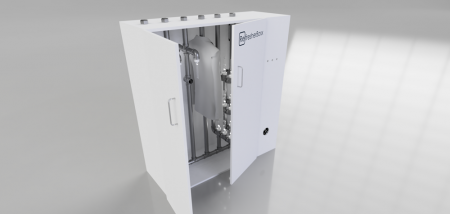
In space, water is a precious commodity. Too precious to wash with it. At the International Space Station ISS, astronauts wear their garments for a prolonged period of time. These are then disposed of after the space mission. Infinity GmbH has developed the RefresherBoxx, which can be used to clean, disinfect and dry all kinds of textiles without the use of water or chemicals. By combining different physical methods (light of different wavelengths, active oxygen, different temperature modes and air pressure differences), bacteria, fungi and viruses are killed and removed. As a result, textiles can be refreshed gently within 30 minutes, valuable resources can be saved and human diseases prevented.
Benefits:
Disinfection – removes up to 99.99512 % of bacteria, fungi and viruses, preventing odours and infections
Environmentally friendly and resourcesaving use in space and on Earth
Additive manufacturing method for metallic coatings of CFRP propellant tanks
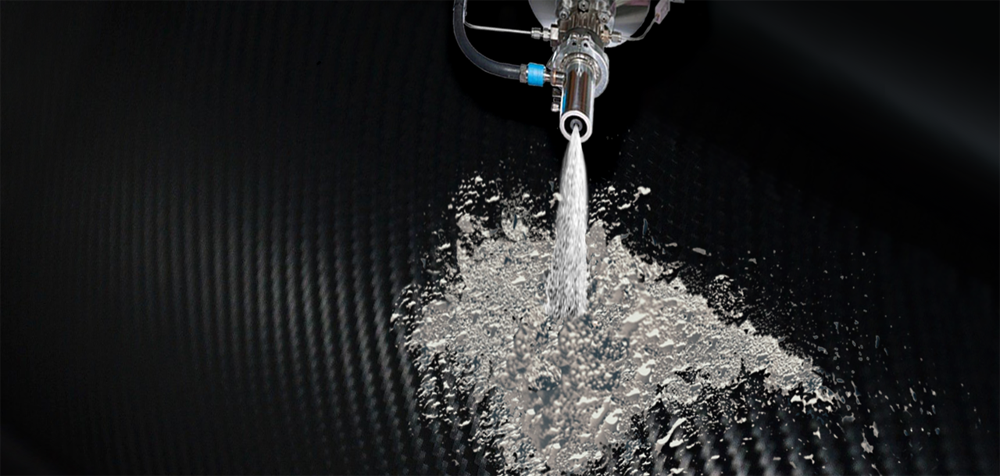
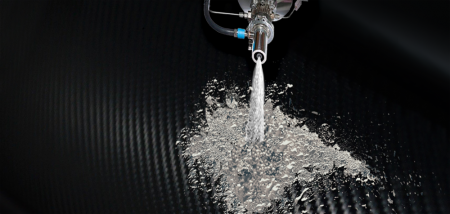
Propellant tanks for rocket stages made of carbon-fibre reinforced plastics (CFRP) need to be lined with a metallic coating (called a liner) on the inside to protect the material from aggressive propellant components and to ensure tightness. Until now, these protective layers have been produced in an expensive manufacturing process by forming and welding thin-walled metal sheets. Additive Space GmbH is developing a thermal spraying process by which metallic coatings can be applied to the inside of the CFRP structure quickly and cost-effectively. The method enables several layers of metals with different material properties to be applied one after the other with the minimum required layer thickness. Apart from the spraying device, which is mounted on an industrial robot, for example, no further devices adapted to the geometry of the respective fuel tank are required.
Benefits:
Thermal spray process for very thin coating thicknesses (≤ 100μ) with low mass increase
Cost / effort reduction, since a metal liner does not have to be produced separately
No geometric specific devices necessary – universal system use
Moderate development risk through adaptation of an established procedure
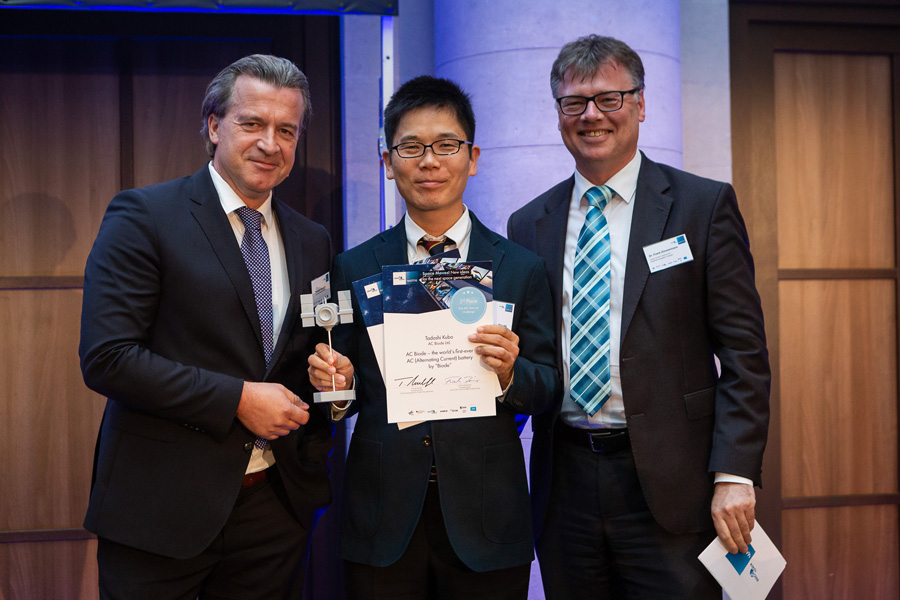
AC Biode – The World‘s First Standalone AC Battery
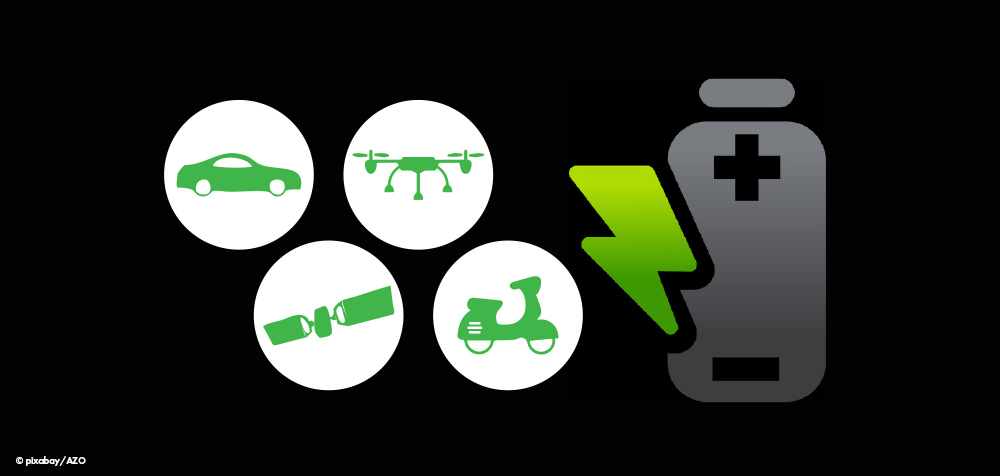
The demand for high-capacity batteries in the space industry has significantly increased and battery capacity is still insufficient in terms of mobility and safety. AC Biode Ltd. is developing the first-ever standalone battery based on alternating current (AC). Biode features the characteristics of both anodes and cathodes. Thanks to a special electric circuit also found in particle accelerators, the system offers more V/Ah flexibility, requires 30% less space, and is safer than every type of regular direct-current (DC) battery. Conventional batteries use DC, which leads to power loss when electricity is converted from AC to DC. AC Biode Ltd. will utilise existing materials and battery production lines to penetrate the market faster than competitors that use new materials or types. Applications are possible in space and in connection with drones, electric vehicles and scooters, and energy storage.
Benefits:
Battery is up to 30% more compact and reduces conversion losses
Space Surveillance and Tracking (SST) as a Service for New Space
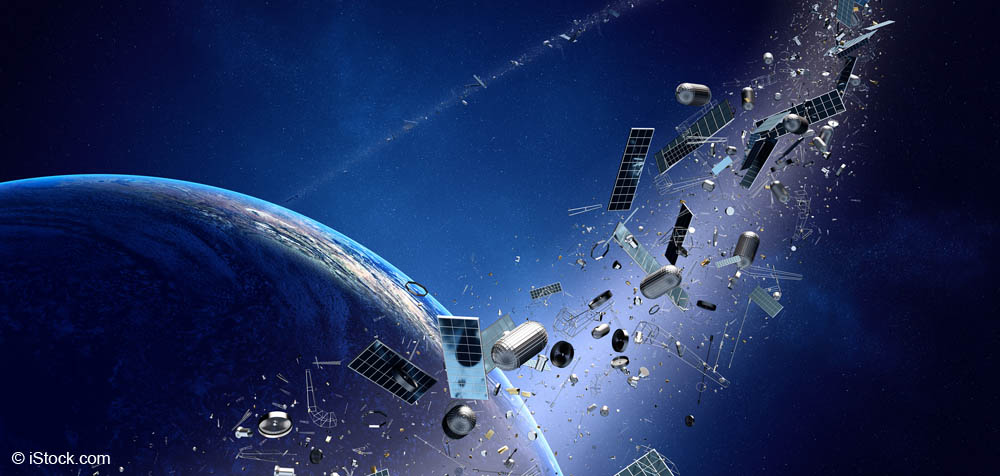
Due to the increasing amount of activities in space, the number of objects is becoming dangerously high and presenting a potential hazard to all satellites – especially in low Earth orbit. Since existing solutions are neither customer-friendly nor usable for the broader masses, new space market players are being forced to accept the risks of loss or damage. OKAPI:Orbits has developed a software-as-a-service (SaaS) solution that is dedicated to making satellite missions more sustainable and cost-efficient by offering customers space surveillance and tracking (SST) solutions as a service. It is a modular, customisable, and scalable software provided via a web interface and APIs. Due to the fact that this software is based on a data stream management system (DSMS), it offers several advantages. It can be used to operate all the relevant aspects of SST and supports integration into existing solutions.
Benefits:
Reduced risk of loss or damage to satellite constellations and lower mission costs overall
Very short access times through DSMS
Processes large amounts of data that define customer procedures that need to be followed
Deployables Cubed – Actuator for Nanosatellite Applications
The aerospace sector is trending towards small, standardised satellites (CubeSats) that offer affordable access to space. Their standard edge length of 10 cm does present a disadvantage, however, as it significantly limits the missions these satellites can support. To get around these limitations, deployable structures like antennas or sails are being used, that are deployed once a satellite is in orbit. This opens the door to high-performance applications that are typically only possible with large satellites. Initiating this deployment requires special actuators such as hold-down and release mechanisms. Unfortunately, European actuators are too large for this purpose, and American products are subject to export restrictions. To solve this problem Deployables Cubed – a new space company at ESA BIC Bavaria – is developing pin-puller and release nut actuators to ensure Europe’s independence with regard to these small actuators and the deployable structures that they make possible. The company plans to establish for simple, light, and reliable aerospace actuators on the market and offer them to a broad range of customers.
Benefits:
Nanosize actuator (optimised for cubesat applications)
GIMOD – Graphene Interferometric Modulation Displays for VR/AR
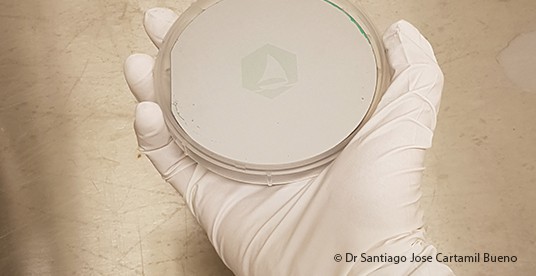
Future displays in astronaut helmets will need to integrate Virtual/Augmented Reality (VR/AR) capabilities for training and operation purposes. The screens of electronic devices with standard technologies consume the most power. Reflective-type displays (e.g. e-book readers) consume little power although current technologies cannot provide colourful images nor fast refresh rates to reproduce videos. Graphene Interferometric Modulation Displays (GIMOD) unite the advantages of the reflective-type technology (low power consumption) with those of standard technologies (video capability), in order to cater to the display requirements in future VR/AR visors. The SCALE project, implemented jointly with Gesellschaft für Angewandte Mikro- und Optoelektronik mbH (AMO) and Graphenea S.A., will commercialise the graphene technology to lead the new semiconductor industry of 2D materials.
Benefits:
Reflective-type display technology with high contrast in bright environments
Ultra-high resolution (>2500 ppi) with low power consumption
Ultimate refresh time (>1000 Hz)
Caters to the requirements of portable VR/AR visors
Nucleus VR – Connecting People and Information Worldwide in Real-Time
Human survival in space is highly dependent on life support systems, computers and equipment. Maintaining these complex systems requires support of hundreds of earth-based experts. Nucleus VR is removing the distance barrier, by allowing astronauts and experts to work simultaneously, as if they were together in the same place. Experts simply connect to the digital twin of the spacecraft and appear in the real spacecraft as a holographic companion. Data can also be placed on the digital twin and displayed in the real spaceship with Augmented Reality (AR). Thereby, challenges can be solved faster, and in a natural, intuitive and less stressful way.
Benefits:
Connecting astronauts and experts all over the world in the digital twin
The digital twin is built from existing CAD data using a simple drag-and-drop process
Many kinds of data can be pinned to the digital twin (live telemetry streams, PDF, video, 360° video)
Increase astronauts’ well-being through meetings with family and friends in relaxing virtual worlds
Compatible with most existing AR/VR (Virtual Reality) hardware: HTC VIVE, OCCULUS, Android AR, castAR, PC, HOLOLENS