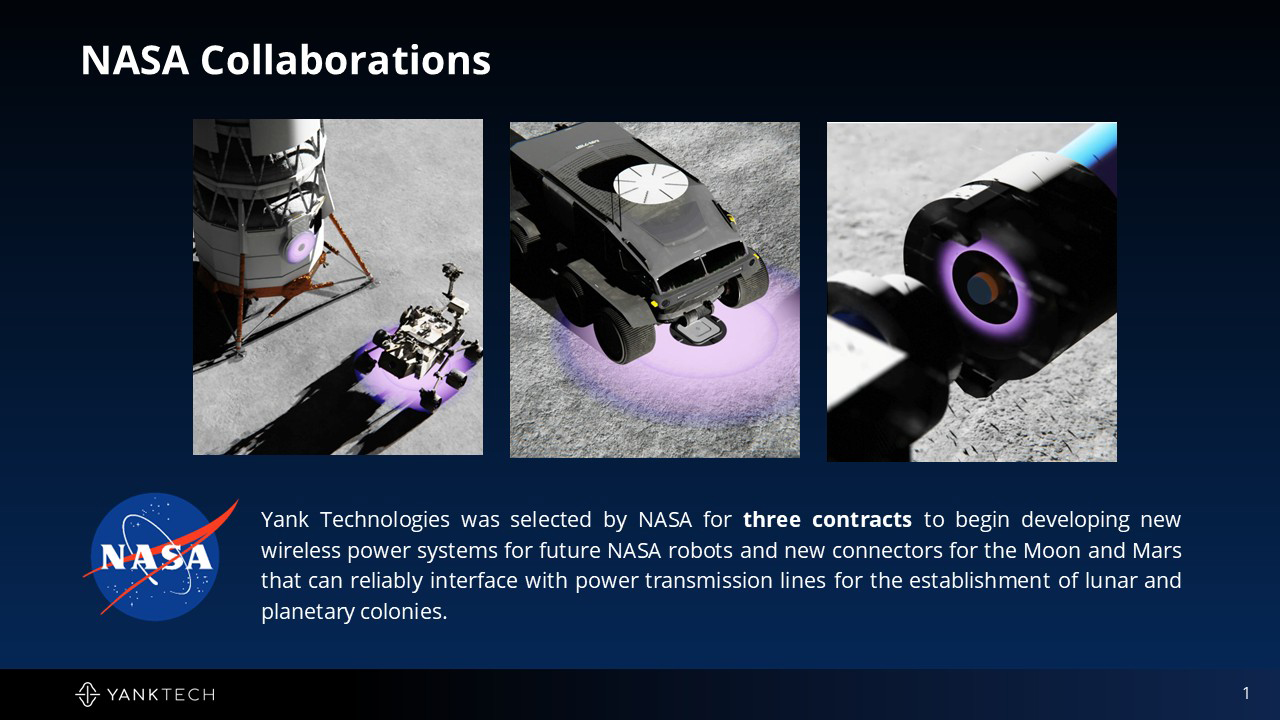
Harsh environmental conditions prevail on the surface of the moon, which are mainly due to the so-called regolith. Its insulating properties at the electrical interfaces of the rovers, such as the power connections, pose a significant risk for any mission. The wireless power supply can mitigate the problems of the electrical interfaces. However, current wireless charging systems are very sensitive to charging distance (less than 1 cm), have very low end-to-end efficiency, and rely on the use of robots to connect the rover to the charging station.
Yank Technologies solves these problems by using its Magnetic Resonant technology to deliver power over distances of up to half a metre, similar to WiFi but for power. This wireless charging system can operate efficiently in extreme misalignment and without robotic intervention, greatly improving operations on the lunar surface.
The technology can also be used in the automotive sector: Wireless power architectures can supply power to complete subsystems such as seats, doors, lighting and infotainment in vehicles, significantly reducing the wiring harness.
Benefits:
Wireless transmission technology using a patented Inductive Resonant technology capable of transmitting energy up to 0.50 metres through materials with high efficiency, without the limited distance, axial alignment, thermal rise and lack of efficiency inherent in conventional inductive solutions.
Efficient operation even with extreme misalignment and without the use of robots, significantly improving the operation of rovers on the lunar surface.
Direct power provision solutions for consumer electronics, industrial robots and automobiles.
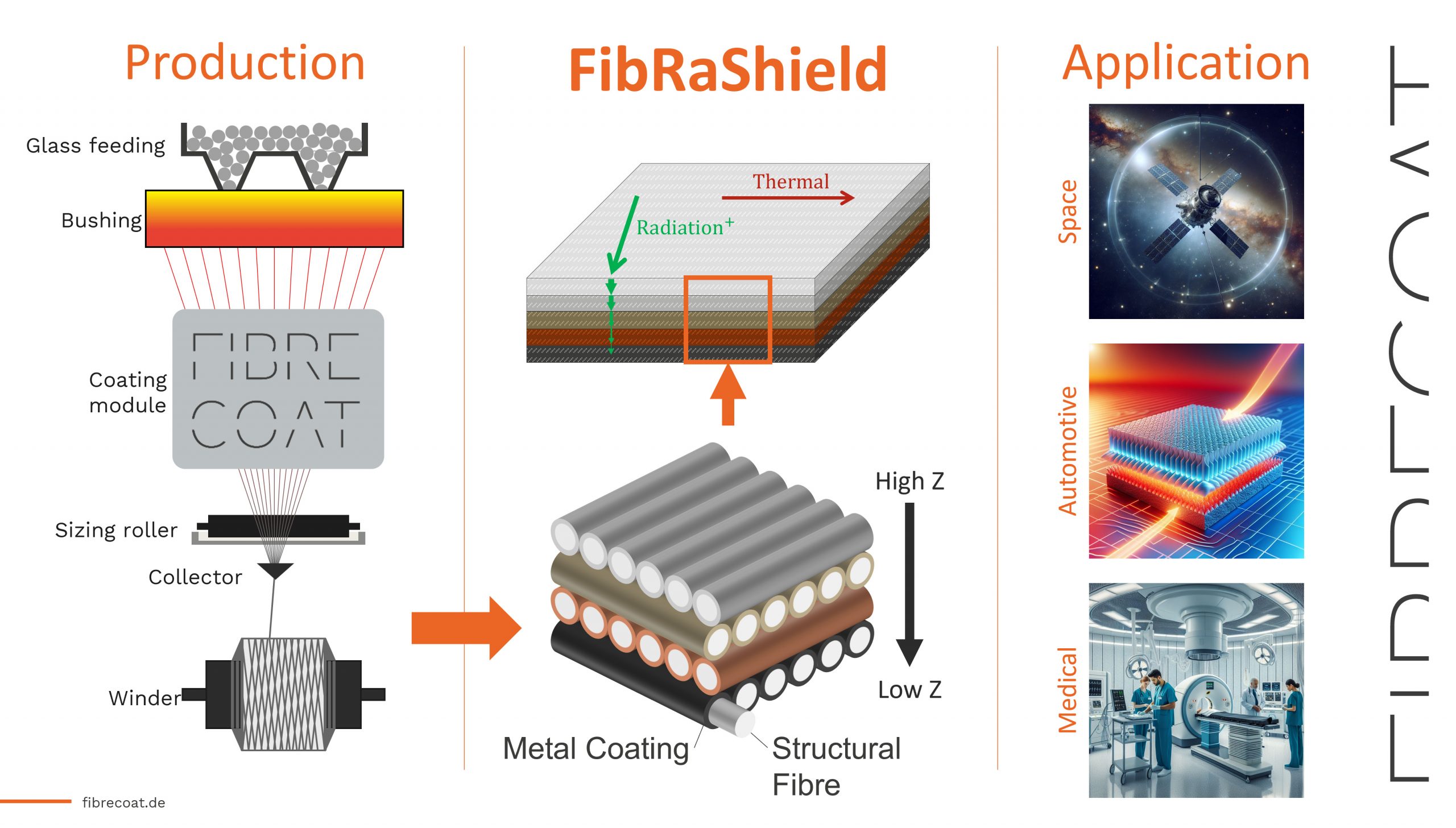
FibRaShield – Shielding humans and electronics from radiation in space
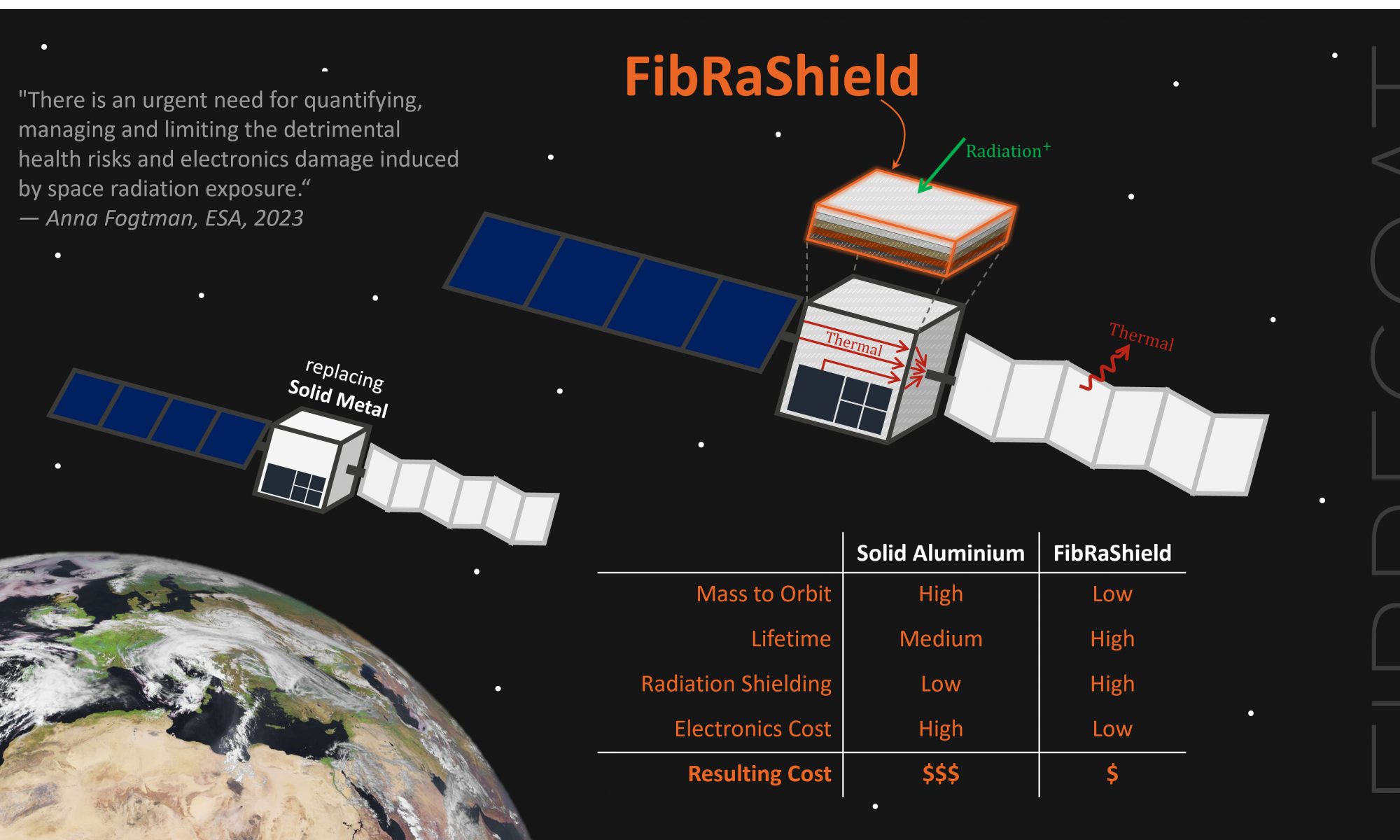
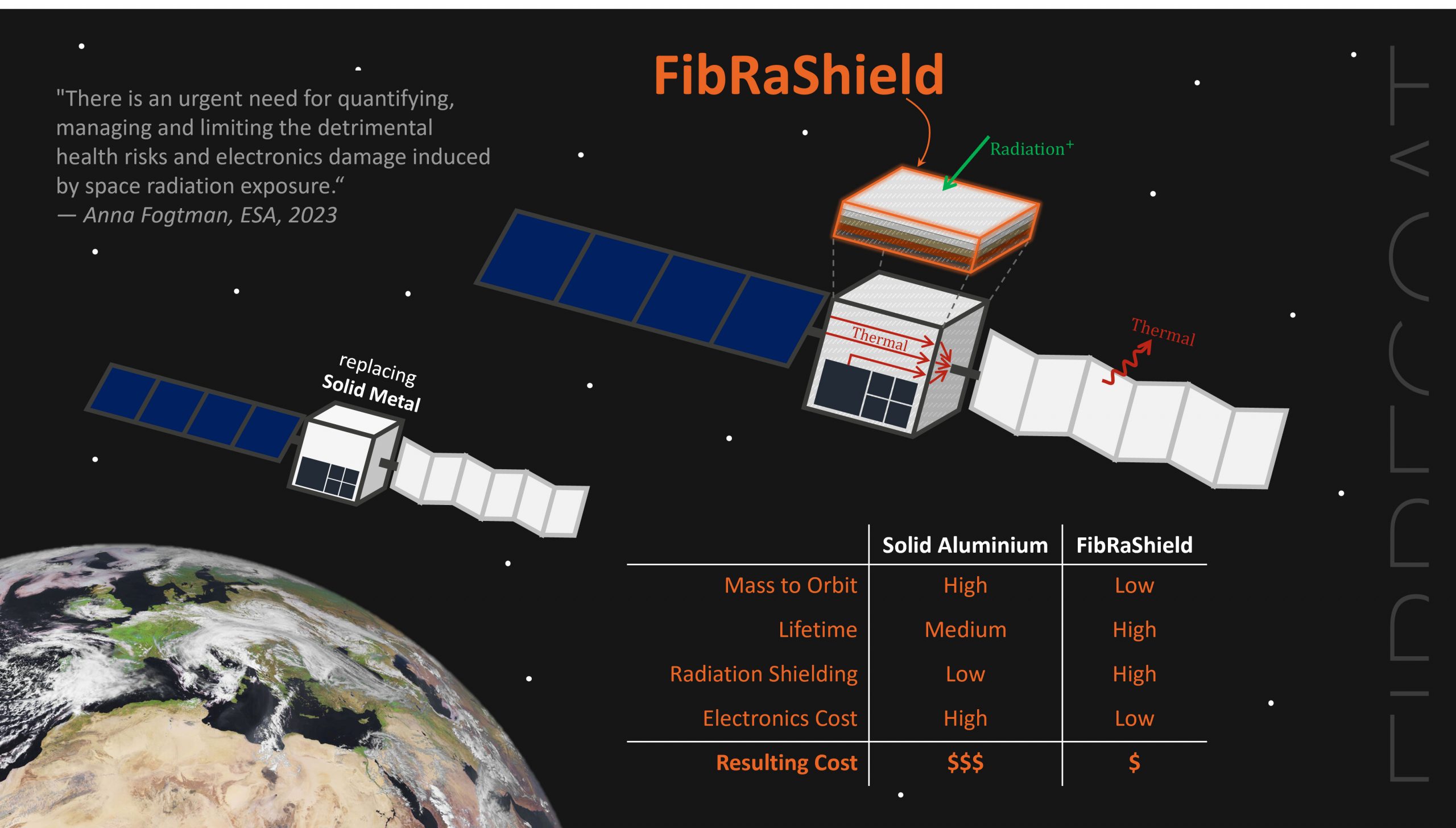
Radiation in space poses significant challenges for space missions. High-energy particles can damage electronic components and degrade materials, as well as increasing the risk of cancer for astronauts. Traditional solutions are costly and heavy.
FibRaShield’s innovative approach involves developing advanced materials using Fibrecoat technology, which coats metals onto fibres. These cutting-edge materials are designed to protect electronic components on satellites from harmful radiation, ensuring their durability and optimal performance. With effective thermal management and minimised radiation impact, FibRaShield is paving the way for more reliable, long-lasting satellite systems and advancing technology for the automotive, defence, medical and energy markets, as well as for future space missions.
Benefits:
Up to 60% better protection for electronic components and astronauts compared to conventional aluminium shields.
Up to 30% weight reduction, which could reduce launch costs by up to $228 million per year.
Potential decrease in the number of spacecraft subsystems, leading to reduced complexity and faster testing and deployment.
Device connectivity is the holy grail of our digital age: By allowing physical devices to connect and communicate with each other, we have been able to increase economic output. Examples include the Internet, satellite communications or, more recently, the Internet of Things (IoT). But all existing networks share some fundamental shortcomings: They are often proprietary, expensive, power-hungry, unscalable and, worst of all, lacking in coverage.
The Hubble Network aims to change that. Hubble is building a constellation of Low Earth Orbit (LEO) satellites to enable a global, low-cost, low-power network that can scale to billions of devices – using Bluetooth Low Energy (BLE). Using their patented innovative satellite antenna design, Hubble have demonstrated that they can connect any Bluetooth device directly to satellites in LEO – without any additional infrastructure. This level of connectivity has the potential to revolutionise many different industries, including agriculture, logistics, mobility and defence.
Benefits:
Enables data exchange directly with satellites by connecting any Bluetooth device directly to space
Enables an unprecedented level of connectivity while using existing commercial-of-the-shelf Bluetooth chips
Easy integration with any existing BLE chip – no additional infrastructure required
PhySens – intelligent system maintenance and current monitoring
Initial submission
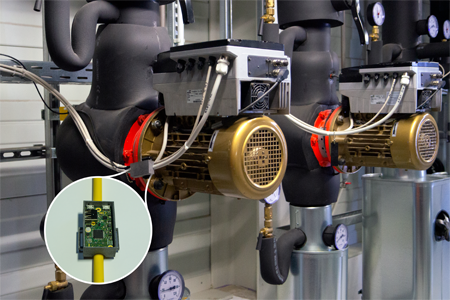
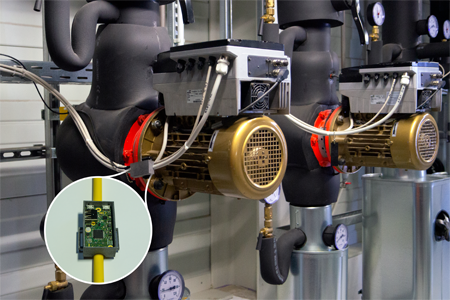
With increasing automation and demand for energy efficiency, new digital measurement solutions are more pertinent than ever for monitoring and process optimisations. Existing products based on current monitoring lack flexibility and are costly to install. Due to the operating principle, these sensors can only measure the current in a single conductor of a cable. Therefore, these systems are unsuitable for many businesses, especially for retrofits because of cost and complexity. Based on space technology deployed as part of ESA’s Rosetta Mission, PhySens GmbH developed a contactless, non-invasive and easily retrofittable sensor solution for current measurement. By simply mounting the sensor on a cable, it measures the currents in all conductors simultaneously using high-precision magnetic field data. As a result, this new sensor solution can detect and classify anomalies in current profiles caused by e.g. faulty motors or seized bearings in hard-to-access or sealed machinery. This is vital for intelligent load management and predictive maintenance as part of industrial automation.
Development
Winning the INNOspace Masters ESA BIC challenge paved the way for a successful application to ESA BIC Northern Germany. In particular, the collaboration with a regional economic development agency (Starthaus Bremen) as part of the ESA BIC programme increased visibility and generated new sales leads. As a result, the INNOspace Masters provided an initial boost and helped to use the contactless magnetic current sensor in a multitude of sustainable energy applications. Ranging from diagnostic tools for electric vehicle charging to retrofittable load management for heat pumps, the space technology-based systems provide flexible and cost-effective solutions for customers on Earth.
PhySens applies and commercialises a magnetic field sensor technology successfully tested in the ESA Rosetta mission in the terrestrial domain. Since their participation in the INNOspace Masters, the team has greatly developed the technology in a very short time and made it accessible for new applications, e.g. for charging monitoring in electric vehicles.
Aerostructure Multifunctional Cover Against Environmental Radiation
We all increasingly use communication networks, including Wi-Fi, mobile phones, satellite networks, Internet of Things, autonomous driving, and monitoring in medicine and the environment. People, as well as machines, will become more and more connected wirelessly. Therefore, the number of antennas integrated into electronic devices is drastically increasing, resulting in strong demand for countermeasures against unwanted signals and noise. Until now, typically metal-based materials have been used to shield electronics. While these are very secure, they are intrinsically very heavy. Moreover, the antennas themselves cannot be covered, as they would then no longer be able to transmit signals. We aim here to drastically reduce the weight of such shields by employing an ultra-lightweight class of materials, called framework aero materials. We will develop small, innovative safety caps that are easy to apply, without being a barrier to the further miniaturization of electronic devices. This new kind of cap will also enable frequency selectivity, thereby increasing the digital security of communication.
Benefits:
Ultra-lightweight cover against unwanted signals
Increase in digital security and protection against jamming
Frequency-selective: antennas can be protected
Very adaptable for specific geometries without mounting interfaces
High frequency tightness
Wide range of applications at different value-added levels
Institut für Luft- und Raumfahrttechnik der Technischen Universität Dresden Dr Tino Schmiel tino.schmiel@tu-dresden.de Institut für Materialwissenschaften der Christian-Albrechts-Universität zu Kiel Dr Fabian Schütt fas@tf.uni-kiel.de
QuMSeC – Quantum Memories for Secure Communication
With a turnover of USD 156.3 billion1, satellite communication is a key component of the global digital economy and is of strategic importance to government and society. The Internet, television, telephony or communication in aviation and shipping rely on highly secure satellite communication networks. However, the encryption methods used in data transmission today are vulnerable, which poses considerable security risks for critical infrastructures in the energy, telecommunications and transport sectors, for example. Quantum communication generally provides the necessary cyber security for current and future satellite communication systems. However, this has so far been based on the assumption of complete control over the development, manufacture, launch and operation of satellites. The „QuMSeC“ project, carried out by Humboldt-Universität zu Berlin and Technische Universität Berlin, is intended to set new standards for secure quantum key exchange with the help of quantum storage devices, even for untrustworthy satellites. In the future, customers and users without their own satellite infrastructure should benefit from secure data communication via satellites.
1 Global Space Economy 2018 (Source: Bryce Space and Technology, 2020)
Benefits:
Verifiable communication security
Market basis for quantum communication providers
Enables economic exploitation of quantum communication
Strengthening of the German leadership role in quantum technology
PCM-Polymer Compound – Novel Material for Thermal Stabilisation of Component Systems
Spacecraft components are constantly subjected to thermal variations. To avoid overheating or undercooling of these components, ESDA-Axiotherm GmbH is developing a phase-change material (PCM) polymer compound for the thermal stabilisation of space components and systems. The PCM polymer compound features a high capacity for absorbing accumulating amounts of heat and releases the heat energy into the system during an undercooling period in order to stabilise the temperature. This material will prevent temperature peaks and produce a smoothed temperature curve. Its unique feature is a mix of materials that remains gelatinous when melted. The compound is leak-proof and well-suited to processing. Furthermore, it is possible to use additives to make permanent, stable modifications to properties such as thermal conductivity, fire protection, and radiation resistance. In particular, batteries (and by extension, the field of e-mobility) should benefit from this life-prolonging technology.
Benefits:
Effective smoothing of temperature peaks and reduced thermo-mechanical stress
Increased useful life of batteries and electronic components, plus increased operational safety
Low mass, high capacity & directly applicable to all battery sectors (automotive/maritime/aviation)
Wall#E: Fibre-Reinforced Spacecraft Walls for Storing Energy
The idea behind Wall#E involves integrating energy storage functions into the support structures of spacecraft, which will significantly reduce the mass and volume of satellites without sacrificing performance. To this end, Wall#E utilises fibre-reinforced structures (which enjoy more and more popularity in aerospace engineering) infiltrated with innovative solid-state battery materials. While this project’s initial focus is on satellites, the underlying concept can easily be adapted to launch systems, space stations, and ground-based e-mobility applications.
Benefits:
Reduced satellite mass
Simpler, more compact constructions
Lower costs of development/launch
TU Braunschweig – Institute of Space Systems Brunswick, Germany Prof Dr-Ing Enrico Stoll www.space-systems.eu e.stoll@tu-bs.de
Shapecomm – Shaping the Future of Satellite Communication
Current communication systems are experiencing great technical changes but do not fully reach the theoretical data rate limits. Satellite communication, in particular, requires flexibility and higher transmission rates to cope with current demands, e.g., for inflight entertainment systems or high throughput satellites. Shapecomm showcased the innovative technology of “Probabilistic Amplitude Shaping” (PAS) and “Distribution Matching” (DM), which achieved a 2.5-fold rate increase in an optical transmission experiment over the Atlantic Ocean conducted by Facebook and Nokia Bell Labs. Based on the patented technology, the company’s objective is to develop a transceiver architecture building upon the DVB-S2X standard, which could support new standardization endeavours, possibly culminating in DVB-S3.
Benefits:
Increase the data rate limits of current communication systems, e.g. satellite communication links
Efficient use of existing resources (e.g. bandwidth), helping to serve and accommodate more users and provide a better experience to end users
Important enabler and pioneer for future applications that require high data rates
Transceiver modems can be designed and produced more flexibly and with lower costs
Economically efficient provision of reliable connections and high data rates in remote areas
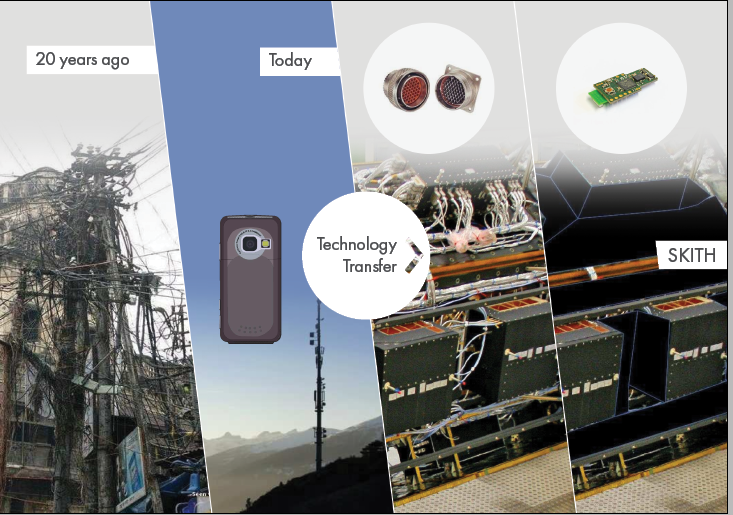
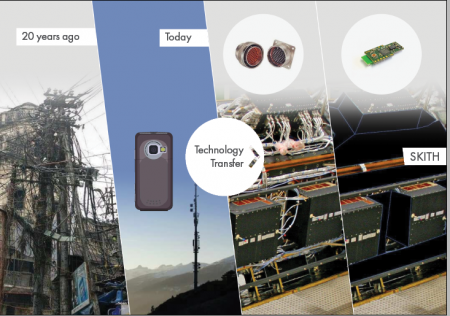
The harness for satellites has been necessary so far but also costly, heavy and a major risk factor. Skith aims to create the first wireless satellite, by using short range, high speed real time miniature radio communication links. By combining modular and fault-tolerant software with ultra-wideband technology from industry 4.0, a robust and adaptable system will be created.
Skith is aiming at:
Reducing the costs of integration and launches of satellites
Increasing the dependability of machines, especially of satellites and aircrafts
Increasing the Flexibility of control systems
Making the board computer independent from input/output (10) devices