LARABICUS FoulCast – Satellite-Optimised Autonomous Hull Cleaning for Maritime Decarbonisation and Biofouling Compliance
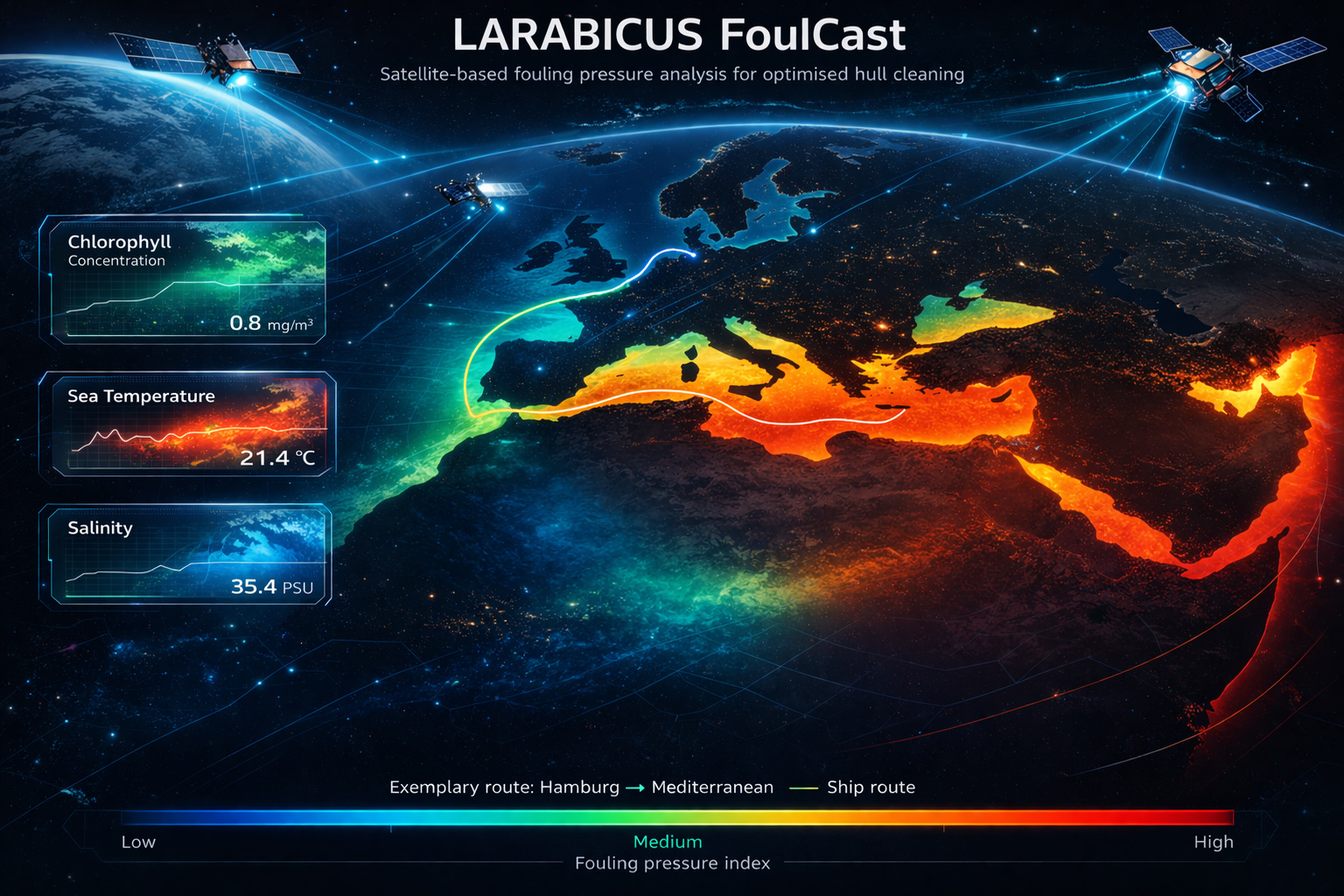
Biofouling on ship hulls can increase fuel consumption by up to 25%. The initial slime layer (biofilm) takes hours to weeks to form, depending on environmental conditions. LARABICUS solves this problem using autonomous robots that remove the biofilm continuously during normal sea passages, before it can cause damage. This service is enhanced by a satellite-based fouling analysis module that uses vessel-specific parameters to estimate the growth pressure of biofilms per route segment and season.
Benefits:
LARABICUS can save 2,000–6,000 tonnes of CO₂ per vessel per year.
Smarter planning: Using satellite-based estimates instead of conservative worst-case planning means up to 50% fewer robots on low-fouling routes. This doubles fleet coverage with identical hardware.
Immediate data: 10+ years of environmental data at daily resolution and global coverage, enabling informed decisions from the first customer ship.
Route-specific service optimisation: Fewer robots and lower cleaning frequency on cold-water routes, more intensive service on warm-water routes. This reduces hardware cost, extends robot lifetime through reduced wear, and ensures consistent hull performance.