Hyposto energy storage solutions for optimising power supply in space missions
The market for energy storage solutions in the space sector is growing continuously. There is a need for new energy storage systems that can withstand extreme conditions such as radiation, temperature fluctuations, and long operational durations, because conventional lithium-ion batteries face limitations due to their limited cycle life, temperature sensitivity, and radiation vulnerability.
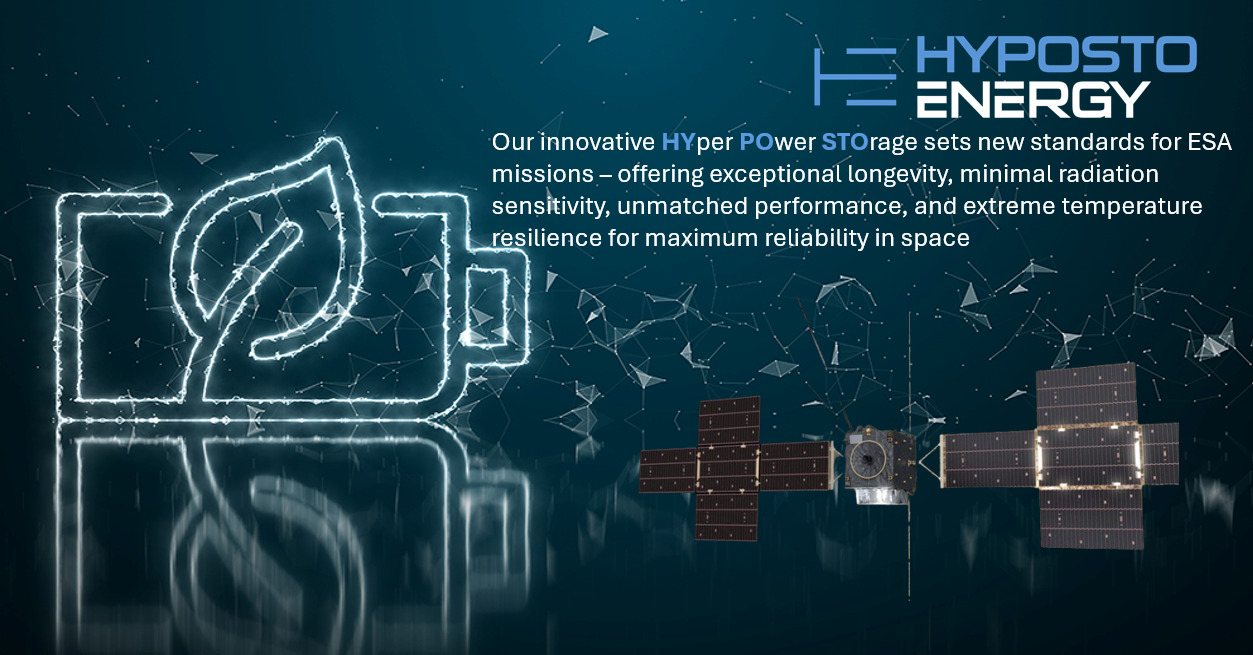
Hyposto Energy is developing lithium-titanium-oxide (LTO) batteries for the space industry, particularly satellite operators, space organisations, and private companies, to optimise the power supply of satellites and enhance their lifespan and cost efficiency. LTO batteries offer high cycle life, radiation resistance, and temperature tolerance, making them ideal for space applications. Additionally, they allow for the integration of solar energy and serve as an uninterruptible power supply (UPS), allowing critical systems to be continuously powered.
The technology could also be applied to spin-off applications in renewable energy and PV home storage on Earth.
Benefits:
LTO batteries offer up to 25,000 charge cycles (five to ten times longer than lithium-ion batteries) to ensure longer durability, which is crucial for the long-term operation of space systems.
Radiation-resistance, making LTO batteries ideal for space, where radiation can shorten the lifespan of electronics.
Wide temperature tolerance of -40°C to +70°C and robustness against extreme vibrations, ensuring reliability in harsh environments.
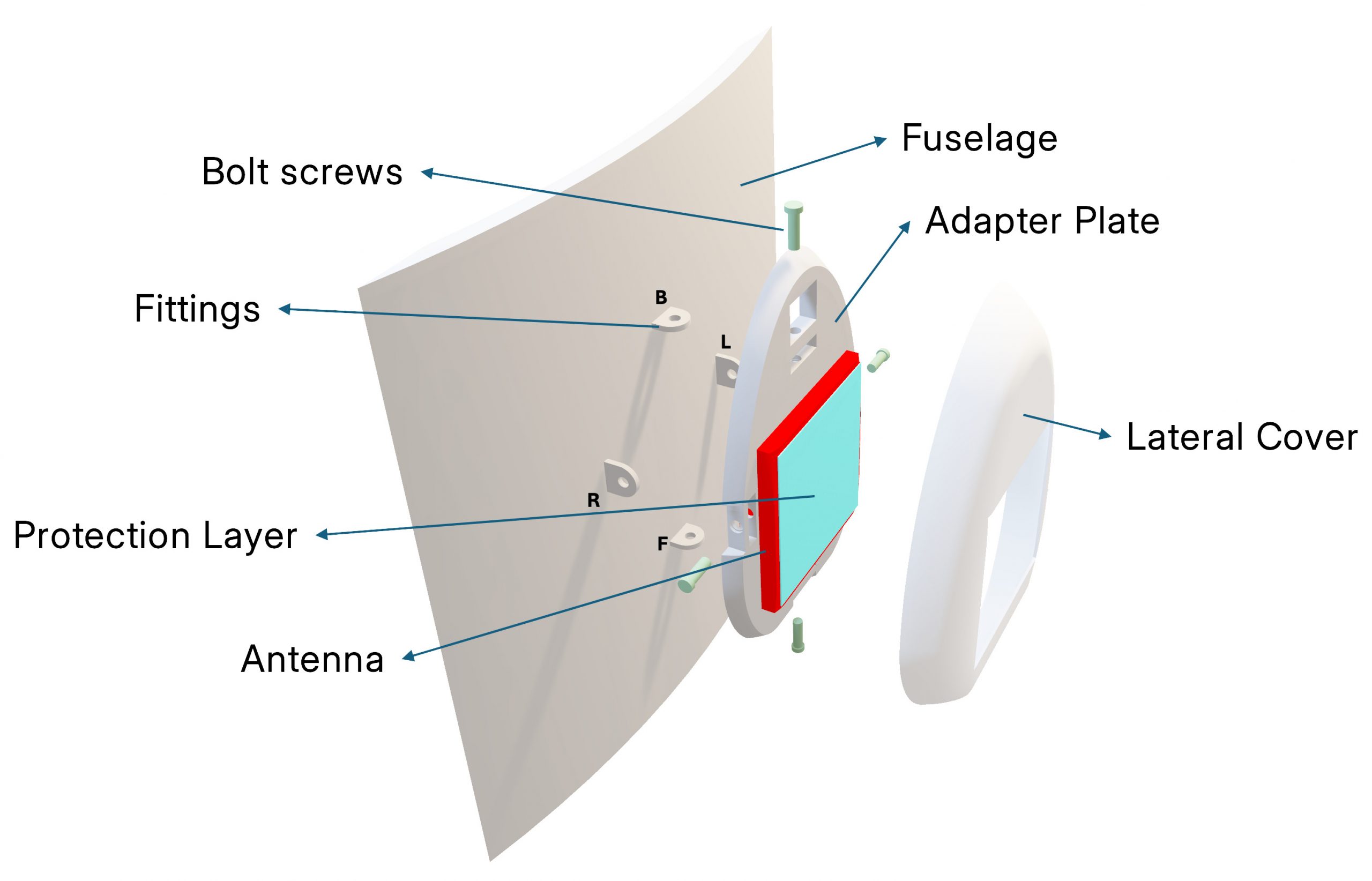
The market of In-Flight Connectivity (IFC) is growing quickly because it enables aeroplanes to provide an internet connection so that passengers can go online during the flight. The key component of an IFC satcom terminal is the antenna. It has to be installed on the top of the airplane fuselage, following clear aeronautical requirements. The design also has to be flexible because service providers have very heterogeneous needs.
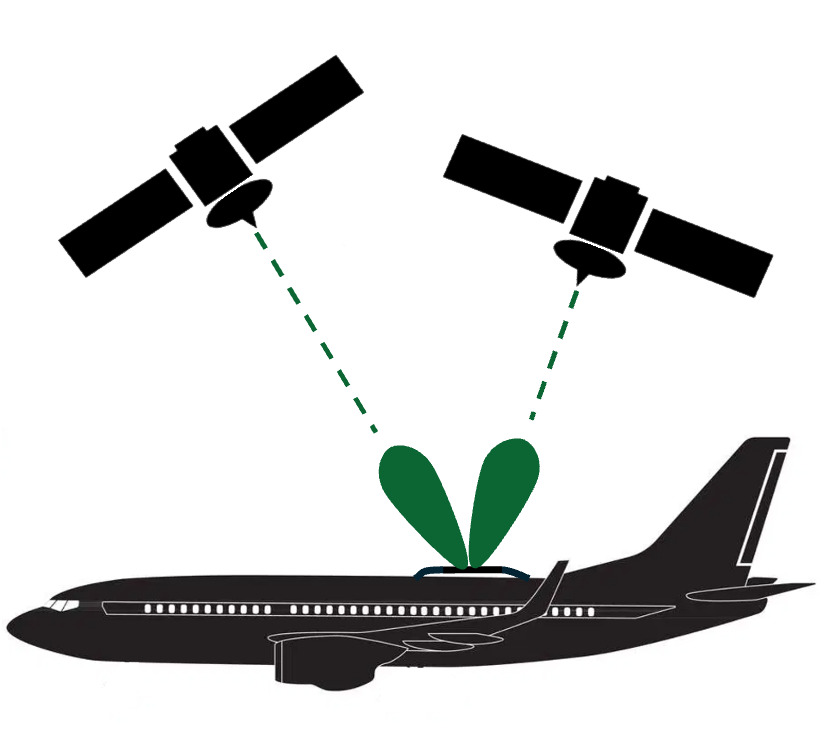
The aim of this project is to design an aeronautical antenna for all IFC providers and for all types of airplanes (from airlines to business jet), for a new high-performance type of in-flight connectivity: the Augusta Space Interlaced antenna (Aspire). This antenna can be installed on any type of airplane and flexibly operate with different satellite providers to always have the best service. It is the first exclusive and smallest, real multi-beam, multi-frequency, and multi-orbit antenna on the market, and could also be used on small satellites or for other satcom terminals (e.g. automotive, IoT).
Benefits:
The ASPIRE antenna is flat, electronically steered, and has an efficiency beyond state of the art.
Modular and flexible design and offers different degrees of trade-off between complexity and performance.
Supports 2 parallel beams (thus providing higher throughputs than existing antennas on the market), and can operate them in Ku-band and/or in Ka-band.
Effortless ECSS Compliance – Automating software development documentation in the space industry
The growing complexity of space applications, such as launchers, satellites, kick stages and payloads, poses an immense challenge to developers in terms of software qualification. Qualification requires developers to spend considerable time on reporting tasks and creating complex, fully traceable documentation manually. This takes valuable time away from coding and advancing development, driving up the costs of mission-critical software.
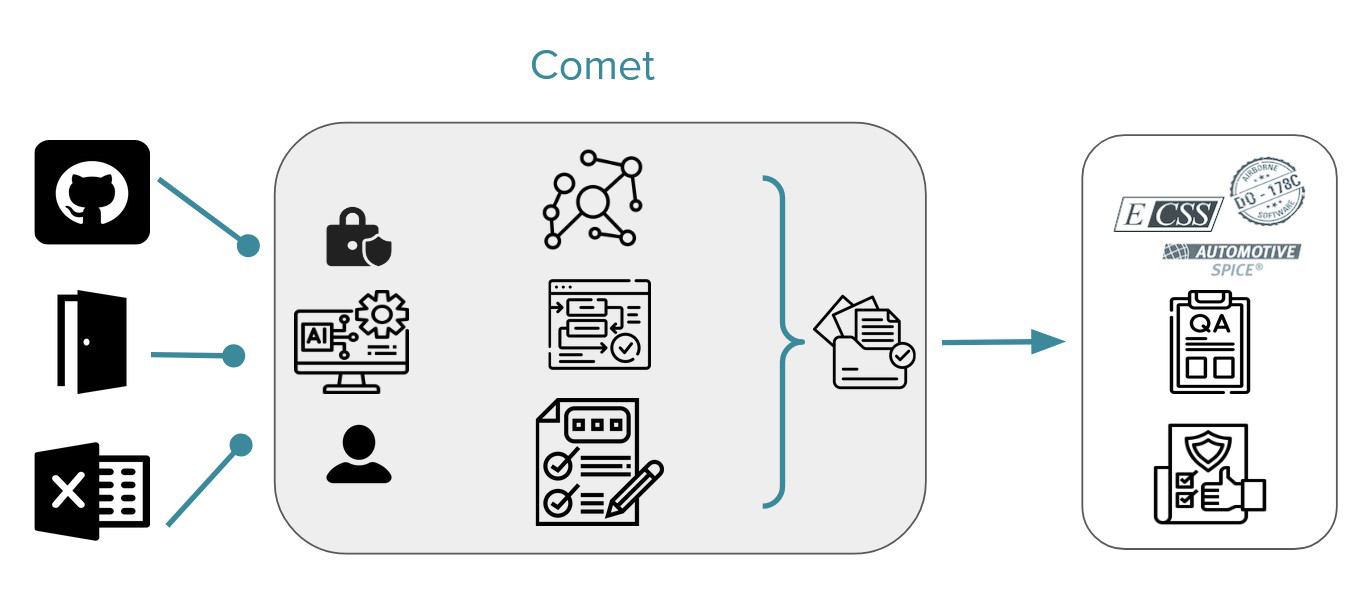
Astra Labs offers a toolkit powered by human-centered AI that is specifically tailored to automate the time-consuming tasks required by ECSS standards. The toolkit reduces defects and errors in the resulting software and artefacts by enabling developers to focus on critical coding tasks instead of mentally exhausting manual documentation work. The tool also maintains up-to-date documentation for developers and quality assurance teams to review, and flags potential inconsistencies and errors.
Benefits:
Automates ECSS software qualification activities by leveraging human-centered AI solutions.
Improves developer productivity, documentation consistency and life cycle quality.
Plugs into existing software development processes.
Aggregates the vast amounts of data generated by these processes, including requirements, test cases, reviews, source code and test results.
QuSSat: Quantum Sensor Satellite-Based Simulator for Earth Observation and Inertial Navigation
Quantum sensors based on cold atoms make it possible to measure gravitational and inertial forces with unprecedented accuracy and precision. Their drift-free operation promises breakthroughs in satellite gravimetry and inertial navigation – without in-flight calibration. Making this technology operational will require long-term investment from key space stakeholders. However, this requires specific domain knowledge that is difficult to obtain. In addition, a lack of instrument standardisation and comprehensive design tools make it difficult to overcome deployment barriers due to the harsh environment in a spacecraft.
The QuSSat project is developing a simulator for space-based cold atom sensors. It will provide reliable performance estimates, including the integration of realistic platform noise, as well as unique numerical models to improve mission design and streamline the development process of space-based cold atom sensors by integrating industry-standard development software. This will help to properly assess the potential of using cold atom sensors in space, enabling more accurate satellite orbit predictions, the ability to navigate in space without GNSS, and dramatically improved models of the Earth’s climate.
Benefits:
Provision of reliable performance estimates for space-based cold atom sensors
Numerical models to improve mission design and streamline the engineering process for space-based cold atom sensors.
QuSSat is working: The team supported the design of the new SM3B science module installed on the ISS.
Land2Energy – A Platform for Site Assessment and Marketing of Properties for Renewable Energy
The green energy transition is progressing very slowly, jeopardising Europe’s goal of a decarbonised future. One reason is the lack of new projects to install wind or solar power. At the same time, farmers are faced with increasing areas of non-arable land due to climate change, resulting in large financial losses.
Agrario Energy addresses this critical challenge of balancing energy production and environmental sustainability by helping to transform fallow land into renewable energy production sites. The innovative software enables landowners to assess the renewable energy potential of their land and facilitates lease agreements with project developers through a simple app. The software considers factors such as planning restrictions, infrastructure and environmental conditions, derived from satellite and geospatial data, and streamlines the process for both parties. By finding the best project developer for each landowner – and vice versa – Agrario Energy is able to offer its service on a commission basis.
The benefits
Makes large-scale renewable energy projects as easy as hiring a car online
Independent, technology neutral and simple
Meeting the needs of landowners and developers for best results
Landowners are able to compare and transparently choose the developer that best fits their need
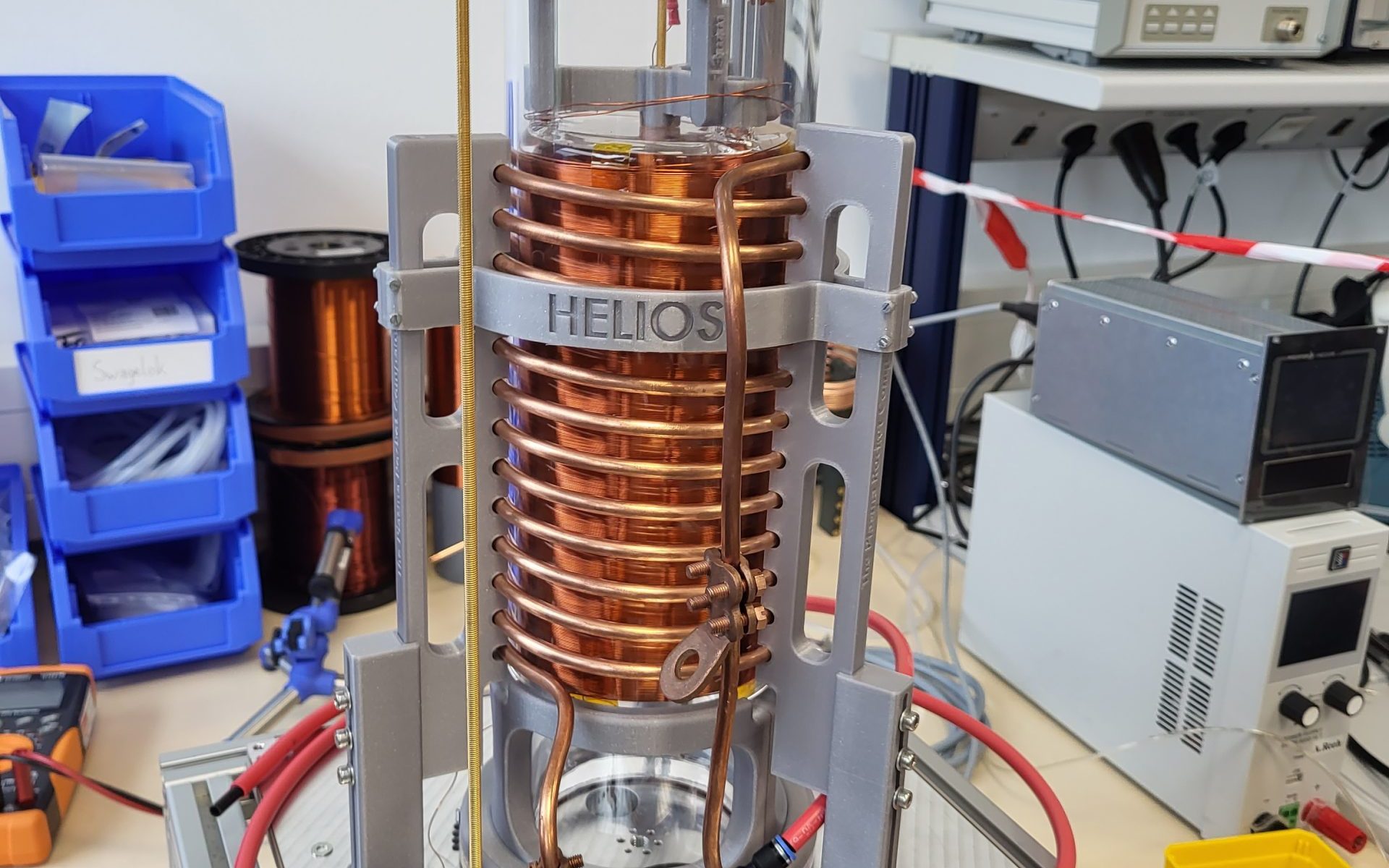
Helios LITE – A First Thruster Model Based on the Two-Stage Ionization Concept of Helios
Current methods for sending spacecraft to Mars require carrying all the necessary fuel for the entire journey, from launch to the distant final orbit. Without the option of refuelling en route, this significantly increases the spacecraft’s total mass, which, in turn, demands even more fuel to overcome Earth’s gravitational forces.
A spacecraft bound for Mars, that needs just enough fuel to reach low Earth orbit for a refuelling stop, would drastically reduce the launch mass of a spacecraft. Helios is capable of paving the way for this new vision of space exploration by offering a completely new technological approach to spaceflight: high-thrust continuous electric propulsion.
In contrast to traditional electric propulsion, Helios uses a unique two-stage ionisation system, tailored to ionise a neutral gas under higher pressure conditions .This provides the technological foundation for generating high thrust with an electric propulsion system. The all-new Helios concept has been developed “without baggage”, focusing only on the desired performance outcome: the generation of high thrust.
Helios LITE is onlythe first version of the Helios thruster family, a first step in creating a new class of thrusters: Electric, highly fuel efficient and capable of generating higher thrust levels. The far-reaching, spiral trajectories that a thruster like Helios can enable for spacecraft unlock new possibilities for in-space transportation.
Benefits:
Electric and highly fuel-efficient thrusters
Use of a neutral gas to generate high thrust
Reduction of the ground-to-space segment trajectory
Continuous high-thrust electric propulsion as the basis for a space transportation ecosystem
Spacecopter – A Novel Technical Approach for Reusable Space Launch Vehicles
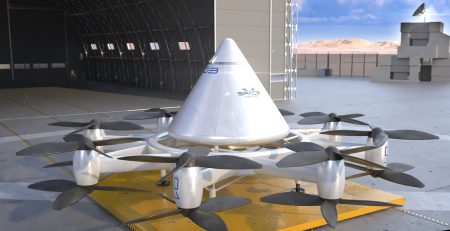
The Spacecopter concept provides a new approach for reusable space launch vehicles that will not only drastically reduce the transportation cost for payloads into orbit but also has the potential to fundamentally revolutionise spaceflight. By combining known and well-established technologies from the automotive, electric flight and chemical battery industry, the Spacecopter project is a low-risk but highly innovative answer to the problem of high transportation costs for orbital payloads. Utilising electrically-driven propellers for the initial launch phase and to return rocket stages to the ground will not only reduce costs but also reduce the mechanical and acoustic loads for the payload. The Spacecopter concept will allow a commercial airline type of operation with only minor check-out procedures between flights. This not only allows completely new market approaches and business opportunities for launch service customers but will, in the long term, squeeze all classic expendable launch vehicles out of the market.
Benefits:
Cost reduction for space launch services of up to 80%
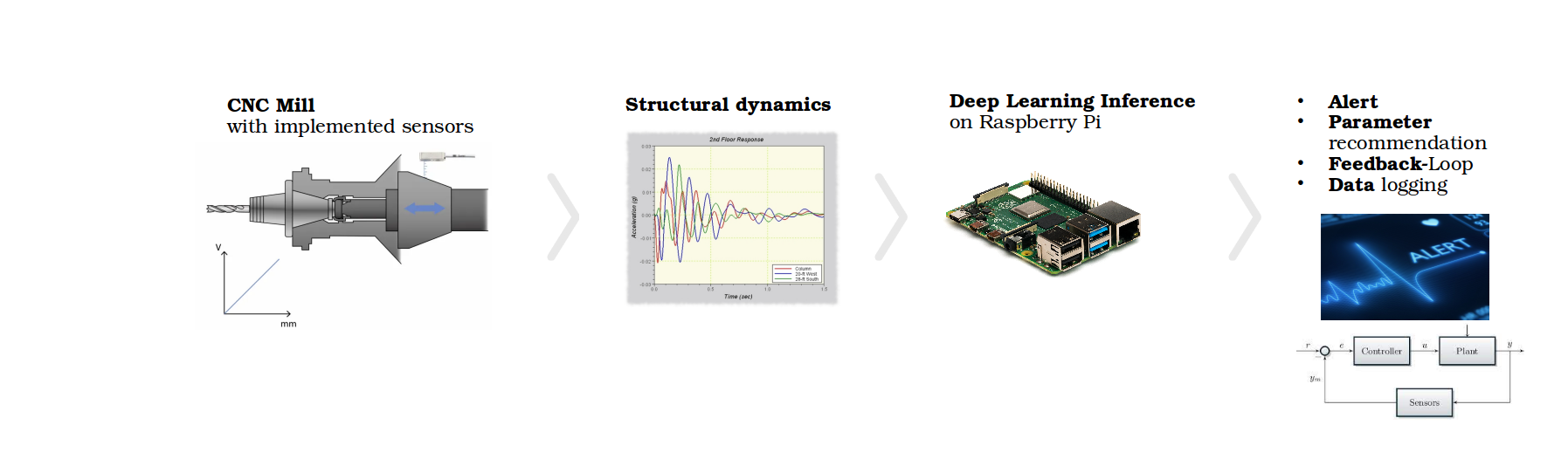
In the manufacturing process, there is a great need for more sophisticated data analysis – a need that has been brought to us by several players from industry. While showing simple deep learning inference models run on a smartphone, we identified great potential for parameter optimisation on CNC mills, better selection of rejects of 3D-printed parts, or in turning machines. Similarly, lots of data must be processed in space, spaceship components tested on the ground before launch, and/or collected data analysed on the ground. This can be automated using AI-based data analysis of all types of sensors. We are currently in the prototyping phase for a drill chuck for a CNC milling machine, or similar, in order to train the networks and set up the generic data platform. In a second step, MAS-Tech aims to transfer the approach of CNC sensor analysis to telemetry data from ESA’s Gaia, which (to our knowledge) is processed manually, and similar space application scenarios. We will then address customers. The total available AI-based sensor market, and also the serviceable obtainable market, is tremendous and growing rapidly, especially in Germany with the many mid-sized engineering companies.
HERA – Integration of active and passive thermal management system for batteries in electrical cars within a load-bearing structure
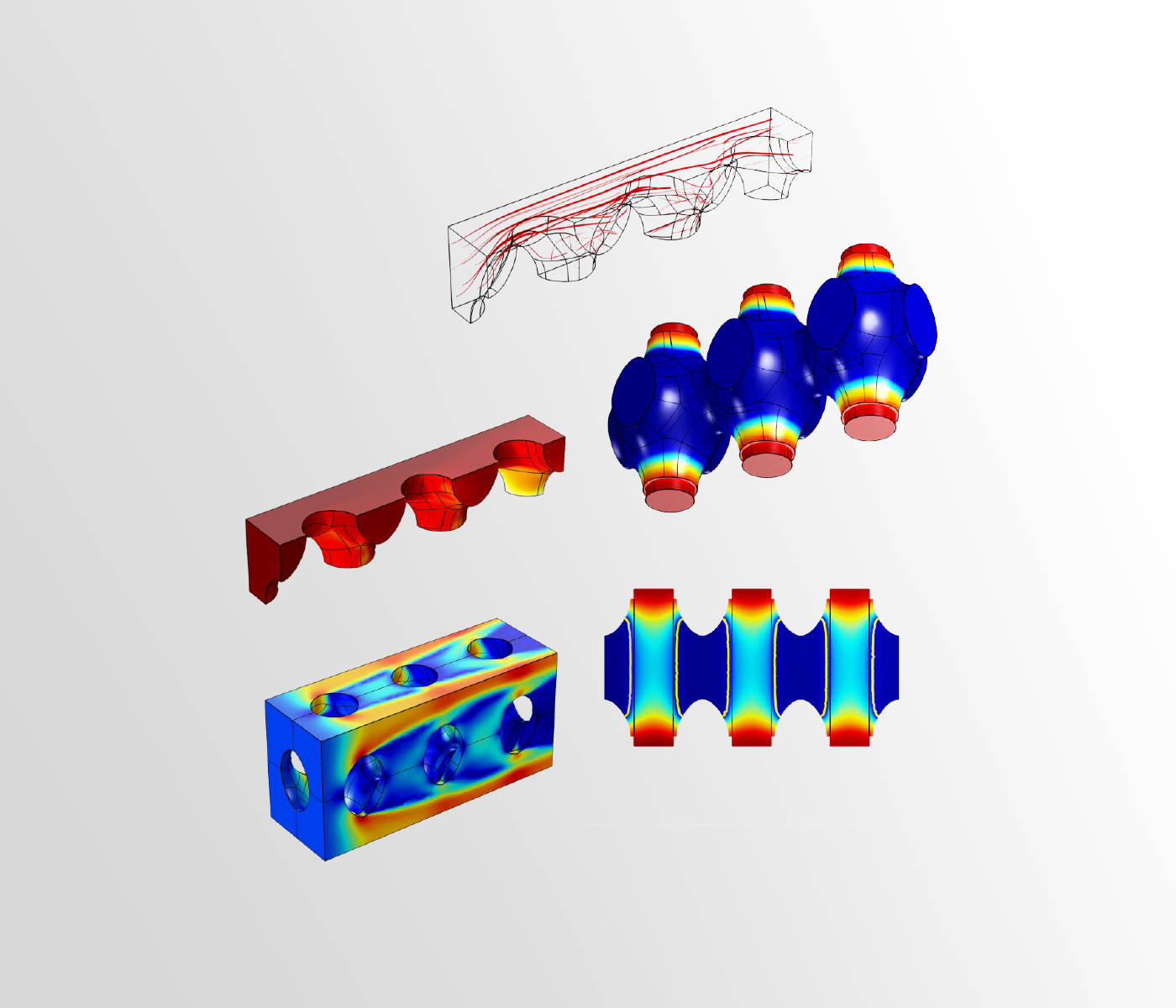
Batteries in electric vehicles need to operate within a narrow temperature window to ensure maximum range and a long life. Load peaks, such as rapid charging and high acceleration or cold/hot environmental conditions, can cause the battery to exceed this window. Large active thermal management systems are currently used to absorb load peaks and prevent the battery from heating up or cooling down. These active systems consume a large amount of energy and imply additional mass. Furthermore, they are often not able to maintain the optimal operating temperature indefinitely, causing degradation of the battery cells. At HERA, we buffer load peaks by means of latent heat storage in passive components based on phase-change materials (PCM). To make this as efficient as possible, we have developed an intelligent structure that couples effective storage of the heat generated in the battery in the PCM with a tailored active cooling system. In this way, load peaks can be levelled out, thereby increasing range and extending battery life. The structure is based on Triply Periodic Minimal Surface (TPMS), which also allows efficient mass-specific mechanical load-bearing capability.
Benefits:
Weight savings through loadbearing structure.
Possibility to manufacture these structures conventionally (no additive manufacturing necessary)
High adaptability through tailorable geometry
Wide range of other applications, such as electrical aviation, heat pumps, reusable rockets, or energy storage for energy grid stability
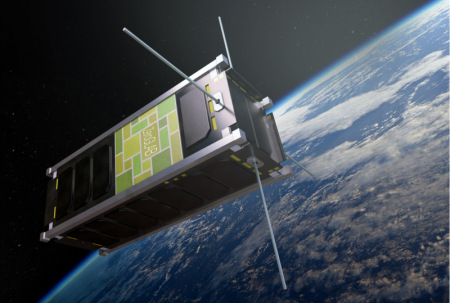
Micro G Scope (MGS) is an innovative approach to the problem of biological testing in space, using an innovative fluorescence contact CMOS microscope and special growing chamber in a CubeSat. The technical requirements for space biology are enormous, and the effort to reduce the cost while maintaining precision and safety is huge. The project’s goal is to solve the problem of the accessibility (and cost) of biological tests in space by providing not only an instrument for biological experiments, but a whole service for pharma and bio-tech companies that will include: experiment design, cell preparation microscale fluorescence microscope, and calibration chamber. In addition, the microlaboratory could be easily modified to accommodate alternative experiments such as seed and spore germination, embryology studies, and the production of nutrients in space, among others. Micro G Scope‘s first design is aimed at testing cancer drugs in space to extract information on whether these drugs work under reduced gravity conditions. The project is currently at SRR level (System Requirements Review) through PDR (Preliminary Design Review).
Benefits:
New cell chamber and microscope design for biological experiments in space based on a lensless design with no moving parts and the size of a credit card
Reduced cost and time to perform the experiments
New full service for the pharma industry where experiment preparation, mission accomplishments, and data review are transparent for the client