Sustainable spacecraft propulsion by water as the expellant mass

Sustainable spacecraft propulsion by water as the expellant mass
innospace-image

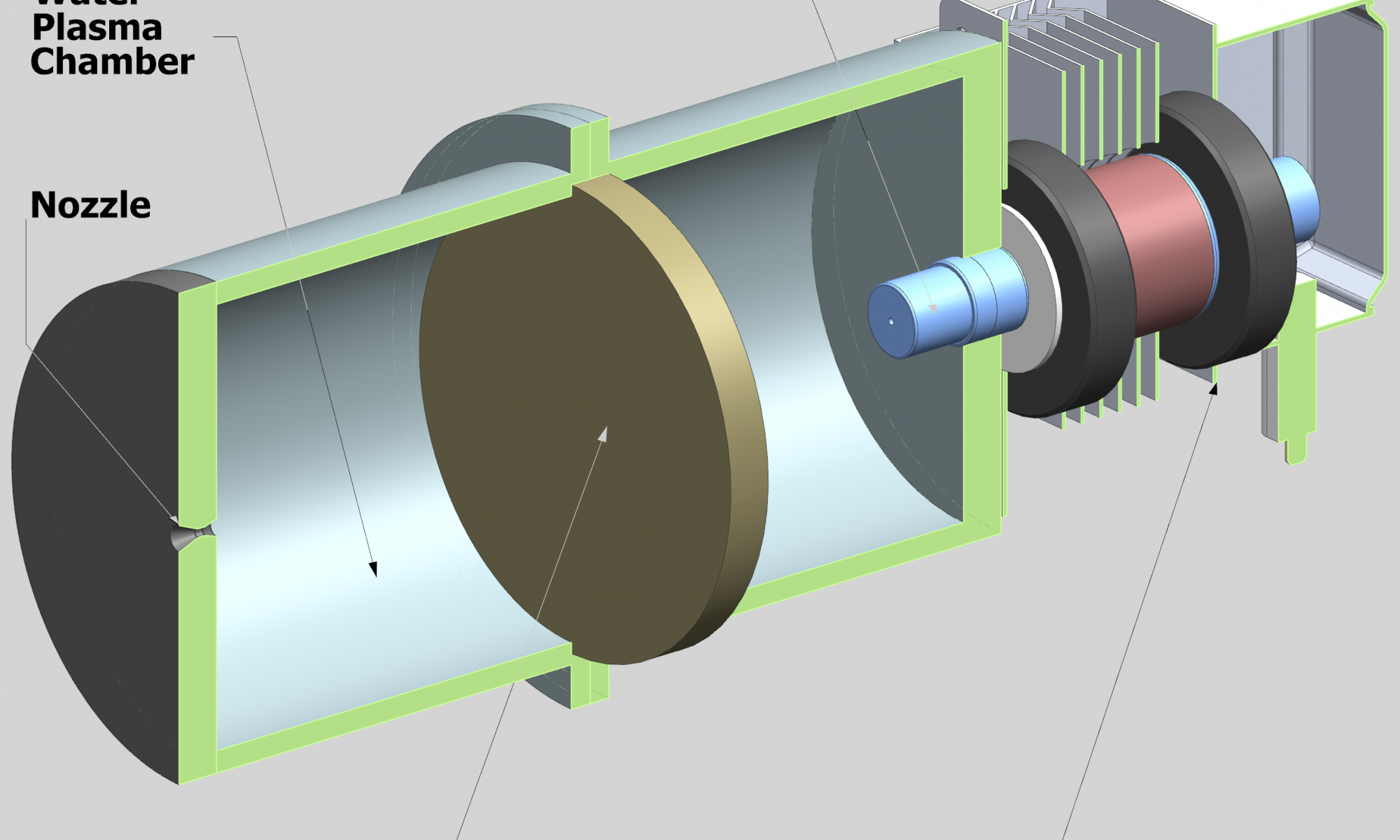
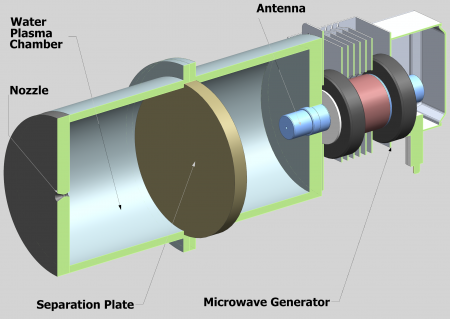
Water is abundant in the solar system. It can be found on the Moon, Mars, the icy moons of Jupiter and on smaller celestial bodies such as asteroids. Considering that it is a must for long-term human presence in space and that it can be used for many purposes, such as radiation shielding or energy storage, it is also conceivable to use it as a propellant or expellant in a propulsion system. It has ideal properties as an expellant: high density, a liquid state at low energy conditions, it is unharmful and simple to handle. Heating the water to plasma state and expanding it in a nozzle forms a highly effective, yet simple, type of electric propulsion system. The high achievable temperature enables a significant saving in propellant mass over chemical in-orbit propulsion systems. The author’s proposal is to make use of advancements in electronics and manufacturing to push this known concept to a new stage within a joint research project. Earlier laboratory demonstrators used bulky and inflexible magnetrons with a high voltage input. A new type of solid-state microwave generator enables a lightweight design and excellent tunability at a low voltage, yet with a high power level. Contactless, low-wear heating of a
green expellant such as water open up an excellent opportunity within propulsion technology. The simplicity of such a propellant also reduces the risk assessment of the system in general and on rideshare missions.

Benefits:

  • Water as a cheap, green expellant
  • Simple, long-term reliability due to contactless heating
  • Uncomplicated approval process due to high safety
  • Greater payload than for chemical propulsion systems
DEBRIS – cleaning space at scale

DEBRIS – cleaning space at scale

photo5429628326697348841

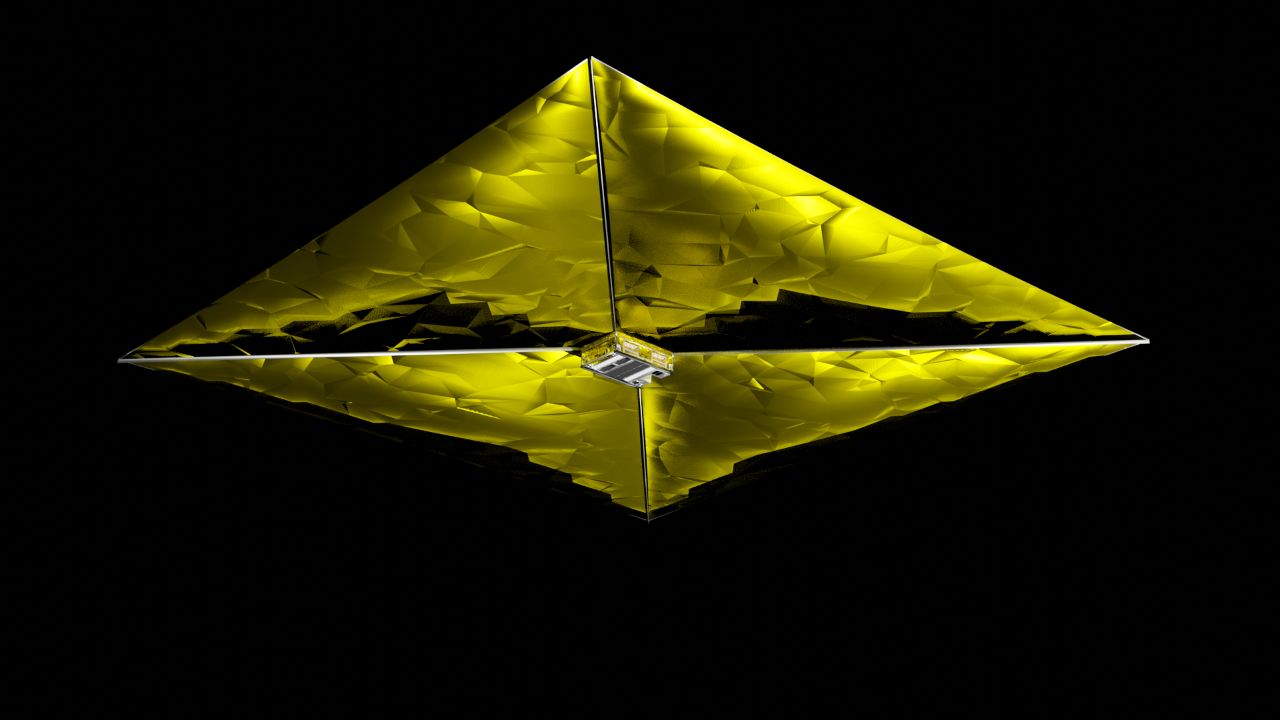
The ever-growing amount of space debris is a critical threat to the space industry and jeopardises the essential services provided to clients all over the world. Although the potential for cascading collisions was outlined many decades ago, no active countermeasures to remove debris from orbit have yet been realised. DEBRIS is a small satellite for active debris removal. It utilises its geometry-independent, multi-capturing-capable mechanism to attach to target objects. After establishing physical contact with its target, DEBRIS employs passive devices — a drag sail and a tether — to deorbit them with great flexibility. From an economic perspective, DEBRIS renders active space debris removal profitable. Key cost-reducing features are its rideshare-optimised design, commercial off-the-shelf components, as well as its low development and operational costs. DEBRIS’s cost-effectiveness and scalability make it unique among other proposals for active space debris removal.

Benefits:

  • Small satellite solution for active space debris removal
  • Geometry-independent multicapturing technology
  • Highly scalable and cost-effective design

German Network of Young
Scientists – juFORUM e.V.
Niklas Wendel
niklas.wendel@juforum.de
www.juforum.de

Mars Torus

Mars Torus

Mars Torus Image

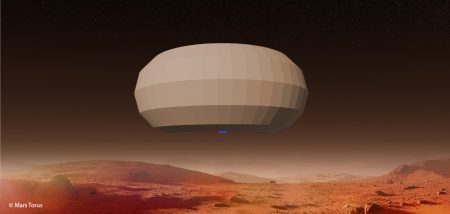
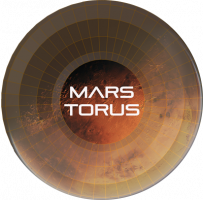
Future robotic and manned Mars missions require high-resolution images of large sections of the planet. The current geographic coverage is achieved either from great height (400 km), or by rovers directly on the surface. Mars Torus is a unique craft, able to produce high-definition images at a height of 2 km while navigating widely over the planet’s surface. Thanks to its structure and a contained vacuum, Torus achieves lift in the thin Martian atmosphere. It thus has a very low energy demand. The energy required for forward momentum and further functions can be generated by solar panels. Mars Torus will have the mobility to relocate in the atmosphere to predefined locations, helping to map locations of interest and search for traces of water and methane.
To allow Mars Torus to navigate precisely and communicate with Earth, it will have its own supporting satellite navigation system via a network of pre-positioned cubesats.

Benefits:

  • High-definition images of the Mars surface
  • Autonomous waypoint navigation around Mars
  • Chemical sampling of the Mars atmosphere
  • Reduction in the risk to future robotic and human missions

Mars Torus
Letterkenny, Ireland
Matthew Kelly
info@marstorus.com
marstorus.com

SUPREME

SUPREME

Imprimir

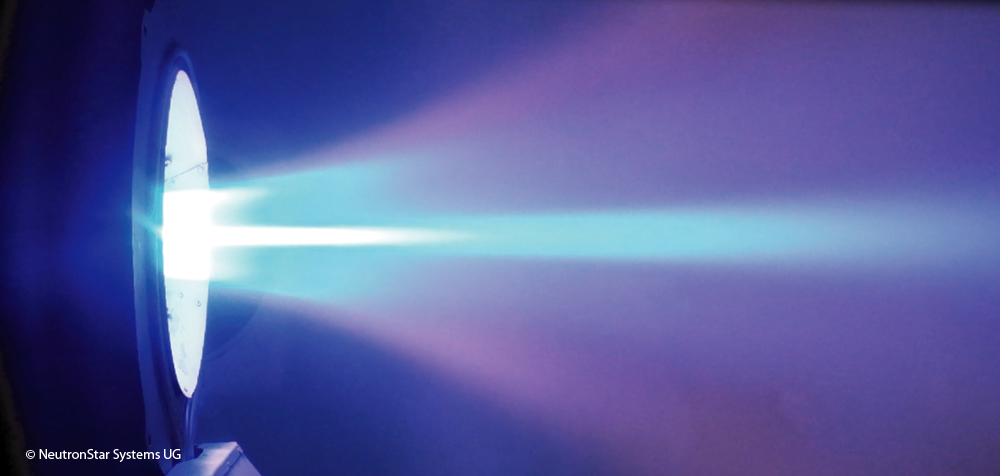
NeutronStar Systems UG is developing a disruptive electric propulsion technology that can reduce mission costs for satellite operators by tens of millions of euros, through cheaper propellant and more efficient operation. It calls the solution SUPREME (SUPerconductor-Based Readiness Enhanced Magnetoplasmadynamic Electric Propulsion). It is based on widely-research appliedfield magnetoplasmadynamic (AF-MPD) thrusters and industrially mature high-temperature superconductors.
SUPREME offers the benefits of AF-MPD technology, namely excellent scalability, a wide operational range, and the ability to use alternative propellants, which are more sustainable and considerably cheaper than existing options. The use of superconductors greatly reduces the mass, volume and power consumption of the propulsion system, while simultaneously enabling longer lifetimes and greater performance.

Benefits:

  • Compact and efficient propulsion system with a wide range of applications
  • Scalability across a wide range of power classes (750W – 1000kW)
  • Uses propellants which are 100 times cheaper than xenon
  • Greater operational flexibility for orbital transfers, reducing fuel consumption

NeutronStar Systems UG
Cologne, Germany
Manuel La Rosa Betancourt
Co-Founder & CEO
marcus@neutronstar.systems
neutronstar.systems

Free-form metal optics for new space applications

Free-form metal optics for new space applications

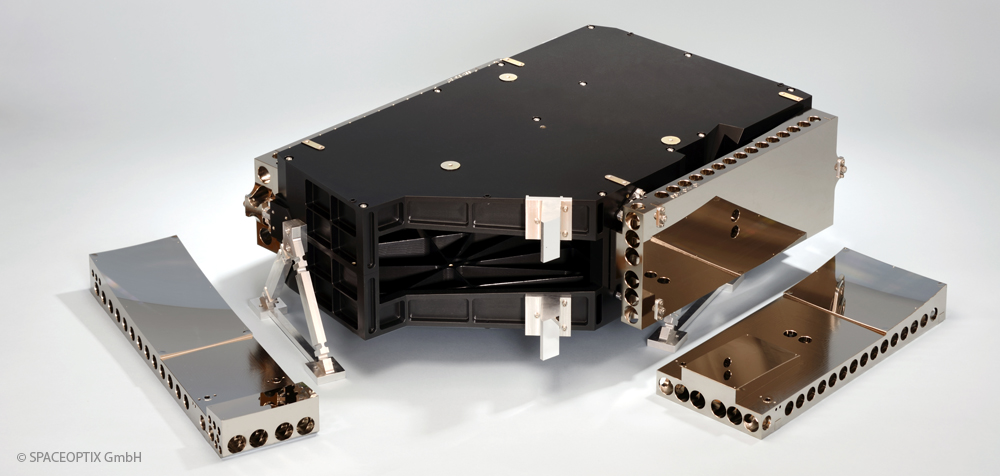
Spaceoptix

The rapidly increasing number of commercial satellites, with some 25,000 small satellites* for Earth observation and communication services alone in the next few years, poses a completely new scaling problem for component and subsystem suppliers. In addition, Earth observation as well as laser and quantum communication increasingly require high-quality optical subsystems with nanometre precision, such as telescopes, spectrometers or pointing mirrors, to enable high-resolution observation data or increased transmission speeds. SPACEOPTIX GmbH develops and manufactures high-quality opto-mechanical components and systems made of metallic substrates. Compared to alternative materials such as glass or ceramics, the metal optical mirrors and mirror systems offer significantly reduced manufacturing and assembly costs and, by using free-form optical system designs, an excellent ratio between optical imaging quality, mass and volume. As a Fraunhofer IOF spin-off, the aim of SPACEOPTIX GmbH is the technology transfer of 20 years of applied research in the field of metal optics to industrial standards.

* www.researchandmarkets.com, 2019, Small Satellite Market Size, Growth and Industry Forecast, 2026

Benefits:

  • Reduced manufacturing costs compared to optics made of alternative materials
  • Efficient realisation of compact freeform optical system designs (miniaturisation, increase of image quality)
  • Integration of mechanical functions into the optical mirror component and thus application of simplified mounting principles (“snap-in” assembly)

SPACEOPTIX GmbH
Jena, Germany
Dr-Ing. Matthias Beier
matthias.beier@spaceoptix.de
spaceoptix.de

Celestial – Products and Services for Deep Space Communication

Celestial – Products and Services for Deep Space Communication

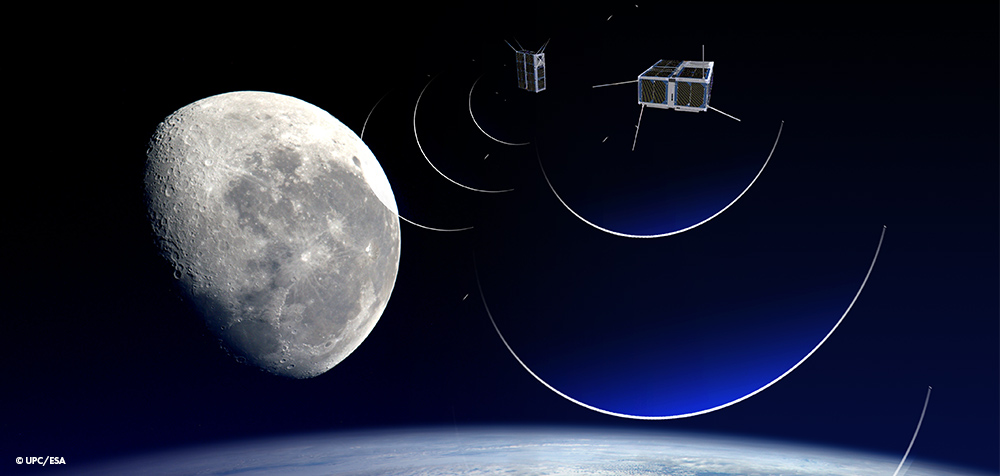
Satellites orbiting the moon

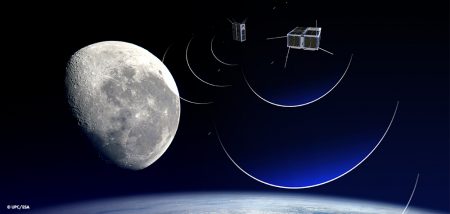
Moon missions are facing many challenges in new space exploration, and communication is one of them. The fact that not all locations on the moon are accessible to transmissions from Earth creates an obstacle to cislunar communication. Celestial aims to deploy a small satellite relay constellation in lunar polar orbit to overcome this barrier. A total of three satellites (plus one redundant satellite) will be deployed. Working on the S and X bands, this constellation will be able to communicate and relay data from lunar missions to ground stations on Earth. In addition, Celestial aims to provide its satellite communication system to missions seeking to explore high-radiation Earth orbits. This payload will be lightweight and radiation-hardened, ensuring longer life than the similar communication systems currently available. The biggest benefit for lunar missions lies in the reduced costs made possible by a low-weight communication system and the ability to reach lunar locations that are otherwise inaccessible.

Benefits:

  • Increased data transmission rates and continuous communication coverage of the lunar poles
  • Low power consumption for low-cost lunar missions
  • Access to lunar regions beyond the direct line of sight

MERIT – Disruptive Propulsion System for Microsatellites

MERIT – Disruptive Propulsion System for Microsatellites

Miniaturised satellites have become increasingly common in recent years. In order to enable different mission scenarios, satellite platforms as small as CubeSats require propulsion systems that are small, versatile, costeffective, and reliable. Since existing propulsion systems are too expensive and lack intense development and physical comprehension, T4i started MERIT, a project that aims to upgrade their own REGULUS propulsion system in terms of cost and performance. Based on helicon plasma technology, it also leverages a modular approach, non-aerospace supply chains, and smart adoption of additive technologies. MERIT’s main target customers include small-satellite (up to150 kg) platform manufacturers. T4i plans not only to provide the propulsion system to be integrated into satellites, but to become a potential partner as well. Its technology will also be exploited in other fields, such as medical and industrial applications and in the development of smart plasma antennas.

Benefits:

  • Increased profitability and efficiency through the functionality of the satellite platform
  • Easy integration of the REGULUS propulsion system into satellite platforms
  • Better performance and cost reductions of up to 83%
  • Reliable and versatile propulsion system thanks to helicon plasma technology

T4i
Padua, Italy
Prof Dr Daniele Pavarin
d.pavarin@t4innovation.com
www.t4innovation.com

PCM-Polymer Compound – Novel Material for Thermal Stabilisation of Component Systems

PCM-Polymer Compound – Novel Material for Thermal Stabilisation of Component Systems

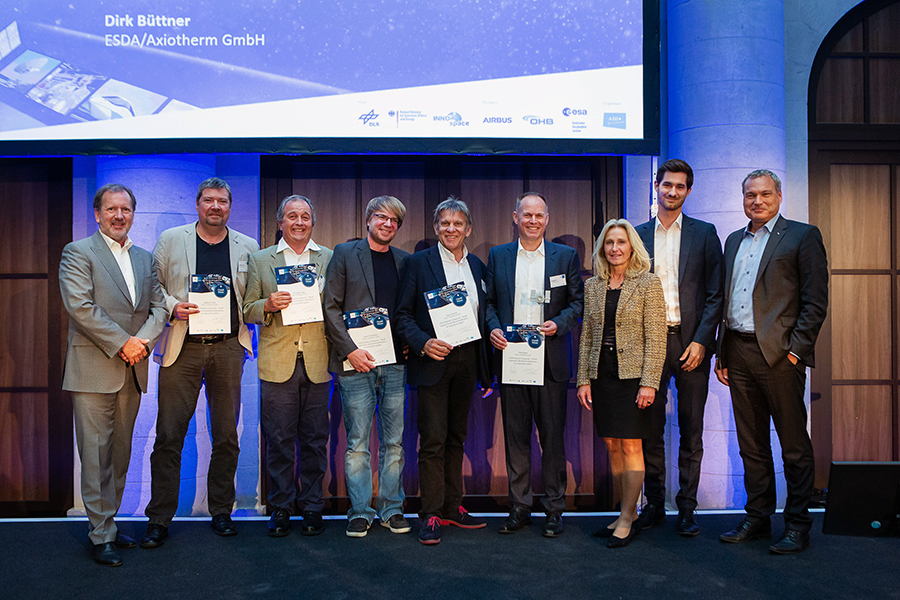
Spacecraft components are constantly subjected to thermal variations. To avoid overheating or undercooling of these components, ESDA-Axiotherm GmbH is developing a phase-change material (PCM) polymer compound for the thermal stabilisation of space components and systems. The PCM polymer compound features a high capacity for absorbing accumulating amounts of heat and releases the heat energy into the system during an undercooling period in order to stabilise the temperature. This material will prevent temperature peaks and produce a smoothed temperature curve. Its unique feature is a mix of materials that remains gelatinous when melted. The compound is leak-proof and well-suited to processing. Furthermore, it is possible to use additives to make permanent, stable modifications to properties such as thermal conductivity, fire protection, and radiation resistance. In particular, batteries (and by extension, the field of e-mobility) should benefit from this life-prolonging technology.

Benefits:

  • Effective smoothing of temperature peaks and reduced thermo-mechanical stress
  • Increased useful life of batteries and electronic components, plus increased operational safety
  • Low mass, high capacity & directly applicable to all battery sectors (automotive/maritime/aviation)

ESDA/Axiotherm GmbH
Eisenberg, Germany
Dirk Büttner
www.axiotherm.de
dirk.buettner@axiotherm.de

ESKIMO – The Next Generation Kickstage

ESKIMO

ESKIMO – The Next Generation Kickstage

ESKIMO

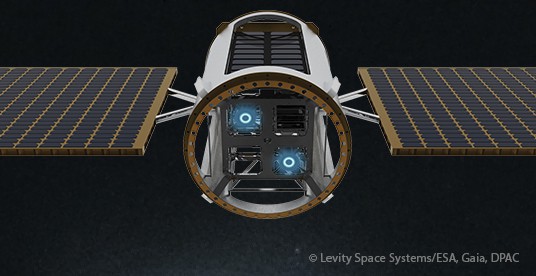
The launch capacity of launch providers is not always sufficient to meet the increasing demands on the flexibility of microsatellite operators. Levity Space Systems is developing an electrically propelled microlauncher kickstage, to transport small satellites into higher orbits beyond the microlauncher capabilities. The additional stage establishes a new alternative for satellite operators, by expanding mission capabilities and reducing launch costs, while increasing the launch performance of the microlauncher. The goal is to provide satellite operators with the opportunity to use microlaunchers as a viable alternative to conventional rockets, as they are able to reach low Earth and lunar orbits, reducing launch times, as well as reliable satellite constellation maintenance by specifically replacing defective satellites.

Benefits:

  • Transport of small satellites into higher orbits (access to lunar orbit using microlaunchers)
  • Reduction of the launch interval from 24 to 3 months
  • Reduction of launch- and opportunity costs
  • Deployment and maintenance of microsatellite constellations
  • Avoidance of secondary payload restrictions
  • Increasing number of possible satellite concepts and applications

Levity Space Systems
Aachen, Germany
Andres Luedeke
www.levity.space
andres.luedeke@levity.space

Levity

PVT-GAMERS – “Improved Pressure-Volume-Temperature Gauging” Method for Electric Propulsion Systems

PVT-GAMERS – “Improved Pressure-Volume-Temperature Gauging” Method for Electric Propulsion Systems

In the new era of electric propulsion, where propellant tanks are larger and missions are longer, the accuracy of classic mass retrieval methods has become obsolete. The knowledge of the exact amount of remaining propellant is critical for optimising a spacecraft’s lifespan. A team from Luleå University of Technology has developed the “Improved Pressure-Volume-Temperature Gauging” Method. This method uses existing technology readiness levels (TRL 9) sensing technologies and it improves the physical modelling of the available propellant as well as the accuracy of the classic Pressure-Volume-Temperature (PVT) retrieval techniques. Thanks to smart use of the spacecraft’s telemetry, its implementation will help spacecraft propulsion systems providers, spacecraft operators, telecommunication companies, and space agencies to increase the lifespan of space missions.

Benefits:

  • More accurate gauging of spacecraft propellant mass
  • Technology scalable to any propellant tank size
  • Extension of the lifespan of space missions and their profitability
  • Low-cost implementation using the existing spacecraft telemetry systems
  • Propellant control system as a transferable technology to any one-phase pressurised vessel in any sector
Winner

Luleå University of Technology (LTU)
Luleå, Sweden
Prof Dr María-Paz
www.atmospheres.research.ltu.se
maria-paz.zorzano.mier@ltu.se

logos

Want to stay up to date?

Sign here: 

We don’t spam! Read our privacy police for more info.